Fascism

Mahara

Outside the Prison Walls: The Mahara Prison Riot and the Rise of Fascistic Ideology in Sri Lanka

By Sanjaya Jayasekera.

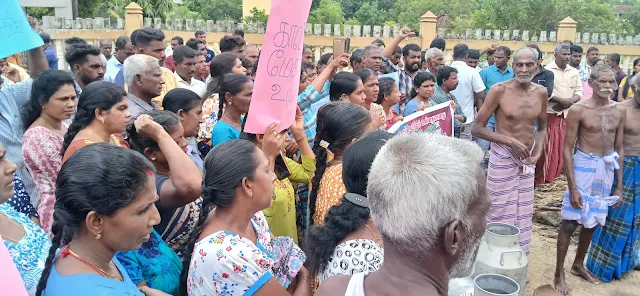
Relatives of the inmates demand not to shoot the prisoners, outside Mahara Prison on 1 August 2026. Photo credit: Ishara S. Kodikara

On August 1-2, 2026, a riot erupted at Mahara Prison, north of Colombo, causing severe damage to its already unlivable infrastructure and reportedly resulting in the death of one inmate. This is the second prison riot in less than a month and followed the massacre in the Negombo prison early last month.[1] The vast majority of detainees at Mahara — as throughout Sri Lanka’s prison system, where approximately 75 percent of inmates are unconvicted remand prisoners — are held in indefinite judicial limbo, warehoused in facilities built for 11,762 that now hold more than 42,000. The conditions are, by any objective standard, a form of systematic torture: prisoners forced to sleep standing, defecate into shopping bags, survive on food that “even cats and dogs” would reject, confined to as little as 1.2 square metres of space.[2] In 2023, 67.8 percent (31,822)  of those imprisoned were jailed due to their inability to pay fines — a form of criminalization of poverty. A recent National Audit Office report finds that over 15,000 remain in prolonged remand custody due to delay in government analyst reports. The riot was not an act of criminality. It was an explosion of outrage of human beings subjected to torturous conditions that the capitalist state has deliberately created and deliberately maintains.  

But it is not the riot itself that most starkly reveals the political trajectory of Sri Lankan society. It is the response — both of the state and of a significant and vocal section of the public.

In the hours following the Mahara unrest, as was in the aftermath of the Negombo prison incident, a significant segment of society — concentrated in the Sinhala middle class of the south and amplified across social media — began openly proposing measures that belong to the lexicon of fascism. “Break their limbs.” “Shoot them in the head.” “Exterminate the drug residue.” These are not the mutterings of isolated cranks. They are the publicly expressed, socially sanctioned political proposals of a layer of the population that has been systematically prepared over decades to regard certain categories of human beings as unworthy of life. The comments sections of mainstream news outlets and the feeds of social media platforms have become open forums for the advocacy of extrajudicial murder, for the vilification of grieving families, for the glorification of the STF and the military, deployed by the JVP/NPP government, to crush prison riots. The corporate media has done nothing to challenge this — because it cannot, because the media itself has been a primary vehicle for the ideological preparation that has produced it.

Military deployed at the Mahara prison on 1 August 2026. Photo credit: Ishara S Kodikara

Following the Mahara unrest, in a video of an elderly mother of a remand prisoner, published on Dasatha News facebook page, she demanded the release of the names of inmates affected by the riot and subsequent military crackdown — including those killed, transferred to other prisons, or hospitalized. In the video, she holds the ruling class and the police accountable for creating a society dominated by drug lords who prey on the sons of impoverished mothers. She explains that her son was framed through drug planting — a widespread practice by the Sri Lanka Police, a routine mechanism for criminalizing poverty and filling the remand prisons with the sons and daughters of the poor.

Military deployed at Mahara prison to crush the riot and intimidate the relatives and the working class. Image Credit: Ishara S. Kodikara

The video attracted hundreds of scathing, inhumane, and morally bankrupt comments. Commentators vilified her for giving birth to her son, blamed her entirely for his drug addiction, and condemned her for failing to raise him properly. The same hostile barrage was directed at parents, siblings, and other relatives who gathered outside the Mahara and Negombo prisons during the riots and crackdowns to demand the safety of their loved ones — mothers weeping at the gates while gunfire echoed within, wives and children pleading for information, families who had traveled from distant villages only to be met with the deployment of armed drones, armored vehicles, and the Special Task Force.

Facebook comments
Social media reporting and comments

This is the face of the fascistic ideology now brewing in sections of the Sri Lankan middle class. It is not merely a political tendency expressed in abstract slogans about “law and order.” It is a social practice of systematic cruelty directed at the most vulnerable — at an elderly mother pleading for her son, at families demanding to know whether their loved ones are alive or dead. The same social media users who demand that prisoners be shot in the head are the ones who mock a mother’s grief, who blame her for the poverty into which her son was born, who insist that the state’s lethal violence is not merely justified but righteous.

This reaction reflects a profound moral decay. It is the ideological harvest of a society that has been taught, systematically and over generations, that lethal violence against the “enemy within” is not merely justified but heroic — and that those who love the enemy, who plead for the enemy, who gave birth to the enemy, are themselves contemptible. The elderly mother who demands to know whether her son is alive is not a grieving parent to be treated with compassion. She is an obstacle to the state’s campaign of terror, and the social media mob has been trained to treat her accordingly.

No public figure has yet gone on record in a formal media statement advocating the extrajudicial execution of prisoners. This tendency has not yet crystallized into an organized movement with a large social base. But it does not need to. The historical lesson of fascism — as demonstrated by the international resurgence of the far right — is that fascist movements are not mass movements from their inception. They begin as ideological currents within sections of the petty bourgeoisie, nurtured by the state and the media, that are activated and expanded when the ruling class requires a battering ram against the working class. The social media comments calling for prisoners to be shot, the mockery of a mother’s anguish, the vilification of families at the prison gates — these are the early ideological indicators of a tendency that the JVP/NPP government, facing mounting social opposition to IMF austerity, will seek to cultivate and mobilize.

The Genealogy of a Fascistic Ideology

The calls to shoot prisoners in the head did not emerge from nowhere. They are the latest expression of an ideological trajectory that can be traced with precision.

The 26-year communal war against the Liberation Tigers of Tamil Eelam (LTTE), concluded in 2009 with the slaughter of an estimated 40,000 Tamil civilians in the final months alone, was not merely a military campaign. It was a project of ideological mobilization on a mass scale. The state, Sinhala-Buddhist saffron forces, and the media jointly constructed a narrative in which the Tamil population — and by extension any population that could be designated as an internal threat — was dehumanized. The war was presented not as a conflict between the Sinhala and Tamil ruling classes, each seeking to exploit “their” workers, but as a civilizational struggle for the “Sinhala motherland” against a barbaric enemy. The Sri Lankan military mercilessly pounded the no-fire zone with artillery shells, deliberately targeting hospitals, aid centres and designated civilian areas. Grisly video evidence later emerged of Sri Lankan soldiers executing naked, bound and blindfolded men in cold blood. [3] When the LTTE defences collapsed, the military murdered surrendering LTTE leaders and herded some 300,000 civilians into army-controlled detention camps.

The Sri Lankan military was glorified as the savior of the nation. War heroes were celebrated in state ceremonies, their images plastered across billboards, their “sacrifices” invoked in political speeches. The military budget was expanded, not contracted, after the war ended. Military “leadership training” was imposed on university students. [4] The armed forces were integrated into the civil administration, including in schools, with retired and serving generals appointed to key government positions. The glorification of the military was inseparable from the cultivation of Sinhala-Buddhist chauvinism, which presented the Sinhala majority as the authentic nation and all others as threats to its integrity.

This ideological campaign did not end with the war. It was repurposed. As the Socialist Equality Party (SEP) warned in 2021: “The military and its brutal methods developed during the war are now being prepared for use against the working class, as unrest grows over the worsening social conditions facing working people.” [5] The “war on terror” became the “war on drugs,” which became the “war on the underworld.” The enemy was no longer the Tamil separatist but the drug dealer, the criminal, the “underworld figure” — categories that, in practice, encompass the poorest and most marginalized layers of the working class.

The World Socialist Web Site (WSWS) explained the logic of these campaigns as early as 2009: the “war on the underworld” was launched “to divert growing popular discontent and to justify the further strengthening of the state apparatus in preparation for social unrest.”[6] The same analysis applies with equal force today. The JVP/NPP government’s escalating “war on drugs” is a rehearsal for police-state measures, the main target of which is the working class that come into struggle.

The middle-class social media users who now call for prisoners to be shot in the head are the products of this decades-long ideological conditioning. They have been taught to see the state’s lethal violence as legitimate, to regard due process as an obstacle to “security,” and to view certain categories of the poor as subhuman. 

The Same Tendency, the Same Targets

But this tendency is not new. It is the same social layer, animated by the same ideology, that has for the past few years populated the comments sections of mainstream media with the glorification of the military and the dehumanization of its victims. When the daily excavations of skeletal remains at the Chemmani-Siththupaththi mass grave are reported — the bones of Tamil men, women, and children who were “disappeared” by state forces, buried in unusual positions, and dumped together in shallow pits — this same social media mob posts comments calling to “make soup out of their bones and have it.” When Tamil communities in the North and East protest the military’s continued occupation of their lands — a permanent network of army camps established during the war and never dismantled — this same tendency demands the deployment of the army to crush them. When Tamil families who have spent decades searching for their loved ones demand accountability for the tens of thousands slaughtered in the final months of the war, this same social layer mocks their grief and insists the killings were justified. When the skeletal remains of 136 individuals were unearthed in Mannar after 74 days of excavation, the same voices jeered, defending the military.

The calls to shoot prisoners in the head are not a departure from this chauvinist culture. They are its extension. The ideological machinery that was built to dehumanize the Tamil “terrorist” has been repurposed to dehumanize the Sinhala “criminal.” The mechanism is identical: construct a subhuman category, mobilize revulsion against it, and demand that the state kill without process, without mercy, without accountability. The war against the LTTE provided the template. The “war on drugs” provides the new target. The underlying logic — that certain categories of human beings may be killed by the state with impunity, without trial, without process, without mercy and that those who call for their killing are patriots — is the same.

The decades-long campaign of militarization and Sinhala-Buddhist chauvinism has prepared this social layer to serve as the shock troops of reaction. The glorification of war heroes, the celebration of military “victory,” the refusal to acknowledge war crimes, the mockery of mass graves — all of this has cultivated an ideological disposition that regards lethal state violence not as a crime to be prosecuted but as a virtue to be celebrated. The middle-class youth who posts “shoot them in the head” on Facebook is not expressing an idiosyncratic opinion. He is expressing the logical endpoint of an ideology that has been systematically inculcated through the education system, the media, and the political culture of the post-war period. He is the product of a society that has never held its killers to account and has instead elevated them to the status of national heroes.

The same social layer revealed its moral character with unmistakable clarity during Israel’s genocidal war on Gaza, which since October 2023 has claimed the lives of tens of thousands of Palestinian civilians — men, women, and children slaughtered under the banner of “fighting terrorism.” Across social media, this section of the Sinhala middle class expressed vociferous indifference to the genocide and open support for Zionist Israel’s crimes. The same dehumanization mechanism was at work: Palestinians were “terrorists,” their deaths were “necessary,” their suffering was deserved. That the JVP/NPP government itself has conspicuously failed to condemn Israel’s planned seizure of Gaza, pointedly omitting any mention of genocide or ethnic cleansing from its official statements, is no coincidence. The ideological framework that justifies the slaughter of prisoners at Mahara or Negombo, the mockery of Chemmani’s dead, and the indifference to Gaza’s murdered children is one and the same: the conviction that lethal state violence against a dehumanized enemy is not a crime but a form of justice. This is the moral universe that decades of militarization and chauvinism have built.

The social base that the JVP/NPP government is cultivating is this. The party that opposed UN human rights investigations into war crimes, that integrated retired military officers into its political apparatus, that retains the Prevention of Terrorism Act and expands police-state powers — this party governs with the tacit support of the social media mob that demands bullets for prisoners and mocks the bones of the disappeared. It does not need to issue formal statements endorsing such sentiments. It needs only to continue what it is already doing: glorifying the security forces, refusing accountability for past and present massacres, and framing its “war on drugs” as a civilizational struggle against subhuman enemies. The social media tendency will do the rest, providing the popular ideological cover that the state requires to escalate its violence — against prisoners today, against striking workers and protesting youth tomorrow.

The JVP/NPP: Architects of Militarization

The present leaders of this militarization campaign are the Janatha Vimukthi Peramuna (JVP) and the National People’s Power (NPP) government. This is a fact of immense political significance that must be stated without equivocation.

The JVP campaigned for the 2024 elections on a platform of “systemic change.” It made promises to workers, peasants, and youth across every corner of society. It presented its program as a vision of social righteousness, of clean government, of a break with the corrupt and violent past. It rode to power on the back of the massive Aragalaya uprising of 2022, in which about a million working people rose up against the Rajapaksa regime and the unbearable social conditions produced by the crisis of Sri Lankan capitalism and the 2022 sovereign default.

Today, that same JVP/NPP holds power while actively driving militarization forward. It has retained the Prevention of Terrorism Act, which it explicitly promised to abolish. It has invoked essential services laws to criminalize strikes across key sectors. It has introduced the Protection of the State from Terrorism Act (PSTA), vastly expanding state repressive powers. It has announced a plan to recruit 10,000 retired military personnel into the police force — many of whom have combat experience from the 26-year anti-Tamil communal war. It has established over 14,000 Public Safety Committees across all village officer divisions, institutionalized as a force operating under the police — a revival of the intelligence-gathering committees set up by Gotabhaya Rajapaksa during the war, with JVP members reportedly appointed to them in almost all areas.[7]

The JVP’s collaboration with the military apparatus is not new. During the war, the Sinhala chauvinist JVP was a virulent advocate of the military campaign against the LTTE, demanding an all-out military solution and vehemently opposing any concessions to Tamils. [8] [9] [10] In 2010, it formed a sordid electoral alliance with former army commander Sarath Fonseka, the general who oversaw the final military offensives. In 2023, as it prepared for government, the JVP/NPP established formal collectives of retired military and police officers — the Retired Tri-forces Collective and the Retired Police Officers Collective — integrating figures most likely including individuals connected to crimes and human rights abuses during the war into its political apparatus.

The betrayal of the Tamil population of the North and East is among the most damning indictments of the JVP/NPP government. During the 2024 presidential and parliamentary election campaigns, Dissanayake and the JVP/NPP made explicit promises to Tamil voters: the release of all political prisoners, the return of civilian land seized by the military, and the provision of information to families of the tens of thousands of missing persons. On the basis of these pledges — and driven by deep disaffection with the traditional Tamil bourgeois parties that had betrayed them for decades — a significant section of Tamil voters swung behind the JVP/NPP in the November 2024 parliamentary election, handing the party a plurality of votes in all but one district in the North and East. Every one of these promises has been broken. The government now claims that political prisoners were convicted on criminal charges and therefore cannot be released. Some land has been returned, but an estimated 2,600 acres still remain under military control, and tens of thousands of acres seized from ordinary working people during the war remain in the hands of the armed forces. Instead of revealing the fate of the disappeared, the government proposes limited financial reparations to victims’ families while protecting the perpetrators. The JVP/NPP has categorically rejected United Nations Human Rights Council resolutions calling for investigations into war crimes. Its opposition to any human rights investigation flows from its Sinhala chauvinist politics and ardent support for the protracted anti-Tamil civil war and is insisting on the lie that the military committed no war crimes. The Tamil masses who voted based on promises of “systemic change”— in spite of the long record of JVP’s anti-Tamil chauvinism — have instead received the same military occupation, the same denial of justice, the same criminalization of their dead.

Now, the JVP Justice Minister visits the Sittupattu mass grave site (on 19 June), faces hundreds of protesters demanding truth and accountability, and walks past them to promise justice “within two years.” But the obscenity does not end there. After standing at Sri Lanka’s largest mass grave — over 400 skeletal remains, including the bones of infants — the minister, answering questions from people at a meeting held at the Jaffna Divisional Secretariat Office publicly cast doubt on whether Chemmani is even a mass grave at all, suggesting it may simply be a normal graveyard. He stated, “first of all, it is a cemetery, cause of death of bones should be inspected, and complaints are required before we can proceed with DNA identification”. In another press statement, the Minister raised doubts as to who the perpetrators were, attempting to discredit strong allegations against the armed forces.[11] This is not confusion. This is not ignorance. This is the language of cover-up. It is the language of impunity spoken aloud.

This is the party that now governs Sri Lanka. This is the party that presides over the prison massacres at Negombo and Mahara. This is the party whose media allies portray dead prison guards as “heroes” who “sacrificed their lives” — the right-wing Island newspaper declaring: “The drug mafia has flexed its muscle again. The government has embarked on an ambitious campaign to rid the country of narcotics, and rightly so.” [12] On August 3, its Sinhala language daily, Divina named the military-STF intervention in the Mahara prison as a “humanitarian mission”, which echoed the term used to refer to the military onslaught in the final phase of the civil war. This is the  party that is precisely accountable for the massive inhumanity, savagery, and moral decay represented by the calls to shoot prisoners in the head.

The Middle Class and the Fascist Mobilization,

The social media posts proposing the extrajudicial execution of prisoners are not evenly distributed across the population. They emanate disproportionately from the Sinhala middle class of the south — the petty bourgeoisie, the lower-level professionals, the small business owners, the university-educated and unemployed youth who have been traditionally taught to see themselves as the guardians of the nation’s moral order. This is the classic social base of fascist movements, and its emergence in Sri Lanka follows a pattern that Marxism has long understood.

The middle class occupies a contradictory position in capitalist society. It is not part of the bourgeoisie — it does not own the means of production on a scale that frees it from the necessity of work. But it is terrified of falling into the proletariat, of losing its precarious status, of being swallowed by the poverty that surrounds it. In periods of capitalist crisis, when its economic position is threatened by inflation, unemployment, and the collapse of small enterprises, the middle class becomes politically volatile. It can be mobilized either in alliance with the working class against the bourgeoisie — or, as history has repeatedly demonstrated, as the shock troops of reaction against the working class.[13

The decades-long campaign of militarization and Sinhala-Buddhist chauvinism has prepared the Sri Lankan middle class to choose the latter path. The glorification of war heroes, the demonization of internal enemies, the constant invocation of “national security” — all of this has cultivated an ideological disposition that sees violence as the solution to social problems. 

This tendency may not yet have a large social base. It is concentrated among a significant section of social media users — particularly youth and the middle class — who wage this militaristic, demoralized, inhumane campaign as a matter of defending law and order and security. 

The government and the ruling class are aware of these developments and are tacitly encouraging them. This is the decisive political point. The social media mob that calls for bullets in prisoners’ heads is not acting against the state. It is acting in harmony with a state that has itself just carried out a shoot-to-kill operation at Negombo, that has deployed the STF and the military against unarmed prisoners, that has subjected transferred inmates to retaliatory torture resulting in at least two post-transfer deaths.[1] The state kills; the social media mob applauds; the government appoints a committee of retired judges to bury the truth. Each element reinforces the others.

The Trajectory: From Prisoners to Workers

The critical political question is: where does this trajectory lead?

The government will in due course direct these fascistic tendencies against working-class struggles. The middle class that today demands bullets for prisoners will tomorrow demand bullets for strikers. The social media mob that dehumanizes “drug residue” will be mobilized to dehumanize workers who defy essential services orders, youth who protest IMF austerity, peasants who resist land grabs. The ideological machinery that was built to prosecute the war against the LTTE and then repurposed for the “war on drugs” will be repurposed again for the war on the working class.

As the Socialist Lead of Sri Lanka and South Asia (SLLA) warned in November 2024, The JVP/NPP government is already preparing the ground. [14] The 14,000 Public Safety Committees, staffed with JVP members and operating under police supervision, are mechanisms for surveillance, intelligence gathering, and repression against political opponents and workers engaged in struggle. The recruitment of 10,000 retired military personnel into the police force is a direct preparation for the violent suppression of social unrest. The government expects strong resistance from youth and students and has already deployed the police to violently suppress teachers’ protests and student demonstrations. School Development Officers were beaten and detained by police in December 2024 for demanding their rights. Allied health science graduates were violently suppressed and arrested in March and April 2025.

The JVP/NPP is implementing the IMF austerity program to the letter. Dissanayake retains the main portfolios of finance and defence to ensure the government’s foremost task of ruthlessly implementing IMF austerity measures is directly in his hands. For 2026, the allocation of funds to the Ministry of Defence is 530 billion Rupees. On the very first day the majority-JVP/NPP parliament convened, the government jettisoned its election pledge to renegotiate the IMF bailout. The measures include significant tax increases targeting workers, the lowering of the income-tax threshold directly affecting the middle class, the slashing of vital public services and a fire-sale of state-owned enterprises, destroying hundreds of thousands of jobs. Parliament unanimously approved these IMF austerity measures in December 2024. Dissanayake’s budgets were fully dictated by the IMF. The working class and the poor suffer heavily due to sky-rocketing prices of consumer items, including essential food items, while the JVP-controlled majority trade unions have artificially suppressed the working class struggles. 

The government knows it sits on a social powder-keg. The austerity measures it implements will generate mass opposition. It is haunted by the 2022 Aragalaya. Its response is to build the repressive apparatus in advance, to cultivate the ideological climate in which lethal violence against protesters will be accepted, and to prepare the middle-class shock troops who will condemn and vilify the worker, hail the military-police crack-down and provide the political cover for state terror.

The JVP’s general secretary Tilvin Silva has declared that “there will be no other governments after this government.” President Dissanayake has said the government “cannot be shaken for decades.” These are not expressions of democratic confidence. They are threats. They announce that the JVP/NPP will not peacefully surrender power, that it is preparing to rule through force, that the fascistic ideology now being cultivated in the middle class is an essential component of its political strategy.

The Crisis of Sri Lankan Capitalism

The prison system — and the fascistic ideology that demands its victims be shot — is a concentrated expression of the broader social catastrophe produced by Sri Lankan capitalism. According to the United Nations Development Program (UNDP), the country was among the most unequal in the Asia-Pacific region by 2023. The Super-Rich comprise just 1 percent of the population but command a massive 31 percent of the total personal wealth in the country. The Working Class and the Poor comprise  half of the entire population but collectively own less than 4 percent of the overall national wealth. 

The plantation workers of the central hill country — the descendants of indentured laborers brought from India by British colonialism — continue to live in conditions of abject poverty. The urban poor of Colombo’s slums, the rural farmers crushed by debt and the removal of fertilizer subsidies, the youth who face permanent unemployment — these are the social layers from which the prison population is drawn.

They are the human products of a system that subordinates human need to private profit. And when they resist — when they protest, when they strike, when they explode — the state answers with bullets. When the middle class applauds those bullets, it is not expressing a pathology. It is expressing the logic of a system that requires the dehumanization of its victims in order to sustain itself.

The Warning and the Task

Workers must recognize this danger. The calls to shoot prisoners in the head are not a temporary aberration. They are a political warning. The same forces that today demand the extrajudicial execution of remand prisoners will tomorrow demand the same for striking workers, for protesting students, for anyone who threatens the “stability” that the ruling class requires to continue its exploitation. The social media tendency that mocks the bones of the Chemmani dead, vilifies a remand prisoner’s grieving mother, and calls for bullets in the heads of prisoners is being cultivated as the ideological battering ram of a government preparing for class war.

The revolutionary party must be conscious of these subtle developments in the social consciousness and expose the growing dangers. This means neither exaggerating the tendency into something it is not yet — a mass fascist movement — nor dismissing it as the harmless venting of online cranks. It means identifying it precisely for what it is: an emergent ideological current, rooted in the material crisis of the middle class, cultivated by decades of militarization and Sinhala-Buddhist chauvinism, and tacitly encouraged by a government that will require it when working-class resistance to austerity intensifies. It means exposing the continuity between the dehumanization of Tamils, the mockery of mass graves, and the demand for bullets in prisoners’ heads — because all three are expressions of the same logic, nurtured by the same state, and aimed at the same ultimate target: the working class.

The working class must defeat the ruling class’s militarization program and ideology. This requires an independent political mobilization, organized through action committees in every workplace and neighborhood, that breaks decisively with all capitalist parties — including the JVP/NPP — and their trade union appendages. It requires the building of a revolutionary party, armed with the program of socialist internationalism, that fights for the unity of Sinhala, Tamil, and Muslim workers across ethnic divisions and builds an alliance of the working class with all oppressed layers, the peasantry and the youth against the ruling class that foments divisions among them to strengthen capitalist class rule.

The fight against fascistic ideology cannot be separated from the fight against the capitalist system that produces it. The middle class that calls for prisoners to be shot is itself a product of a society in crisis — economically threatened, ideologically disoriented, politically manipulated by a ruling class that requires it as a battering ram against the working class. The only force capable of defeating this reactionary mobilization is the organized working class, united across all communal lines, advancing its own socialist program as the alternative to the barbarism of capitalism in decay.

The Negombo dead, the Mahara brutalized prisoners, the tens of thousands slaughtered at Mulliwaikkal, the tens of thousands of rural youth killed in 1988–89, the skeletons still being unearthed at Chemmani and Mannar, the forcibly disappeared, the tortured and the warehoused — The blood of the Sri Lankan working class and oppressed cries out against a system that produces only death and misery. The task of the SLLA is to build the revolutionary party to organize the working class, in alliance with the middle class, the petty-bourgeoisie, the rural poor and the urban impoverished, to put an end to it — through the revolutionary overthrow of capitalism and the construction of a workers’ state, in Sri Lanka, South Asia and internationally, as part of the world party of socialist revolution, the International Committee of the Fourth International.

[1] The Negombo Prison Massacre: Class Violence and the Capitalist State in Sri Lanka, The Socialist Lead of Sri Lanka and South Asia (SLLA) (11 July 2026).<https://www.thesocialist.lk/11-07-2026-the-negombo-prison-massacre-class-violence-and-the-capitalist-state-in-sri-lanka/>

[2] Inmates face torture after prison riots in Sri Lanka, Wasantha Rupasinghe (10 July 2026) <https://www.wsws.org/en/articles/2026/07/11/uohf-j11.html

[3] Video evidence of Sri Lankan government war crimes, Sarath Kumara (29 August 2009) <https://www.wsws.org/en/articles/2009/08/slkl-a29.html

[4] Sri Lanka: Military discipline for university students, Panini Wijesiriwardena (24 January 2011) <https://www.wsws.org/en/articles/2011/01/sril-j24.html

[5] Twelve years since the end of Sri Lanka’s communal war, Socialist Equality Party (Sri Lanka) (26 May 2021) <https://www.wsws.org/en/articles/2021/05/27/slwr-m27.html

[6] Sri Lankan government launches “war on the underworld” Sarath Kumara (3 August 2009) <https://www.wsws.org/en/articles/2009/08/slcr-a03.html

[7] Sri Lankan government to expand repressive police apparatus, N. Ranges (19 June 2025) <https://www.wsws.org/en/articles/2025/06/20/ioqy-j20.html

[8] An abrupt turn in Sri Lanka’s civil war once again reveals the fascist character of the JVP, Nanda Wickremasinghe (8 September 2000) <https://www.wsws.org/en/articles/2000/09/jvp-s08.html

[9] Sri Lanka: JVP vehemently opposes any concessions to Tamils, Wije Dias (11 June 2009) <https://www.wsws.org/en/articles/2009/06/sril-j11.html

[10] Sri Lankan government negotiates with JVP ally on program for all-out war, K. Ratnayake (28 August 2006) <https://www.wsws.org/en/articles/2006/08/sril-a28.html

[11] “We are currently exhuming bodies in Chemmani. First, we need to determine whether those deaths occurred naturally or due to trauma. The other issue is that within a very short period in that area, the LTTE was in control, the Indian Army was there, and other paramilitaries from that time were also there. The army came much later. Therefore, an investigation is underway to identify the relevant individuals. We will conduct it properly.” Adaderana Facebook on 29 July 2026. [“චෙම්මනි මිනී ගොඩගනිමින් අපි ඉන්නෙ. ඒව සමහරවිට ස්වභාවිකව වෙළා ද, එහෙම නැත්නම් ට්‍රොමා එකකින් උනාද කියල ඉස්සෙල්ල බේරගන්නට ඕන. අනික් ගැටලුව ඔය ප්‍රදේශයේ ඉතා කෙටි කාලයක් තුළ LTTE එකත් පාලනයේ ඉඳළ තියෙනව, ඉන්දියන් හමුදාවත් ඉඳළ තියෙනව, ඒකාලෙ හිටපු අනිත් පැරාමිලිටරිස් ඉඳළ තියෙනව. හමුදාව එන්නෙ ඊට ගොඩාක් පස්සෙ. ඒ නිසා අදාළ පුද්ගලයො හොයාගැනීමට විමර්ශන කටයුත්තක් තිබෙනව. ඒක අපි හරියට කරනව.”]

[12] Inmates face torture after prison riots in Sri Lanka, Wasantha Rupasinghe (10 July 2026)<https://www.wsws.org/en/articles/2026/07/11/uohf-j11.html

[13] Bourgeoisie, Petty Bourgeoisie and Proletariat: Jacobinism, Social Democracy and Fascism – The Political Programs of the Petty Bourgeoisie, Leon Trotsky, (August 1932) <https://www.marxists.org/archive/trotsky/1932/08/onlyroad2.htm >

[14] Sri Lanka’s ruling NPP secures a strong parliamentary majority to enforce IMF dictates: Build the SEP to fight the cuts! Statement of the Socialist Lead of Sri Lanka and South Asia (SLLA), the Revolutionary Left Faction (RLF) of the Socialist Equality Party (SEP) of Sri Lanka (16 November 2026) <https://www.thesocialist.lk/sri-lankas-ruling-npp-secures-a-strong-parliamentary-majority-to-enforce-imf-dictates-build-the-sep-to-fight-the-cuts/

Outside the Prison Walls: The Mahara Prison Riot and the Rise of Fascistic Ideology in Sri Lanka Read More »

ජපානයේ ආරක්ෂක අමාත්‍යවරයා න්‍යෂ්ටික ආයුධ පිළිබඳ “තහංචිය” අවසන් කරන ලෙස ඉල්ලා සිටියි

බෙන් මැක්ග්‍රාත් විසිනි.

මෙහි පළවන්නේ ලෝක සමාජවාදී වෙබ් අඩවියේ (WSWS) 2026 ජුලි 23 දින “Japanese defense minister calls for end of “taboo” on nuclear weaponsයන හිසින් පළවූ බෙන් මැක්ග්‍රාත් විසින් ලියන ලද ලිපියේ සිංහල පරිවර්තනය යි. 

ෂින්ජිරෝ කොයිසුමි [AP Photo/Eugene Hoshiko, Pool]

ජපානයේ ආරක්ෂක අමාත්‍ය ෂින්ජිරෝ කොයිසුමි ජූලි 17 වන දින ප්‍රසිද්ධියේ ප්‍රකාශ කළේ, ජපානයට න්‍යෂ්ටික ආයුධ හඳුන්වා දීම පිළිබඳව ටෝකියෝව සාකච්ඡා කළ යුතු බවයි. දැනට ධුරයේ සිටින රජයේ සාමාජිකයෙකුගෙන් මෙවැනි අදහස් පළවීම දුර්ලභ වන අතර, චීනයට එරෙහිව ඇමරිකාව මෙහෙයවන යුද ව්‍යාපාරයේ කොටසක් ලෙස ටෝකියෝවේ වේගවත් වන ප්‍රතිසන්නද්ධ වීමේ (remilitarization) වැඩසටහන මෙයින් පෙන්නුම් කෙරේ.

ඔන්ලයින් වැඩසටහනක් වන ගෙන්රොන් ටීවී (Genron TV) වෙත සම්මුඛ සාකච්ඡාවක් දෙමින් කොයිසුමි ප්‍රකාශ කළේ, “මෙය ජපානයට සාකච්ඡා කිරීමට අපහසු විෂයයක් වුවද, අපට මගහැරිය නොහැකි එක් මාතෘකාවක් වන්නේ න්‍යෂ්ටික ආයුධයි” යනුවෙනි. මෙම අදහස් පළ වූයේ අන්ත-දක්ෂිණාංශික  ආරක්ෂක අමාත්‍යවරයා යුරෝපය බලා පිටත්ව යාමට ආසන්නව තිබියදීය. පැරිසිය සිය න්‍යෂ්ටික ආයුධ ගබඩාව  ඉහළ නැංවීමට සැලසුම් කරන අතරම, හෙල්සින්කි (ෆින්ලන්තය) මෑතකදී නේටෝ  න්‍යෂ්ටික ආයුධ එරට ස්ථානගත කිරීම පිළිබඳ තහනම ඉවත් කිරීම උපුටා දක්වමින්, ඔහු ප්‍රංශය සහ ෆින්ලන්තය යන රටවල් දෙකම අනුගමනය කළ යුතු උදාහරණ ලෙස පෙන්වා දුන්නේය.

පරමාණු බෝම්බ ප්‍රහාරයන්ගෙන් පීඩා විඳි එකම රට වන ජපානය තුළ න්‍යෂ්ටික ආයුධ සත්කාරකත්වය දැරීම (hosting) හෝ ලබා ගැනීම (acquire) “හදිසි අවස්ථාවකදී”  අත්‍යවශ්‍ය කරුණක් ලෙස කොයිසුමි ඉදිරිපත් කළේය. ඔහු තවදුරටත් මෙසේ පැවසීය: “මෙය සලකා බලන විට, ජපානය මුහුණ දී සිටින ආරක්ෂක පරිසරය තුළ කිසිදු තහනම් වචනයකින් (taboo) තොරව සාකච්ඡා කරමින් සහ ඉදිරියට යමින්, දැඩි අර්බුදකාරී හැඟීමකින් යුතුව සෑම ප්‍රතිපත්තියකටම අප එළඹිය යුතු බව පැහැදිලි කිරීමට අප මීටත් වඩා වැඩි උත්සාහයක් ගත යුතු යැයි මම විශ්වාස කරමි.”

යුක්‍රේනය තුළ රුසියාවට එරෙහිව ඇමරිකාව/නේටෝව විසින් ඇවුලූ යුද්ධය පුපුරා ගිය තැන් පටන්, ජපානයේ වේගවත් ප්‍රතිසන්නද්ධ වීම සඳහා නිදහසට කරුණක් (pretext) ලෙස චීනය තායිවානයට ප්‍රහාරයක් එල්ල කිරීමට සැලසුම් කරන බවට චෝදනා කරමින්, “අද යුක්‍රේනය හෙට නැගෙනහිර ආසියාව විය හැකිය”යි ටෝකියෝව නිතිපතා ප්‍රකාශ කර ඇත.

කෙසේ වෙතත්, වොෂින්ටනයේ න්‍යෂ්ටික ආයුධ ගබඩාව හෝ ජපානයේ න්‍යෂ්ටික අභිලාෂයන්ට ආරක්ෂාව සමඟ කිසිදු සම්බන්ධයක් නොමැත. ඉරානයට එරෙහිව අඩු ඵලදායී  (low-yield) න්‍යෂ්ටික ආයුධ භාවිතා කිරීම “කළ හැක්කක්ද” යන්න ඇමරිකානු ජනාධිපති ට්‍රම්ප් අසා ඇති බව වාර්තා වේ. චීනය සමඟ යුද්ධයක් ඇති වුවහොත්, ඇමරිකාව සැකයකින් තොරව මෙවැනි ආයුධ වෙත යොමු වනු ඇති අතර, ජපානය එවැනි ප්‍රහාර සඳහා විභව මෙහෙයුම් වේදිකාවක් (staging ground) බවට පත් කරනු ඇත.

ජපානය තුළ න්‍යෂ්ටික ආයුධ ස්ථානගත කිරීම මගින් ඉන්දු-පැසිෆික් කලාපය තවදුරටත් අස්ථාවර කරනු ඇති අතර, එය සැකයකින් තොරව පුළුල් ආයුධ තරඟයකට සහ න්‍යෂ්ටික යුද්ධයක ඊටත් වඩා විශාල අනතුරකට මග පාදනු ඇත.

කොයිසුමිගේ ප්‍රකාශයන්ට ප්‍රතිචාර දක්වමින් චීන විදේශ අමාත්‍යාංශයේ ප්‍රකාශක ලින් ජියාන් සඳුදා මෙසේ ප්‍රකාශ කළේය: “ජපන් බලධාරීන් න්‍යෂ්ටික කාරනාව පිළිබඳ ඔවුන්ගේ වැරදි ගණනය කිරීම්වල එල්බ සිටින්නේ නම්, න්‍යෂ්ටික-හරණ  මූලධර්ම ත්‍රිත්වය (three non-nuclear principles) සංශෝධනය කිරීමට වෙර දරන්නේ  නම් සහ මිත්‍ර පාක්ෂිකයින්ගේ න්‍යෂ්ටික ආයුධ ජපානයේ ස්ථානගත කරන්නේ නම්, ඔවුන් පශ්චාත්-යුධ (දෙවන ලෝක  යුද්ධයෙන් පසු) ජාත්‍යන්තර පිළිවෙත සහ ජාත්‍යන්තර න්‍යෂ්ටික අවි ව්‍යාප්ති පාලන තන්ත්‍රයට (international nuclear non-proliferation regime) බරපතල ලෙස අභියෝග කරනවා පමණක් නොව, සාමය සඳහා වූ කැපවීම උල්ලංඝනය කරමින්, ජපන් ජනතා අවශ්‍යතාවයන්ට පිටුපාන අතර, අවසානයේදී ඒ සඳහා අධික වන්දියක් ගෙවීමට ඔවුනට සිදුවනු ඇත.”

වොෂින්ටනය සහ ටෝකියෝව යන දෙපාර්ශවයම, ඉහළ මට්ටමේ රාජ්‍ය තාන්ත්‍රික දූත මෙහෙවරයන් දියත් කිරීමෙන්, තායිවාන් සමුද්‍ර සන්ධිය හරහා නාවික යුධ නැව් යැවීමෙන් හෝ දිවයිනේ නිදහසට පක්ෂපාතී මතවාදයන්ට අනුබල දීමෙන්, එක් චීනයක් ප්‍රතිපත්තියට (One China policy) අඛණ්ඩව අභියෝග කරමින් වසර ගණනාවක් තිස්සේ බෙයිජිං පාලනය කුපිත කර ඇත. තායිවානය නිදහස ප්‍රකාශ කළහොත්, එය චීන භූමිය අනාගතයේදී කැබලි කිරීම සඳහා පූර්වාදර්ශයක් සපයන අතරම අධිරාජ්‍යවාදී බලවතුන්ට ප්‍රධාන භූමියට එරෙහිව යුද කඳවුරක් සපයන බව සම්පූර්ණයෙන්ම වටහාගෙන සිටින බෙයිජිං පාලනය, මෙම විෂයය සම්බන්ධයෙන් අතිශයින් සංවේදී වේ.

ඇමරිකාව සහ ජපානය ඇතුළු ලොව පුරා රටවල් දශක ගණනාවක් තිස්සේ තායිවානය චීනයේ කොටසක් බව පිළිගනිමින් එක් චීනයක් ප්‍රතිපත්තියට අනුකූලව කටයුතු කර ඇත. ඇමරිකාව ලාභ චීන ශ්‍රමය ග්‍රහණය කර ගැනීමට සහ බෙයිජිං හා මොස්කව් අතර පැවති ආතතීන් ගසා කෑමට මාන බලමින්, 1979 දී වොෂින්ටනය බෙයිජිං සමඟ විධිමත් සබඳතා ඇති කර ගත්තේ එම පදනම මත ය.

පසුගිය නොවැම්බර් මාසයේදී, අන්ත දක්ෂිණාංශික අගමැති සානා ටකායිචි ප්‍රකෝපකාරී ලෙස ප්‍රකාශ කළේ තායිවානයේ “හදිසි අවස්ථාවක්” ජපානය සදහා”පැවැත්මට තර්ජනයක් වන තත්වයක්” (survival-threatening situation) නිර්මාණය කරන බවයි — එය “ආත්ම ආරක්ෂාව” (self-defense) නාමයෙන් චීනයට එරෙහි යුද්ධය සඳහා අවශ්‍ය නෛතික සාධාරණීකරණය සැපයීමකි.

කෙටි කාලීනව, වඩාත්ම සිදුවිය හැකි දර්ශනය වනුයේ ටෝකියෝව විසින් ජපන් භූමිය තුළ ඇමරිකානු න්‍යෂ්ටික ආයුධ සඳහා සත්කාරකත්වය දැරීමයි. කෙසේ වෙතත්, ටෝකියෝවට ඇමරිකාවේ කනිෂ්ඨ හවුල්කරුවෙකු (junior partner) පමණක් වීමේ අභිලාෂයක් නොමැත. ඒ වෙනුවට, ජපානය තුළ විවෘතව න්‍යෂ්ටික ආයුධ රඳවා තැබීමට ඇමරිකාවට ඉඩ දීම මගින් ටෝකියෝවට තවත් ඉදිරියට යාමටත්, තමන්ගේම න්‍යෂ්ටික ආයුධ ගබඩාවක් පිහිටුවා ගැනීමටත් පූර්වාදර්ශයක් සැපයෙනු ඇත. ජපානය සතුව අවම වශයෙන් කිලෝග්‍රෑම් 8,000 ක ආයුධ ශ්‍රේණියේ ප්ලූටෝනියම් (weapons-grade plutonium) තොගයක් පවතින අතර, එය න්‍යෂ්ටික ආයුධ 1,600 ක් සෑදීමට ප්‍රමාණවත් වේ. ජපානයේ තොග පිළිබඳ වෙනත් තක්සේරුවල අගයන් මීට වඩා සැලකිය යුතු ලෙස ඉහළ ය.

කලාපයේ ප්‍රධාන බලවතා ලෙස නැවත නැගී සිටීමට ගන්නා උත්සාහයේදී, ජපන් අධිරාජ්‍යවාදයට තමන්ගේම න්‍යෂ්ටික ආයුධ සහිත වීම,  ඇමරිකාවේ වියදමින් පවා තමන්ගේම ආර්ථික හා මූලෝපායික අවශ්‍යතා තහවුරු කර ගැනීම සදහා වැඩි හැකියාවක් ලැබෙනු ඇත.

කොයිසුමිගේ මෑතම අදහස් දැක්වීම්වල අරමුණ වන්නේ ජපානයේ න්‍යෂ්ටික අභිලාෂයන් ආවරණය කර ගැනීම වන අතරම, යුද්ධය සාධාරණීකරණය කිරීම සඳහා චීනය කෙරෙහි මහජනතාව තුළ බියක් ඇති කිරීමයි. ඔක්තෝබර් මාසයේ බලයට පත්වූ තැන් සිට, ටකායිචි සහ ඇගේ රජයේ අනෙකුත් ප්‍රමුඛයින් ජපානය තමන්ගේ භූමිය තුළ න්‍යෂ්ටික ආයුධ ළඟ තබා නොගන්නා බවට, නිෂ්පාදනය නොකරන බවට හෝ ඉඩ නොදෙන බවට ප්‍රකාශ කෙරෙන ජපානයේ “න්‍යෂ්ටික-හරණ මූලධර්ම තුන” සංශෝධනය කිරීමට ඉඟි කර ඇත.

න්‍යෂ්ටික-හරණ මූලධර්ම තුන ප්‍රථමයෙන් ගෙනහැර දක්වන ලද්දේ 1967 දී ය, නමුත් ඒවා නීත්‍යානුකූලව බැඳ නොතබන අතර අතීතයේදී උල්ලංඝනය කර ඇත. 2024 දී, නිහොන් විශ්ව විද්‍යාලයේ (Nihon University) සම්මානිත මහාචාර්ය  ටකාෂි ෂිනොබු ලේඛන හෙළිදරව් කරමින් පෙන්වා දුන්නේ, ඇමරිකා-ජපාන ආරක්ෂක ගිවිසුම සංශෝධනය කිරීම සඳහා 1958 සහ 1960 අතර පැවති සාකච්ඡා අතරතුර, ජපන් රජය විමසීමකින් තොරව න්‍යෂ්ටික ආයුධ රැගත් ඇමරිකානු යුධ නැව් ජපන් වරායන්හි නැංගුරම් ලෑමට රහසිගතව ඉඩ දීමට ජපානය එකඟ වූ බවයි.

2017 දී ඇමරිකාව විසින් රහසිගතභාවයෙන් මුදාහළ (declassified) 1969 ලියවිල්ලකින් ද පෙන්නුම් කළේ, 1972 දී එම ප්‍රදේශය ජපානයට ආපසු ලබා දීමේ කොන්දේසියක් ලෙස “හදිසි පදනමක්” යටතේ ඔකිනාවා වෙත න්‍යෂ්ටික ආයුධ ගෙන ඒමට වොෂින්ටනයට ඉඩ දීමට ටෝකියෝව එකඟ වූ බවයි.

ජූලි 6 වන දින, ප්‍රධාන මිලිටරි ලේඛන තුන සංශෝධනය කිරීමේදී “න්‍යෂ්ටික-හරන මූලධර්ම තුන” සමාලෝචනය කිරීම පිළිබඳ ප්‍රශ්නයකට පිළිතුරු දෙමින් ටකායිචි ප්‍රකාශ කළේ, තමා “සෑම විෂයයක්ම සාකච්ඡාව සඳහා අනිවාර්යයෙන්ම මේසය වෙත ගෙන එන” බවයි. දෙසැම්බර් මාසයේදී, නම සඳහන් නොකළ රජයේ නිලධාරියෙකු ද ජපානයට න්‍යෂ්ටික ආයුධ අවශ්‍ය බව  ප්‍රසිද්ධියේ ප්‍රකාශ කළේ යැයි ප්‍රසිද්ධ විකාශන සේවයක් වන NHK වාර්තා කළේය.

ජපානය, සැලසුම් කළ කාලයට වසරකට පෙර, එනම් 2026 අග වන විට අදාළ ප්‍රධාන සන්නද්ධ ලේඛන තුන සංශෝධනය කිරීමට සැලසුම් කරයි. මෙම ලේඛන තුන 2022 දී සංශෝධනය කරන ලද අතර, 2027 වන විට මිලිටරි වියදම් දළ දේශීය නිෂ්පාදිතයෙන් (GDP) සියයට දෙක දක්වා දෙගුණ කිරීමේ සැලසුමක් ගෙනහැර දැක්වීය. ටකායිචි රජය පසුගිය වසර අවසානයේදී එම ඉලක්කයට ළඟා වූ අතිරේක අයවැයක් සම්මත කළේය. අනුගමනය කළ යුතු ආකෘති ල්‍රෙස සියයට 3.5 ක් වැය කිරීමට නේටෝ රටවල් සහ දකුණු කොරියාව ලබා දී ඇති පොරොන්දු රජය උපුටා දක්වන බැවින් අනාගත වියදම් ඊටත් වඩා වැඩි විය හැකිය.

ජපානය තුළ න්‍යෂ්ටික ආයුධ සඳහා වන ඉල්ලීම් අලුත් දෙයක් නොවේ. උදාහරණයක් ලෙස, හිටපු අගමැති ෂින්සෝ අබේ 2022 පෙබරවාරි මාසයේදී ප්‍රකාශ කළේ, ටෝකියෝව යුරෝපීය රටවල අඩිපාරේ යමින් ඇමරිකානු න්‍යෂ්ටික ආයුධ සඳහා සත්කාරකත්වය දැක්විය යුතු බවයි. “සාකච්ඡා කරමින් පැවතෙන බව ” යන භාෂාවෙන් ආවරණය කරන මෙම යෝජනාවල ප්‍රවේශම් සහගත ස්වභාවය, කම්කරු පන්තිය තුළ පවතින පුළුල් විරෝධයේ ප්‍රතිඵලයකි. අසාහි ෂිම්බුන් (Asahi Shimbun) පුවත්පත මගින් අප්‍රේල් මාසයේදී පවත්වන ලද සමීක්ෂණයකදී, 75% ක ජනතාවක් ජපානයේ න්‍යෂ්ටික-හරණ  ප්‍රතිපත්ති තුනෙහි කිසිදු වෙනසක් කිරීමට විරුද්ධ වූහ. මැයි මාසයේදී ජපානයේ මිලිටරි ව්‍යාප්තිය හෙළා දකිමින් විශාල විරෝධතා පැවැත්විණි.

ලොව දෙවන විශාලතම ආර්ථිකය ලෙස චීනය විසින් අභිබවා යනු ලැබීමෙන් පසුව, ජපානය මිලිටරි බලය ඇතුළු සියලු මාර්ගවලින් සිය පසුබැසීම ආපසු හැරවීමට උත්සාහ කරයි. මෙයට පාලක පන්තියේ ව්‍යාජ “සාමකාමීත්වයට” (pacifism) ඇලී සිටීම අතහැර දැමීම පමණක් නොව, සමස්තයක් ලෙස කම්කරු පන්තියේ ප්‍රජාතන්ත්‍රවාදී අයිතිවාසිකම් සහ අවශ්‍යතාවයන් නොතකා කටයුතු කිරීම ද අවශ්‍ය වේ.

[අවධාරණය පරිවර්තනයේදී එක් කෙරුණි.]

ජපානයේ ආරක්ෂක අමාත්‍යවරයා න්‍යෂ්ටික ආයුධ පිළිබඳ “තහංචිය” අවසන් කරන ලෙස ඉල්ලා සිටියි Read More »

එක්සත් ජනපද කතිපයාධිකාරයේ අපරාධ කල්ලි නායකයා: ට්‍රම්ප් 2025 දී ඩොලර් බිලියන 2.2ක් සාක්කුවේ දමාගනී

බැරී ග්‍රේ විසිනි.

මෙහි පළවන්නේ ලෝක සමාජවාදී වෙබ් අඩවියේ (WSWS) 2026 ජුලි 02 දින “The U.S. oligarchy’s crime boss: Trump pocketed $2.2 billion in 2025” යන හිසින් පළවූ බැරී ග්‍රේ විසින් ලියන ලද ඉදිරිදර්ශන ලිපියේ සිංහල පරිවර්තනය යි. 

ජනාධිපති ඩොනල්ඩ් ට්‍රම්ප් 2026 මාර්තු 9 වන සඳුදා, ෆ්ලොරිඩාවේ ඩොරල් හි ට්‍රම්ප් ජාතික ඩොරල් මියාමි හි පැවති ප්‍රවෘත්ති සාකච්ඡාවකදී කතා කරයි [AP ඡායාරූපය/මාර්ක් ෂීෆෙල්බයින්]

පසුගිය අඟහරුවාදා, ජනාධිපති ඩොනල්ඩ් ට්‍රම්ප් තමන්ගේ 2025 වර්ෂය සඳහා වන අනිවාර්ය මූල්‍ය හෙළිදරව්ව ප්‍රකාශයට පත් කළේය. එයින් පෙන්නුම් කෙරුණේ ඔහුගේ දෙවන ධූර කාලයේ පළමු වසර තුළදී ඔහු තම පෞද්ගලික ආදායම තුන් ගුණයකට වඩා වැඩි කරගෙන ඇති බවයි; එනම් 2024 දී ඩොලර් මිලියන 622ක් වූ ආදායම පසුගිය වසරේදී අවම වශයෙන් ඩොලර් බිලියන 2.2ක් දක්වා ඉහළ නංවාගෙන ඇත.

ට්‍රම්ප් තමන්ගේ ධනය වර්ධනය කරගෙන ඇති පරිමාණය සමඟ සසඳන කල, ඇමරිකානු ඉතිහාසයේ මහා දූෂණ වංචාවන් කිසියම් ඇන්ටික් සුන්දරත්වයක් ගැබ් කරගත්තාක් සේ පවා පෙනී යයි. දේශපාලන සාපරාධීත්වයේ සංකේතයක් ලෙස සියවසක් පුරා පැවති 1920 ගණන්වල ‘ටීපොට් ඩෝම්’ (Teapot Dome) සිදුවීම කේන්ද්‍රගත වූයේ, එවකට අභ්‍යන්තර කටයුතු ලේකම් ඇල්බට් ෆෝල් විසින් නාවික තෙල් සංචිත බදු දීම වෙනුවෙන් ලබාගත් ඩොලර් 400,000ක (අද මුදලින් ඩොලර් මිලියන 8ක පමණ) අල්ලසක් වටාය. ෆෝල්ට බන්ධනාගාරගත වීමට සිදු විය. 1973 දී උප ජනාධිපති ස්පිරෝ ඇග්නියුට ඉල්ලා අස්වීමට සිදු වූයේ මේරිලන්ඩ් කොන්ත්‍රාත්කරුවන්ගෙන් මුදල් නෝට්ටු අඩංගු කවර මඟින් ලබාගත් සමස්තයක් ලෙස ඩොලර් 250,000ක පමණ අල්ලස් මුදලක් හේතුවෙනි. ට්‍රම්ප්ගේ ප්‍රමිතීන්ට අනුව බලන කල, මේවා ඉතා සුළු මුදල්ය.

මෙම වාර්තාව මඟින්, දේපළ වෙළඳාම් වංචාකරුවෙකු සහ මාධ්‍ය තොරම්බල් කාරයෙකුව සිට එක්සත් ජනපද ජනාධිපතිවරයා බවට පත්වූ පුද්ගලයාට තමන්ගේ සහ තම පවුලේ ධනය දැවැන්ත ලෙස වර්ධනය කර ගැනීමට මඟ පෑදූ බරපතල බියසැක නැති අත්තනෝමතික ගනුදෙනු සහ දූෂණ පිළිබඳ සමහර ඇඟවීම් සපයයි. පසුගිය සැප්තැම්බර් මාසය වන විට, ට්‍රම්ප් පවුලේ සමස්ත ධනය ඇස්තමේන්තුගත ඩොලර් බිලියන 10ක් ලෙස පැවති අතර, එය 2024 නොවැම්බර් මැතිවරණයෙන් පසුව දෙගුණයකින් පමණ ඉහළ ගොස් තිබුණි. ඩොනල්ඩ් ට්‍රම්ප් ජූනියර්ගේ ධනය ඩොලර් මිලියන 50 සිට ඩොලර් මිලියන 300 දක්වා ඉහළ ගිය අතර, එරික් ට්‍රම්ප්ගේ ධනය දස ගුණයකින් එනම් ඩොලර් මිලියන 400 දක්වා ඉහළ ගියේය.

එම වසරේදීම, ජාතික ආදායමෙන් ශ්‍රමයට හිමිවන කොටස වාර්තා තැබීම ආරම්භ කළ දා සිට අඩුම මට්ටම දක්වා පහත වැටුණි. 2025 තුන්වන කාර්තුවේදී ශ්‍රමයේ කොටස සියයට 53.8 දක්වා පහත වැටුණු අතර, එය 1947 දී සියයට 70ක් ලෙස පැවතුණි. මෙම සංඛ්‍යාලේඛන සැබෑ ජීවිතය තුළට පරිවර්තනය වන්නේ දරිද්‍රතා මට්ටමේ වැටුප්, දරාගත නොහැකි ඉහළ ගෙවල් කුලී සහ ජීවන වියදම් මෙන්ම කෝටි සංඛ්‍යාත කම්කරුවන්ට දිගු සේවා මුරයන්ට මුහුණ දීමට සිදුවීම ලෙසය.

ශ්‍රම සංඛ්‍යාලේඛන කාර්යාංශයේ (Bureau of Labor Statistics) පැය 40ක සේවා සතියක් මත පදනම් වූ සාමාන්‍ය මෝටර් රථ කම්කරුවෙකුගේ වැටුප් ඇස්තමේන්තුවට අනුව, ඩොලර් බිලියන 2.2ක වාර්ෂික ආදායමක් යනු එක්සත් ජනපදයේ මෝටර් රථ කම්කරුවන් 37,931 දෙනෙකුගේ ආදායමට සමාන වේ. ඩොලර් බිලියන 2.2ක වාර්ෂික ආදායමක් යනු පැයකට ඩොලර් 251,000කි. එම අනුපාතයට අනුව, පුද්ගලයෙකු තත්පරයකට ඩොලර් 70ක් උපයන අතර, එය UAW මෝටර් රථ කම්කරුවෙකු පැයකට උපයන මුදල මෙන් දෙගුණයකටත් වඩා වැඩිය.

මේ සතියේ ඕවල් කාර්යාලයේ පැවති උත්සවයකදී, අඩු ආදායම්ලාභී නිවාස වර්ධනය කිරීමේ පනත් කෙටුම්පතකට අත්සන් තැබීම ප්‍රතික්ෂේප කිරීම සාධාරණීකරණය කරමින්, මිලියන සංඛ්‍යාත කම්කරු පන්තියේ ඡන්දදායකයන්ගේ ඡන්ද අයිතිය අහෝසි කිරීමේ තම සැලසුම මුලින්ම සම්මත කරන ලෙස කොන්ග්‍රස් මණ්ඩලයෙන් බලකර සිටීමටත්, එම නිවාස පනත “කම්මැලි කතාවක්” (big yawn) ලෙස හැඳින්වීමටත් ට්‍රම්ප් පෙළඹීම පුදුමයක් නොවේ.

2017 සහ 2021 අතර ඔහුගේ පළමු ධූර කාලය තුළදී, ට්‍රම්ප් තමන්ගේ මූල්‍ය කටයුතු තමන්ට පාලනය කළ නොහැකි භාරයන් (blind trusts) වෙත පැවරීමේ නූතන ජනාධිපතිවරුන්ගේ සම්ප්‍රදාය බිඳ දැමුවේය. ඔහු තම ව්‍යාපාරවලින් ඉවත් වීම ප්‍රතික්ෂේප කළ අතර, තවමත් තමන්ට ප්‍රවේශ විය හැකි භාරයක් තුළ ඒවා තැන්පත් කළේය. ඔහු වොෂින්ටන් ඩී.සී. හි පිහිටි තම ට්‍රම්ප් ඉන්ටර්නැෂනල් හෝටලය මුදල් උල්පතක් ලෙස භාවිතා කළ අතර, විදේශීය දූත පිරිස්, තැරැව්කරුවන් (lobbyists) සහ රිපබ්ලිකන් නිලධාරීන්ට එහි මුදල් වියදම් කිරීමට දිරිමත් කළ අතර එම මුදල් ඔහුගේ පෞද්ගලික බැංකු ගිණුම් වෙත ගලා ගියේය. ඇමරිකා-චීන වෙළඳ සාකච්ඡා සිදුවෙමින් පවතින අතරතුරදීම, ඔහුගේ දියණිය වන ඉවන්කා ධවල මන්දිර උපදේශකවරියක ලෙස සේවය කරද්දී ඇයට චීන වෙළඳ ලකුණු (trademarks) කිහිපයක් ලබා දීමට ඔහු කටයුතු කළේය.

කෙසේ වෙතත්, ට්‍රම්ප්ගේ දෙවන ධූර කාලය සමඟ සසඳන කල ඒවා ඉතා සුළු දේවල් වේ. ඔහු තම පළමු ධූර කාලයේදී ලබාදුන් සදාචාරාත්මක ප්‍රතිඥාවට අත්සන් කිරීම ප්‍රතික්ෂේප කළ අතර, බයිඩන්ගේ ජනාධිපති සදාචාරාත්මක රීති අවලංගු කළේය, තවද 2025 මුල් භාගයේදී රජයේ සදාචාර කාර්යාලයේ (Office of Government Ethics) ප්‍රධානියා ඉවත් කර එය ස්ථිර අධ්‍යක්ෂවරයෙකු නොමැති තත්ත්වයට පත් කළේය.

ට්‍රම්ප් ඔහුගේ 2025 ආදායමෙන් වැඩි කොටසක් උපයා ගත්තේ ඔහුගේ ක්‍රිප්ටෝකරන්සි (cryptocurrency) ව්‍යාපාරවලින් වන අතර, එය ඩොලර් බිලියන 1.4ක් පමණ විය. නිව්යෝර්ක් ටයිම්ස් පුවත්පතේ විශ්ලේෂණයකට අනුව, $WLFI නමින් හැඳින්වෙන ඩිජිටල් මුදල් වර්ගයක් අලෙවි කරන ඔහුගේ ක්‍රිප්ටෝ ව්‍යාපාරයක් වන ‘වර්ල්ඩ් ලිබර්ටි ෆිනෑන්ෂල්’ (World Liberty Financial) ආයතනය පසුගිය වසරේදී ඩොලර් මිලියන 799ක් උපයා ඇති අතර, එය 2024 දී පැවතියේ ඩොලර් මිලියන 57ක් ලෙස පමණි.

ඔහුගේ දෙවන නිල කාලය ආරම්භයට දින තුනකට පෙර, ට්‍රම්ප් $TRUMP නමින් ‘මීම්කොයින්’ (memecoin) වර්ගයක් දියත් කිරීමට උදව් කළ අතර, එයින් තවත් ඩොලර් මිලියන 636ක් උපයා ඇත. ඔහු පසුගිය වසරේ මාරා-ලාගෝ (Mar-a-Lago) වෙතින් ඩොලර් මිලියන 77ක් උපයා ඇති අතර එය 2024 දී ඩොලර් මිලියන 50ක් විය. ඔහුගේ ට්‍රම්ප් නැෂනල් ඩොරල් ගොල්ෆ් ක්ලබ් වෙතින් ඩොලර් මිලියන 122ක් උපයා ඇති අතර එය ඩොලර් මිලියන 11ක වර්ධනයකි. ඔහු සතුව ට්‍රම්ප් මීඩියා ඇන්ඩ් ටෙක්නොලොජි (Trump Media & Technology) සමූහයේ ඩොලර් මිලියන 875ක් වටිනා කොටස් පවතී. 2025 අවසානය වන විට, ට්‍රම්ප් සතුව අවම වශයෙන් ඩොලර් මිලියන 857ක ආයෝජන වත්කම් පැවති අතර, එය පෙර වසරේ පැවතියේ ඩොලර් මිලියන 236ක් ලෙසය.

ජනාධිපතිවරයා ලෙස ට්‍රම්ප් ගත් ප්‍රතිපත්තිමය තීරණවලින් ඔහුගේ ක්‍රිප්ටෝ ව්‍යාපාරවලට සෘජු ප්‍රතිලාභ ලැබුණි. 2025 ජනවාරි මාසයේදී, ඔහුගේ නිල දිව්රුමට දින තුනකට පෙර, එක්සත් අරාබි එමීර් රාජ්‍යයේ රජයට සම්බන්ධ ආයෝජන සමාගමක් වර්ල්ඩ් ලිබර්ටි ෆිනෑන්ෂල් ආයතනයේ සියයට 49ක කොටස් ප්‍රමාණයක් මිලදී ගත් අතර, එමඟින් ට්‍රම්ප් පවුලට ඩොලර් මිලියන 23ක ලාභයක් හිමි විය. ඉන් කෙටි කලකට පසු, ට්‍රම්ප් පරිපාලනය ඇමරිකාවෙන් එක්සත් අරාබි එමීර් රාජ්‍යයට කෘත්‍රිම බුද්ධිය (AI) බලගන්වන පරිගණක චිප්ස් අපනයනය කිරීම සඳහා ගිවිසුමකට එළඹුණි.

ට්‍රම්ප්ගේ මීම්කොයින් ව්‍යාපාරයට 2025 පෙබරවාරි මාසයේදී සුරැකුම්පත් හා විනිමය කොමිෂන් සභාව (SEC) විසින් නිකුත් කරන ලද ප්‍රකාශයකින් සෘජු ප්‍රතිලාභ ලැබුණු අතර, එමඟින් කර්මාන්තයට දැනුම් දුන්නේ එවැනි ටෝකන (tokens) මුදල් ඒකක තවදුරටත් එම ආයතනයේ අධීක්ෂණයට යටත් නොවන බවයි. මෙය බයිඩන් පරිපාලන සමයේ එම කොමිසමේ සභාපතිවරයා දැරූ ස්ථාවරය සම්පූර්ණයෙන්ම වෙනස් කිරීමකි. තවද ට්‍රම්ප් පසුගිය ජූලි මාසයේදී ස්ටේබල්කොයින්ස් (stablecoins) ලෙස හැඳින්වෙන ක්‍රිප්ටෝ මුදල් වර්ගයක් ප්‍රවර්ධනය කිරීමේ නීති සම්පාදනයකට අත්සන් තැබුවේ, ඔහුගේ පවුලේ අනුග්‍රහය ලබන සමාගම තමන්ගේම ස්ටේබල්කොයින් එකක් හඳුන්වා දී මාස හතරකට පසුවය.

පසුගිය ඔක්තෝබර් මාසයේදී, ට්‍රම්ප් විසින් ක්‍රිප්ටෝ ක්ෂේත්‍රයේ ධනවත්ම මිනිසා වන බයිනෑන්ස් (Binance) නිර්මාතෘ චැංපෙන්ග් ෂාඕ වෙත ජනාධිපති සමාව ලබා දුන් අතර, ඔහු 2023 දී මුදල් විශුද්ධිකරණ විරෝධී නීති උල්ලංඝනය කිරීම සම්බන්ධයෙන් වරදකරු වී මාස හතරක සිරදඬුවමක් විඳ තිබුණි. එතැන් සිට බයිනෑන්ස් ආයතනය ට්‍රම්ප් පවුලේ ක්‍රිප්ටෝ ව්‍යාපාරයේ වැදගත් ව්‍යාපාරික හවුල්කරුවෙකු බවට පත්ව ඇත.

කෙසේ වෙතත්, ට්‍රම්ප් තමන්ගේ ව්‍යාපාර ප්‍රවර්ධනය කිරීමට සහ පෞද්ගලික ධනය වැඩි කර ගැනීමට ධවල මන්දිරය භාවිතා කළ එකම ක්ෂේත්‍රය ක්‍රිප්ටෝ නොවේ. ඔහු සෞදි අරාබිය සහ කටාර් වැනි රටවල දේපළ සඳහා ‘ට්‍රම්ප්’ යන නාමය භාවිතා කිරීමට බලපත්‍ර ලබා දී ඇත. එම ගනුදෙනු දෙකෙන් පමණක් 2025 දී ට්‍රම්ප්ට ඩොලර් මිලියන 14කට වඩා වැඩි මුදලක් උපයා දී ඇත.

පසුගිය ඉරිදා, නිව්යෝර්ක් ටයිම්ස් පුවත්පත පැවති සෝවියට් සමූහාණ්ඩුවක් වන කසකස්තානයේ ටංස්ටන් (tungsten) පතල් සංවර්ධනය කිරීම සඳහා එක්සත් ජනපදය සහ කසකස්තානය අතර ඇති වූ ඩොලර් බිලියන ගණනක ගනුදෙනුවක් පිළිබඳ හෙළිදරව්වක් පළ කළේය. මෙම ව්‍යාපෘතියට ට්‍රම්ප්ගේ පුතුන් සහ ඔහුගේ වාණිජ ලේකම් හොවාර්ඩ් ලුට්නික් සෘජුවම සම්බන්ධ වී සිටිති. එක්සත් ජනපද වාණිජ දෙපාර්තමේන්තුවෙන් සහ අපනයන-ආනයන බැංකුවෙන් (Export-Import Bank) ඩොලර් බිලියන ගණනක ණය වෙන් කරනු ලබන්නේ මෙම පවුල් දෙකට මෙන්ම ජනාධිපතිවරයාගේ අනෙකුත් බිලියනපති හිතවතුන්ට විශාල ලාභයක් උපයා දීමට නියමිත ව්‍යාපාරයකට මුදල් සැපයීම සඳහාය.

එමෙන්ම, ධවල මන්දිරය විසින් සිදුකරනු ලබන බෝම්බ හෙලීම් සහ/හෝ ඉරානය සමඟ සාම සාකච්ඡා පිළිබඳ නිවේදන කල්තියා දැනගැනීම මත පදනම්ව තෙල් මිල පිළිබඳ අනාවැකි වෙළඳපොලවල් (predictive markets) හරහා මූල්‍ය ප්‍රභූ පැලැන්තියේ සාමාජිකයන් විසින් උපයන මිලියන ගණනක මුදල්ද පවතී. කතිපයාධිකාරීන් සහ ට්‍රම්ප් වැනි ඔවුන්ගේ අපරාධ කල්ලි නියෝජිතයන් විසින් පාලනය කරනු ලබන ලෝකයක, ගැණිය නොහැකි දහස් ගණනකගේ ජීවිත රිසි සේ හසුරුවන ලද වෙළඳපොලවල් හරහා ලාභ ලැබීමේ මෙවලම් බවට පත්වේ. ට්‍රම්ප්ගේ බෑණනුවන් වන ජැරඩ් කුෂ්නර් මැදපෙරදිග ප්‍රතිපත්ති සහ සාකච්ඡා වලදී තමන්ට හිමිවූ භූමිකාව භාවිතා කරමින් සෞදි අරාබියෙන් සහ අනෙකුත් ගල්ෆ් රාජ්‍යයන්ගෙන් තමන්ගේ පෞද්ගලික ආයෝජන සඳහා දැවැන්ත මුදල් ප්‍රමාණයක් ලබාගෙන ඇති ආකාරය ගවේෂණාත්මක වාර්තා මඟින් ලේඛනගත කර ඇත.

මේවා සිදුවන්නේ, ධවල මන්දිර උත්සව ශාලාව සහ “පරාවර්තන තටාකය” (Reflecting Pool) වැනි ව්‍යාපෘති සඳහා රජය සමඟ ව්‍යාපාරික කටයුතු කරන ආධාරකරුවන්ට ටෙන්ඩර් කැඳවීමකින් තොරව කොන්ත්‍රාත්තු ලබා දීම ඇතුළු ට්‍රම්ප් පරිපාලනයේ සාමාන්‍ය දූෂණ ක්‍රියාවලට අමතරව ය.

ට්‍රම්ප් කරන්නේ නීති බිඳ දැමීම පමණක් නොවේ; ඔහු නීති නැවත ලියමින් සිටින්නේ තමන්ගේ ධනවත් වීම නීත්‍යානුකූලව අපරාධයක් ලෙස වර්ගීකරණය නොවන පරිදිය. දූෂණය රාජ්‍ය ප්‍රතිපත්තියේ මට්ටමට ඔසවා තැබෙයි — එනම් කොල්ලකන අතරතුරදීම එම කොල්ලය නීත්‍යානුකූල කිරීමකි.

මේවා තනි පුද්ගලයෙකුගේ අපරාධ නොවේ. නිව්යෝර්ක් හි දේපළ වෙළඳාම් සහ සූදු මාෆියාවේ ෆැසිස්ට්වාදී නිෂ්පාදනයක් වන ට්‍රම්ප්ව රාජ්‍ය නායකයා ලෙස පත් කර ඇත්තේ අතිශය ධනවත් සහ පරපෝෂිත මූල්‍ය කතිපයාධිකාරය විසිනි. නිල සමාජයේ ඉහළම ස්ථරයන් සම්බන්ධ කරන සහ එහි වසා ගැනීම් සඳහා ට්‍රම්ප්, ආයතනික මාධ්‍ය සහ සමස්ත දේශපාලන සංස්ථාපිතයම ඒකාබද්ධ කරන එප්ස්ටයින් (Epstein) අපචාරයට (scandal) වඩා හොඳින් මෙම නව වංශවත් පන්තියේ සිරිත් විරිත් හෙළි කරන වෙනත් කිසිවක් නැත.

නාමික විපක්ෂය වන ඩිමොක්‍රටික් පක්ෂය සම්බන්ධයෙන් ගත් කල, ඔවුන් තම දෑත් අඹරවමින් මැසිවිලි නැඟුවද මෙම කොල්ලකෑම් නැවැත්වීමට හෝ අපරාධකරුවන් වගවීමට බැඳීමට කිසිවක් නොකරයි, මන්ද ඔවුන්ද පාලනය කරනු ලබන්නේ එම කතිපයාධිකාරී පන්තිය විසින්ම වන අතර, ඔවුන් ලාභය සඳහා වන නිෂ්පාදනය සහ නිෂ්පාදන මාධ්‍යයන්ගේ පෞද්ගලික හිමිකාරිත්වය මත පදනම් වූ ක්‍රමය ආරක්ෂා කරන බැවිනි.

මෙම සමස්ත පන්තියේ දේපළ රාජසන්තක කළ යුතු අතර, කම්කරු පන්තිය විසින් නිෂ්පාදනය කරනු ලබන ධනය සමාජ අවශ්‍යතා සපුරාලීම සඳහා භාවිතා කළ යුතුය.

[අවධාරණය පරිවර්තනයේදී එකතු කෙරිණි]

එක්සත් ජනපද කතිපයාධිකාරයේ අපරාධ කල්ලි නායකයා: ට්‍රම්ප් 2025 දී ඩොලර් බිලියන 2.2ක් සාක්කුවේ දමාගනී Read More »

Nedunkerni

Oppose Communally Driven State-Sponsored Demographic Engineering in the North and East of Sri Lanka: The Way Forward

By Sanjaya Jayasekera, Member, the Socialist Lead of Sri Lanka and South Asia (SLLA)

Nedunkerni Protest
On 2 February 2026, residents and farmers of Nedunkerni, Vavuniya, held a protest against the Sri Lankan government’s revival of proposed Kivul Oya Reservoir Project, alleging that it would facilitate Sinhala colonization and alter the demographic composition of the North-East. Image courtesy of Sri Lanka Breaking News fb page

At a media conference held at the Jaffna Press Club premises on July 3, 2026, a Sinhalese speaker voiced a widely-held Sinhala-Buddhist communal argument: because Tamils, Sinhalese and Muslims live together in Colombo, the capital of Sri Lanka, Sinhalese could likewise be peacefully settled in Jaffna and the North and East. This is a misconceived justification for the state-sponsored Sinhalisation of Tamil-majority areas. The argument is a fraud. If accepted as a general principle, it would equally justify the state allocating land to Tamils in Matara, Weeraketiya, Dikwella, Tangalle, Ambalantota, Mirissa, Galle and Deniyaya — predominantly Sinhala areas of the south. The speaker would never accept that, because he exactly knows that state-sponsored settlement is not an invitation to voluntary coexistence, but is an instrument of power.  What is being presented as a principle of multi-ethnic coexistence is in reality a justification for state-sponsored ethnic domination of the Sinhalese. The issue is not a matter of ethnicity, not whether Sinhalese, Tamils and Muslims can live together voluntarily. The issue is the political character of state-directed demographic engineering and the communal strategy of capitalist rule it serves.

The historical record

Since the sham independence of 1948, successive Sri Lankan governments have pursued demographic engineering in the North and East as a core pillar of communal rule. One of the first acts of the D.S. Senanayake government was to disenfranchise over a million Tamil-speaking plantation workers. The UNP applied from the outset the communal principle that, as Colvin R. de Silva prophetically declared in his 1948 speech opposing the Citizenship Bill, “the state must be coeval with the nation and the nation with the race.” He warned that this was “an outmoded idea and an exploded philosophy,” adding: “It is precisely under Fascism that the nation was to be made coeval with the race, and race the governing factor in the composition of the state.”[1]

The pattern intensified after the 1953 hartal, when the general strike shook bourgeois rule to its foundations. Bandaranaike concluded that only the stirring up of anti-Tamil prejudice could counter the influence of the Trotskyists in the working class. But the communal project was not confined to legislation and administrative discrimination. It was pursued with equal vigour through the physical transformation of the country’s demographic map.

From the 1950s onward, successive governments used state-sponsored irrigation and land colonisation schemes to resettle Sinhalese peasants from the wet zone into the dry-zone Northern and Eastern provinces. The Gal Oya project, initiated in 1949 under D.S. Senanayake, settled tens of thousands of Sinhalese colonists on land developed through the diversion of the Gal Oya river. The Sinhalese population of the combined Batticaloa-Amparai district, a mere 4,702 in 1911, had swelled to over 150,000 by 1981 — an increase far exceeding any possible natural growth rate, achieved through the systematic allocation of state land, irrigation infrastructure and cultivation rights to settlers brought from the Sinhalese-majority south. The administrative separation of Ampara from Batticaloa in April 1961 was presented as a measure of bureaucratic decentralisation necessitated by the region’s growth. In reality, it was the political consolidation of more than a decade of engineered demographic transformation. The redrawing of district boundaries carved a new Sinhalese-majority interior out of what had been Tamil- and Muslim-majority territory, severing it administratively from the coastal areas where Tamils and Muslims remained concentrated. By reshaping electoral boundaries to manufacture Sinhala parliamentary representation in what had been a Tamil-majority province, the Ampara partition was not an incidental by-product of development policy but an integral mechanism of the Sinhala bourgeoisie’s nation-building project — confirming that what was presented as technical administration and rural development was, from its inception, bound up with the ruling class’s strategy of fragmenting the working class along communal lines.

A similar dynamic unfolded at Kantale (Kanthalai), where the state settled peasants drawn from outside Trincomalee District in what had been a Tamil-majority village. The same logic was extended north-west into the Tamil-speaking areas of Anuradhapura District through the Padaviya Tank scheme, 65 km from Anuradhapura town. Across these projects, the pattern of land allocation was consistent and unambiguous: the Allai scheme assigned 65 percent of settler plots to Sinhalese colonists, and Kanthalai assigned 77 percent, in each case relegating the existing Tamil and Muslim population to a residual share. The cumulative demographic effect was stark — Trincomalee District’s Sinhalese population rose from roughly 15 percent in 1946 to 33 percent by 1981 — an increase that cannot be attributed to organic demographic growth and that testifies instead to the systematic character of state-directed colonization as an instrument of Sinhala-Buddhist nation-building.

The Mahaweli Development Programme, whose modern phase began under Dudley Senanayake’s government in the late 1960s following a 1969 UNDP/FAO master plan and was dramatically compressed from a planned thirty years into seven after the UNP’s return to power in 1977, took this process of engineered demographic transformation to a qualitatively new level. Settlement in Systems B, C, H and L brought overwhelmingly Sinhalese colonists into the Eastern and Northern provinces: in Systems H and C, 90 percent of settlers were Sinhalese and 10 percent Muslim, with no Tamils allocated land at all, despite the territory lying within the Eastern Province, then a majority-Tamil area. This composition was not incidental; a former senior Mahaweli Authority bureaucrat later acknowledged that the settlement of System L in Weli Oya (Manal Aru) in particular was designed to “destroy the land basis for the very existence of Eelam,” inserting a loyal Sinhala population into the narrow strip separating Tamil areas of the north from Tamil- and Muslim-inhabited areas of the east and driving a permanent geographic wedge into the claimed Tamil homeland.[2] Weli Oya was the most militarized expression of Sinhala colonization, and was settled clandestinely from the mid-1980s under a Buddhist-monk-led mobilization backed by President Jayewardene’s inner circle, with settlers armed and deployed as home guards alongside the army. 

A 1985 government-appointed “study group” explicitly recommended — reported in Tamil Times, November 1985 — using Sinhala colonization to sever the territorial link between the Tamil-majority north and east. “The area [Trincomalee District] forms an ethnic bridge and colonization of this region by Sinhalese population can break this inter-district ethnic [Tamil] link”, the report proposed. Eight recommendations reported include transformation of the ethnic composition of the Tamil areas of the north and east in order that Sinhalese would constitute the majority by redrawing Sri Lanka’s map with boundary changes of provinces and by creating new districts.  Jayewardene himself announced — reported in Los Angeles News on January 21, 1985 — plans to colonize the Northern Province with enough Sinhalese: “We consider Sri Lanka as one land belonging to all citizens, consisting of 75% Sinhalese and 25% other races. As such, we will settle Sri Lankans in this proportion throughout the island on state land”, he said at a public meeting at Anamaduwa. 

This was not a program confined to the war years. It resumed after the LTTE’s military defeat in 2009, when the Mahaweli Authority and the military brought new waves of landless Sinhalese, mainly from Hambantota, into Weli Oya in the same clandestine manner as before. And it continues into the present, with the Sri Lankan cabinet of President Anura Kumara Dissanayake approving the revival of the Mahaweli System L’s Kivul Oya reservoir project in January 2026 — a scheme reported to confiscate over 1,600 acres of Tamil paddy land and settle more than 7,000 people, reportedly all Sinhalese, with no land allocated to the Tamil communities who have farmed the area for decades.

Nedunkerni
On 2 February 2026, residents and farmers of Nedunkerni, Vavuniya, held a protest against the Sri Lankan government’s revival of proposed Kivul Oya Reservoir Project, alleging that it would facilitate Sinhala colonization and alter the demographic composition of the North-East. Image courtesy of Tamil Guardian

These programs were administered under the banner of national development and land reform. They were nothing of the kind. They shifted the ethnic composition of entire districts, fragmented the geographic contiguity of Tamil-majority territory, and became one of the central grievances underlying Tamil nationalist politics and, later, the armed conflict. The war that erupted in 1983 and the military occupation of the North and East provided cover for accelerated settlement. In the post-war period, as the WSWS reported in 2012, the Rajapakse government pursued a systematic policy of “Sinhalisation” — changing Tamil place names to Sinhala, erecting Buddha statues, and moving Sinhalese settlers northward “to change the population balance in politically and socially significant ways.” [3] The military controlled land allocation and barred displaced Tamils from returning to their villages. 

The Sinhalese peasants settled in the Northern and Eastern provinces through these colonisation schemes were themselves victims of the same communal strategy. Granted land and state assistance as initial inducements, many were subsequently left to endure severe hardship. Established in militarily exposed frontier zones, they were repeatedly subjected to deadly attacks by the LTTE and other armed groups, while the state frequently failed to provide either adequate protection or long-term economic security. For many settler families, the promised improvement in living conditions never materialised. Yet these same schemes profoundly and permanently altered the demographic composition of historically Tamil-majority areas — an outcome that was not incidental but, as a substantial body of research has documented, a central political objective of successive governments. The objective record demonstrates that the Sinhala-chauvinist state subordinated the welfare of poor Sinhalese settlers, no less than that of the Tamil population, to its broader strategy of consolidating territorial and political control through communal division. Sinhalese peasants were deployed not as the principal beneficiaries of these schemes but as instruments of a reactionary state policy whose overriding purpose was the preservation of bourgeois rule through ethnic polarisation.

Keppapulavu
On 5 February 2026, residents of Keppapulavu held a protest for the 12th consecutive day, demanding the return of their “ancestral lands” and community properties that have remained under military occupation since 2009. Image courtesy of Kumanan Kana

Tamil Eelam is Sri Lanka’s Gaza 

The continued militarisation of the North and East, the land grabs and settler colonisation sponsored by the Sinhala-Buddhist chauvinist state, and the atrocities committed against Tamils since the early 1980s draw a sharp parallel between occupied Palestine and the North and East of Sri Lanka. The parallel is not incidental. It is verifiably reported that the Sri Lankan ruling class studied and adapted Zionist settler-colonialism as a precedent, with direct advisory contact between Israeli and Sri Lankan state agencies in the 1980s. The ideological foundations are strikingly similar. Just as Zionist ideology since the Nakba of 1948 has been built on the colonial assertion of a divine and historical claim to land, erasing the presence of the indigenous Palestinian population, Sinhala-Buddhist chauvinism rests on the anachronistic and false claim that Tamils were historically invaders of the island — a mythology that denies the centuries-long presence of Tamils in the North and East and provides the ideological cover for their dispossession. The material manifestation of both ideologies has been the same: state-sponsored settler colonisation. In Palestine, Zionist settlements have been systematically implanted to fragment Palestinian territory, seize water and land resources, and make the creation of a viable Palestinian state impossible. In Sri Lanka, from the Gal Oya project of 1949 through the Mahaweli Programme to the post-war military colonies, the state has resettled Sinhalese peasants in historically Tamil-concentrated areas to alter the demographic map, fragment territorial contiguity, and “destroy the land basis for the very existence of Eelam”. In both cases, the political objective was not merely territorial acquisition but the deliberate strengthening of communal divisions to prevent the unity of the working class. In both cases, the major imperialist powers — above all the United States — provided political cover, military support and diplomatic protection for the project. In both cases, the civilian population was subjected to military onslaught when it resisted: the slaughter of tens of thousands of Tamils at Mullivaikkal in 2009, like the genocidal assault on Gaza, was the bloody culmination of decades of occupation, colonisation and ethnic cleansing. Tamil Eelam is Sri Lanka’s Gaza — not as a rhetorical flourish, but as the product of the same logic of the capitalist nation-state, which, whether in Palestine or Sri Lanka, resorts to settler colonialism, communal war and permanent military occupation to suppress the democratic rights of oppressed peoples and to divide the working class along ethnic lines.

The class logic of communalism

The policies of demographic engineering have not promoted unity between Tamil and Sinhala workers. They have deepened mistrust and communal division. This serves the interests of the Sinhala ruling class by weakening the independent unity of the working class, while simultaneously providing Tamil nationalist bourgeois leaders with political ammunition to reinforce ethnic divisions and strengthen support for separatism. The Sinhala ruling class and the Tamil bourgeois nationalists are not genuine antagonists. They are symbiotic. Each feeds on the other, and both depend on preventing the unity of Tamil, Sinhala and Muslim workers on a class basis.

The demographic restructuring of the North and East serves a precise class function. It provides land and patronage to Sinhala settlers, creating a social base with a material stake in the communal order. It fragments the working class along ethnic lines, making it far harder for Tamil and Sinhala workers to recognise their common interests. And it provides the Tamil nationalist bourgeoisie with precisely the grievance around which to mobilise ethnic solidarity, reinforcing the very divisions that prevent the emergence of an independent working-class politics.

This was not inevitable. The Bolshevik Leninist Party of India (BLPI), the Trotskyist forerunner of the Socialist Equality Party and the Socialist Lead (SLLA), commanded the allegiance of the most class-conscious workers in the 1940s. On February 4, 1948, it mobilised 50,000 workers — Tamil, Sinhala and Muslim — on Galle Face Green to reject the fake independence arranged in the British Colonial Office. The BLPI warned that disenfranchising Tamil plantation workers would set a chain of discrimination in motion. The disaster came with the Lanka Sama Samaja Party’s political degeneration. Encouraged by the Pabloite revisionists in the Fourth International, the LSSP leaders increasingly adapted to Bandaranaike’s Sinhala populism, entering the SLFP government in 1964. By 1972, the former Trotskyist de Silva was drafting a constitution that enshrined Buddhism as the state religion and a Sinhala as the sole official language — a direct repudiation of everything he had fought for in 1948. The LSSP’s betrayal blocked the development of an independent revolutionary movement of the working class, opening the door to the JVP among Sinhala rural youth and the LTTE among young Tamils.

The way forward

The democratic rights of all communities cannot be secured through state-directed demographic manipulation. They require the conscious political unity of Tamil, Sinhala and Muslim workers against communalism and the capitalist state that has systematically exploited ethnic divisions for its own survival.

Where communities have been relocated through politically motivated settlement schemes, any future solution must uphold democratic rights, be voluntary, provide adequate compensation and livelihood guarantees, and be determined in consultation with the affected people — not imposed by the state in pursuit of communal objectives. But even such democratic measures can only be fully realised through a broader political struggle against the capitalist system that generates communalism as an instrument of rule.

The working class must reject all forms of nationalism and communalism — whether Sinhala supremacism or Tamil separatism. In solidarity with the socialist internationalist programme of the International Committee of the Fourth International (ICFI), the SLLA fights for a workers’ and farmers’ government and the convening of a genuine constituent assembly to abolish decades of discrimination and oppression on the basis of religion, ethnicity, caste and gender. Democratic rights can only be assured by ending social inequality through the socialist transformation of society.

The ICFI advances the perspective of a United Socialist States of Sri Lanka and [Tamil] Eelam, as part of a United Socialist States of South Asia. The ICFI’s “Tamil Eelam” is not the LTTE’s capitalist Eelam — it is a constituent part of a voluntary socialist federation, a socialist Tamil Eelam, guaranteed by a workers’ state. This is not a diplomatic formula for negotiations between capitalist nation-states. It is a guide to revolutionary action — the unification of Sinhala and Tamil workers in a common struggle against their common class enemy. As the 1987 statement of the International Committee of the Fourth International explained, the working class fights for the democratic rights of oppressed peoples “not as an appendage to the national bourgeoisie, but rather as its implacable enemy.”[4] The right of nations to self-determination cannot be realised through bourgeois and petty-bourgeois movements, no matter how courageous or militant. It can only be achieved as a by-product of the socialist revolution led by the proletariat, which, having established its dictatorship, guarantees to all oppressed peoples their legitimate democratic rights within a voluntarily united socialist federation.

What, then, is the way forward for the Sinhalese peasants who have been settled in the North and East under these reactionary programmes? For those already settled and granted title deeds over the years — many of whom have lived there for decades, raised families and know no other home — any resolution must be democratic and voluntary, not punitive. They must be guaranteed security of person and property, full democratic rights, and equal participation in the economic and social life of the region alongside their Tamil and Muslim neighbours. For those who were settled but never granted formal title deeds, the state must either regularise their tenure on terms determined in consultation with all affected communities, or provide adequate compensation and livelihood guarantees should they choose to relocate. For those Sinhalese presently being lured by the state into new settlement schemes — the most active front of the ongoing communal project — the answer is to refuse. Sinhalese workers, youth and peasants must reject the role the Sinhala-chauvinist state has assigned them as demographic pawns. The state that offers them land today will abandon them tomorrow, as it has abandoned generations of settlers before them, once their political utility is exhausted. The genuine interests of Sinhalese peasants lie not in accepting stolen land at the expense of Tamil and Muslim working people, but in joining with those same working people in a common struggle against the capitalist system that exploits and divides them all.

The working class has no interest in drawing borders on exclusive ethnic lines, nor in the demographic manipulation of one community against another. They should reject the idea that different ethnic groups must be separated into different states. The territorial referent of “Tamil Eelam” in our usage is the Northern and Eastern provinces — the areas where the Tamil population has historically lived as a concentrated community, where national oppression has been most acute, and where the demand for a separate Tamil state has been historically raised by the Tamil nationalist movement. But, we do so within the framework of a United Socialist States, on the basis of the democratic right of self-determination and the struggle for socialism — NOT on the basis of ethnic exclusivity of Tamils, nationalist “homeland” claims of a primordial birthright grounded in ethnic identity, or the cartographic pretensions of the Tamil bourgeoisie. The interest of the working class lies in abolishing the entire system of capitalist communal rule through the socialist transformation of society. Sinhalese workers, youth and peasants should recognise the reactionary character of state-sponsored settlement policies and the devastating consequences they have produced over decades. The allies of Tamil workers are not to be found in the separatist leaderships of the Tamil bourgeoisie, but among their Sinhala and Muslim class brothers and sisters. The fight against communally driven demographic engineering is inseparable from the fight for socialism.

Let us be clear 

Seventeen years after the war, the democratic right of Tamil people to reclaim their occupied lands must be upheld without qualification. Whether or not individual Tamils possess formal title deeds is irrelevant to the legitimacy of their claim. These are historically Tamil neighbourhoods — areas where Tamils were historically concentrated, where their homes, Tamil villages and cultural places were situated. The absence of state-issued documentation does not extinguish the right of a people to the lands on which their community has lived for generations. On the contrary, the systematic denial or destruction of title deeds by the occupying state is itself an instrument of dispossession, not a legitimate basis for denying restitution.

The democratic right of Tamils to their own neighbourhoods must be recognised and restored. This is not a claim to ethnic exclusivity. No member of any other ethnic community is prevented from residing in these areas of his or her own will, without the intervention of the state. The right being asserted is not the bourgeois-nationalist demand for an ethnically pure territory, but the inviolable democratic right of a historically oppressed people to return to and live in their traditional neighbourhoods, their historical villages and towns — the places from which they were driven by communal war, military occupation and state-sponsored colonisation. There is no exclusive ethnic right to lands that Marxists recognise. But people of the same ethnicity who have shared a culture in traditional neighbourhoods of a community, recognised as their historical villages and towns, have an inviolable right to reside on those lands.

This distinction is fundamental. The Sinhala-chauvinist state has systematically violated this right for decades — through the Gal Oya and Mahaweli colonisation schemes, through the mass expulsions of the 1980s and 1990s, through the military land seizures that followed the 2009 slaughter, and through the ongoing policy of settling Sinhalese colonists on lands from which Tamil families have been barred from returning. The state invokes formal legal title to justify these seizures, but the legal framework itself is the product of the same communal project. To accept the state’s legal title as the arbiter of rights would be to accept the legitimacy of the dispossession.

The restoration of Tamil neighbourhoods, villages and towns is a democratic demand that the working class must champion. It requires the immediate and unconditional withdrawal of the military from the North and East, the dismantling of high security zones and army camps established on seized land, and the return of occupied lands to their traditional Tamil inhabitants. It requires that Sinhalese settlers who were implanted through state-sponsored schemes — particularly those who never received formal title — not be used by the state as a human shield to perpetuate occupation. Where settlers have been present for decades and know no other home, solutions must be democratic, voluntary and negotiated with the affected Tamil communities whose rights are primary. But the principle is clear: the democratic right of Tamils to their historical villages and towns is inviolable, and the state that violated it bears the responsibility for redress.

[1] Permanent Revolution and the National Question Today, David North (1993), (16 May 1998) <https://www.wsws.org/en/articles/1998/05/dnkb-m16.html

[2] The Lure of Land: Peasant Politics, Frontier Colonization and the Cunning State in Sri Lanka, Thiruni Kelegama and Benedikt Korf (2023) Modern Asian Studies 1, Cambridge University Press <https://doi.org/10.1017/S0026749X22000506⁠>

[3] ICG reports detail the militarisation in Sri Lanka’s North, Sampath Perera (24 March 2012) <https://www.wsws.org/en/articles/2012/03/sril-m24.html

[4] The Situation in Sri Lanka and the Political Tasks of the Revolutionary Communist League, Statement of the International Committee of the Fourth International, David North, Keerthi Balasuriya (19 November 1987) <https://www.wsws.org/en/special/library/fi-15-1/05.html

Oppose Communally Driven State-Sponsored Demographic Engineering in the North and East of Sri Lanka: The Way Forward Read More »

Merz

යුරෝපානු සංගම් (EU) සමුළුව යුද මාවත වේගවත් කරයි: ආයුධ ගොඩනැඟීම, වෙළඳ යුද්ධය, සමාජ කප්පාදු සහ සරණාගත විරෝධී පියවර 

ජොහැන්නස් ස්ටර්න් විසිනි. 

මෙහි පළවන්නේ ලෝක සමාජවාදී වෙබ් අඩවියේ (WSWS) 2026 ජුනි 11 දින “EU summit accelerates war course: Arms build-up, trade war, social cuts and anti-refugee measuresයන හිසින් පළවූ ජොහැන්නස් ස්ටර්න් විසින් ලියන ලද ලිපියේ සිංහල පරිවර්තනය යි. 

Merz
ජර්මානු චාන්සලර් ෆ්‍රෙඩ්රික් මර්ස් 2026 ජුනි 18-19 දිනවල බ්‍රසල්ස් හි පැවති EU සමුළුවේදී කතා කරයි. [AP ඡායාරූපය/මාරියස් බර්ගල්මන්]

බ්‍රහස්පතින්දා සහ සිකුරාදා බ්‍රසල්ස් හි පැවැත්වුණු යුරෝපා සංගම් (EU) සමුළුව සෑම අතින්ම යුද සමුළුවක් විය. “ආරක්ෂාව”, “තරඟකාරිත්වය”, “ප්‍රත්‍යස්ථතාව” සහ “සංක්‍රමණ” වැනි නිල සූත්‍රගත කිරීම් පිටුපස සැඟවී ඇත්තේ නැවත ප්‍රතිසන්නද්ධ වීම, යුද්ධය උත්සන්න කිරීම, සමාජ කප්පාදු සහ ප්‍රජාතන්ත්‍රවාදී අයිතිවාසිකම්වලට ප්‍රහාර එල්ල කිරීමේ පුළුල් වැඩපිළිවෙලකි.

යුක්රේනය සඳහා වන මිලිටරි ආධාර දැවැන්ත ලෙස පුළුල් කිරීමටත්, මුළු මහද්වීපය පුරාම ආයුධ නිෂ්පාදනය වේගවත් කිරීමටත්, 2030 වන විට යුරෝපා සංගමය යුද්ධයට සූදානම් කිරීමටත් යුරෝපා සංගමයේ රාජ්‍ය සහ ආණ්ඩු ප්‍රධානීහු තීරණය කළහ. එම සමගම ඔවුහු, මැදපෙරදිග කලාපය තුළ යුරෝපය සඳහා වඩාත් විශාල මිලිටරි භූමිකාවක්, චීනයට එරෙහිව වඩාත් දැඩි වෙළඳ යුද ප්‍රතිපත්තියක්, නැවත ප්‍රතිසන්නද්ධ ගැන්වීමේ අවශ්‍යතාවලට වඩ වඩාත් යටත් කරන ලද නව යුරෝපා සංගම් අයවැයක් සහ සරණාගත ප්‍රතිපත්තිය තවදුරටත් දැඩි කිරීම පිළිබඳව සාකච්ඡා කළහ.

මෙම සමුළුව සෘජුවම ගලා ආවේ, සතියකට පෙර ජර්මන් චාන්සලර් ෆ්‍රීඩ්රික් මර්ස් විසින් බුන්ඩෙස්ටැග් (ජර්මන් පාර්ලිමේන්තුව) වෙත ඉදිරිපත් කරන ලද ඔහුගේ ආණ්ඩු ප්‍රකාශය මගින් පනවන ලද ප්‍රතිගාමී මාවතෙනි. මර්ස් ප්‍රකාශ කළේ, නැවත ප්‍රතිසන්නද්ධ ගැන්වීම, යුරෝපීය “තරඟකාරිත්වය” ශක්තිමත් කිරීම සහ සරණාගතයින් පලවා හැරීම යුරෝපා සංගමයේ කේන්ද්‍රීය කාර්යයන් විය යුතු බවයි. එම අවස්ථාවේදීම, එහි පිරිවැය දරාගත යුත්තේ කවුරුන්ද යන්න ඔහු පැහැදිලි කළේය: එනම් කම්කරු පන්තියයි. මිලිටරිමය වශයෙන් නැවත ප්‍රතිසන්නද්ධ ගැන්වීමට ප්‍රතිපාදන සැපයීම සඳහා ජනගහනය “අනෙකුත් ක්ෂේත්‍රවලද සීමා කිරීම් පිළිගත යුතු” බව ඔහු පැවසීය.

දැන් බ්‍රසල්ස් හිදී සම්මත කරගෙන ඇති වැඩපිළිවෙල යනු මෙම යුද න්‍යාය පත්‍රය යුරෝපය  පුරා ක්‍රියාවට නැංවීමයි.

මෙහි කේන්ද්‍රයේ පැවතියේ, යුක්රේනය තුළ රුසියාවට එරෙහිව නේටෝව (NATO) ගෙන යන යුද්ධය තවදුරටත් උත්සන්න කිරීමයි. යුක්රේන ජනාධිපති වොලොඩිමියර් සෙලෙන්ස්කි පෞද්ගලිකවම මෙම සමුළුවට සහභාගී වූ අතර, තව තවත් ආයුධ, පතොරම්, ගුවන් ආරක්ෂක පද්ධති සහ කඩිනම් යුරෝපා සංගම් සාමාජිකත්වය ඉල්ලා සිටියේය. යුරෝපා සංගම් නායකයෝ යුක්රේනය සඳහා වන ඔවුන්ගේ “නොසැලෙන” සහයෝගය යළිත් සහතික කළ අතර, ඔවුන්ගේ දේශපාලන, මූල්‍ය, ආර්ථික සහ මිලිටරි ආධාර අඛණ්ඩව ලබා දීමට පොරොන්දු වූහ.

යථාර්ථය නම්, මෙය “සහයෝගයක්” වීම බොහෝ කලකට පෙර නතර වී ඇති අතර එය යුද්ධයට සෘජුවම සම්බන්ධ වීමක් බවට පත්ව ඇත. යුරෝපීය බලවත්තු යුක්රේන රාජ්‍ය අයවැයට ප්‍රතිපාදන සපයමින්, වඩ වඩාත් දිගු දුර විහිදෙන ආයුධ පද්ධති සපයමින්, යුක්රේන සෙබළුන් පුහුණු කරමින්, බුද්ධි තොරතුරු සපයමින් සහ යුක්රේන යුද මෙහෙයුම් ඔවුන්ගේම මිලිටරි සැලසුම්වලට වඩ වඩාත් සමීපව අනුකලනය කරමින් සිටිති. 2026 සහ 2027 වර්ෂ සඳහා වන යුරෝ බිලියන 90 ක ණය මුදලක පළමු වාරිකය ජුනි මස අවසානයට පෙර නිකුත් කරන බව සමුළුව යළිත් තහවුරු කළේය. එම අවස්ථාවේදීම, ඔවුන්ගේ ද්විපාර්ශ්වික මිලිටරි ආධාර අඛණ්ඩව පවත්වාගෙන යන ලෙස සාමාජික රටවලින් ඉල්ලා සිටින ලදී.

ආයුධ සහයෝගීතාව පිළිබඳ තීරණ විශේෂයෙන්ම භයානක ය. ගුවන් ආරක්ෂක පද්ධති, පතොරම්, ඩ්‍රෝන යානා සහ මිසයිල නිෂ්පාදනය හා බෙදා හැරීම “කඩිනමින්” වේගවත් කරන ලෙස යුරෝපා සංගමය ඉල්ලා සිටියි. යුරෝපීය සහ යුක්රේන ආයුධ කර්මාන්ත අතර සහයෝගීතාව තවදුරටත් ගැඹුරු කිරීමට නියමිතය. මෙඟින් යුක්රේනය යුරෝපීය යුද ආර්ථිකයට තවදුරටත් සෘජුවම සම්බන්ධ කෙරේ.

මෙහිදී ප්‍රමුඛ භූමිකාවක් ඉටු කරන්නේ ජර්මනියයි. මීට සති කිහිපයකට පෙර, ෆෙඩරල් ආණ්ඩුව කියෙව් (Kiev) පාලනය සමඟ එකඟ වූයේ, රුසියාවේ අභ්‍යන්තරයටම ප්‍රහාර එල්ල කළ හැකි දිගු දුර ඩ්‍රෝන යානා සහ අනෙකුත් ආයුධ පද්ධති ඒකාබද්ධව සංවර්ධනය කිරීමට සහ නිෂ්පාදනය කිරීමටයි. පිස්ටෝරියස්, මර්ස් සහ සෙලෙන්ස්කි එකල විවෘතවම පැහැදිලි කළේ, මෙය තවදුරටත් යුක්රේන භූමිය ආරක්ෂා කිරීම ගැන පමණක් නොව, රුසියානු නගර, පිරිපහදු, බලශක්ති පහසුකම්, මිලිටරි කඳවුරු සහ කාර්මික මධ්‍යස්ථානවලට ප්‍රහාර එල්ල කිරීම ගැන වන බවයි.

මෙහි ප්‍රතිවිපාක ගණන් බලාගත නොහැකි තරම්ය. යුක්රේන හමුදාව දැනටමත් රුසියාවේ අභ්‍යන්තරයටම නිරන්තරයෙන් ඩ්‍රෝන ප්‍රහාර එල්ල කරමින් සිටියි. එවැනි ප්‍රහාරයන්ට ඉඩ සලසන බටහිර රාජ්‍යයන් යුද්ධයේ පාර්ශවකරුවන් ලෙස සලකන බව ක්‍රෙම්ලිනය නැවත නැවතත් ප්‍රකාශ කර ඇත. ඒ සමගම, යුරෝපීය බලවත්තු යුක්රේනය සඳහා වන අනාගත “ආරක්ෂක සහතිකයන්” තුළ තමන්ම ප්‍රධාන භූමිකාවක් භාර ගැනීමටත්, තමන්ගේම යුරෝපා සංගම් සෙබළුන් පවා යුක්රේනයට අනුයුක්ත කිරීමටත් වඩ වඩාත් විවෘතව බලපෑම් කරමින් සිටිති.

සමුළුවේ නිල නිගමනවල සඳහන් වන්නේ: “යුක්රේනයේ සාමය කරා යන මාවත යුක්රේනය නොමැතිව තීරණය කළ නොහැක.” ඊට සෘජුවම පසුව තීරණාත්මක වාක්‍යය පැමිණේ: “යුරෝපා සංගමය එහි හැකියාවට හෝ එහි ආරක්ෂාවට බලපාන කරුණු පිළිබඳව තීරණය කරනු ඇත.” ඊළඟ කරුණ මෙසේ ඉදිරියට යයි: “ඕනෑම අනාගත සමථයකදී යුරෝපයට ඉටු කිරීමට ප්‍රධාන භූමිකාවක් ඇති අතර එය තම අවශ්‍යතා ආරක්ෂා කිරීමට සූදානම්ව සිටියි.”

අනාගත “ආරක්ෂක සහතික” පිළිබඳ ඡේදය ද විශේෂයෙන්ම දුරදිග යන්නකි. යුරෝපීය කවුන්සිලය ප්‍රකාශ කරන්නේ, යුරෝපා සංගමය සහ එහි සාමාජික රටවල් “විශේෂයෙන්ම කැමැත්ත ඇති අයගේ සන්ධානය (Coalition of the Willing) හරහා සහ එක්සත් ජනපදය සමඟ සහයෝගීතාවයෙන් යුක්රේනය සඳහා ශක්තිමත් සහ විශ්වසනීය ආරක්ෂක සහතිකයන් සඳහා දායක වීමට සූදානම්” බවයි. යුරෝපා සංගම් මිලිටරි ආධාර මෙහෙයුම (EU Military Assistance Mission-EUMAM Ukraine), යුරෝපා සංගම් උපදේශන මෙහෙයුම (EU Advisory Mission-EUAM Ukraine) සහ යුරෝපා සංගම් චන්ද්‍රිකා මධ්‍යස්ථානය මඟින් සටන් විරාම නිරීක්ෂණය කිරීම ඇතුළු ක්‍රම මඟින්, “දිගුකාලීනව ද ආක්‍රමණ වැළැක්වීමට සහ ඵලදායී ලෙස ආරක්ෂා වීමට” යුක්රේනයට ඇති හැකියාවට සහය දීම මෙයට ඇතුළත් වේ.

වෙනත් වචනවලින් කිවහොත්, අනාගත මිලිටරි-රාජ්‍ය තාන්ත්‍රික සමථයකදී, යුරෝපා සංගමය කියෙව් පාලනයේ හුදු ආධාරකරුවෙකු ලෙස පමණක් නොව, ස්වාධීන අධිරාජ්‍යවාදී බලවතෙකු ලෙස මේසයේ වාඩි වීමට සහ තමන්ගේම භූ-මූලෝපායික අවශ්‍යතා බලාත්මක කිරීමට ඇති අයිතිය පැහැදිලිවම කියා පාමින් සිටියි. වොෂින්ටනය සහ මොස්කව් තමන්ට උඩින් එකඟතාවයකට පැමිණීම වැළැක්වීමට යුරෝපීය බලවත්තු උත්සාහ කරති. ඉරාන යුද්ධය සහ ඇමරිකානු අධිරාජ්‍යවාදයේ අර්බුදය මඟින් වේගවත් කරන ලද, යුක්රේන යුද්ධයේ සෘජු නායකත්වයෙන් එක්සත් ජනපදය සාපේක්ෂව පසුබැසීම, බර්ලිනය, පැරිසිය, ලන්ඩනය සහ බ්‍රසල්ස් විසින් වඩාත් ආක්‍රමණශීලී ලෙස ක්‍රියා කිරීම සඳහා යොදා ගනිමින් තිබේ.

නේටෝ බලවතුන් සහ රුසියාව අතර සෘජු යුද්ධයක අනතුර දිනෙන් දින වර්ධනය වේ. මේ සතියේ ඉංග්‍රීසි ඕඩය (English Channel) තුළ බ්‍රිතාන්‍යය සහ රුසියාව අතර ඇති වූ ගැටුමෙන් මෙය විශේෂයෙන් පැහැදිලි විය. රුසියානු යුද නෞකාවක් බ්‍රිතාන්‍ය යාත්‍රාවක් අසලට අනතුරු ඇඟවීමේ වෙඩි ප්‍රහාර එල්ල කළේය. නිශ්චිත තත්ත්වයන් මතභේදාත්මක වුවද, නේටෝ රාජ්‍යයන් සහ රුසියාව අතර මිලිටරි ප්‍රකෝපකරනයක් හෝ ගැටුමක් පාලනය කළ නොහැකි උත්සන්න වීමකට කොතරම් ඉක්මනින් මඟ පෑදිය හැකිද යන්න මෙම සිදුවීමෙන් පැහැදිලි වේ.

ලෝක සමාජවාදී වෙබ් අඩවිය (WSWS) එහි ඉදිරිදර්ශන ලිපියක් වූ, “ඉංග්‍රීසි ඕඩයේ වෙඩි තැබීම් – බ්‍රිතාන්‍යය, රුසියාව සහ තුන්වන ලෝක යුද්ධයේ අනතුර” මඟින් අනතුරු ඇඟවූයේ, මෙම සිදුවීම යුරෝපීය කම්කරු පන්තිය විසින් අනතුරු ඇඟවීමක් ලෙස වටහා ගත යුතු බවයි: “ආණ්ඩු ඔවුන්ව රුසියාව සමඟ යුද්ධයකට වඩ වඩාත් සෘජුවම ඇද දමමින් සිටී. මෙම අනතුරු ඇඟවීම යුරෝපා සංගම් සමුළුව මඟින් හරියටම තහවුරු වේ. යුරෝපීය බලවත්තු වර්ධනය වන යුද අනතුරට ප්‍රතිචාර දක්වන්නේ සංයමයෙන් නොව, තව තවත් නැවත ප්‍රතිසන්නද්ධ ගැන්වීම් සහ උත්සන්න කිරීම් සමඟිනි.”

සමුළුව නැවත වරක් රුසියාව යුරෝපා සංගමයට “පැවැත්ම පිළිබඳ අභියෝගයක්” (existential challenge) ලෙස ප්‍රකාශ කළ අතර 2030 වන විට යුරෝපයේ “ආරක්ෂක සූදානම” තීරණාත්මක ලෙස ඉහළ නැංවීමට කැඳවුම් කළේය. නිල නිගමනවලදී, ඩ්‍රෝන සහ ඩ්‍රෝන මර්දන පද්ධති, පූර්ව අනතුරු ඇඟවීමේ පද්ධති, ගුවන් ආරක්ෂක, අභ්‍යවකාශ හැකියාවන් සහ “ගැඹුරු නිරවද්‍ය ප්‍රහාරක හැකියාවන්” (deep precision strike capabilities) කේන්ද්‍රීය ප්‍රමුඛතා ලෙස නම් කර ඇත. මෙම තාක්ෂණික යෙදුම පිටුපස සැඟවී ඇත්තේ නිරවද්‍ය ආයුධ මඟින් දුරස්ථ ඉලක්ක විනාශ කිරීමේ හැකියාවයි — එනම් රුසියාවට එරෙහිව ප්‍රහාරාත්මක බලයක් සංවර්ධනය කිරීමයි.

එම අවස්ථාවේදීම “මිලිටරි සංචලතාව” (military mobility) වේගවත් කිරීමට නියමිතය. ඊට අදාළ ව්‍යවස්ථාදායක යෝජනා වසර අවසානයට පෙර සම්මත කර ගැනීමට නියමිතය. මෙයින් අදහස් කරන්නේ යුරෝපය පුරා ඇති මාර්ග, දුම්රිය මාර්ග, පාලම්, වරායන්, ගුවන් තොටුපළවල් සහ දේශසීමා තරණ මාර්ග, සෙබළුන් සහ බර උපකරණ වේගයෙන් ගෙනයාම සඳහා පෙළගැස්මයි. මෙය ජර්මනියේ “ජර්මනියේ මෙහෙයුම් සැලැස්ම” (Operation Plan Germany) සමඟ හරියටම ගැළපෙන අතර, එමඟින් මුළු සමාජයම, ආර්ථිකය සහ යටිතල පහසුකම් නැඟෙනහිර පෙරමුණේ මහා යුද්ධයක් සඳහා සූදානම් කරනු ලබයි.

“ආරක්ෂාව” පිළිබඳ නිල වාක්‍ය ඛණ්ඩ හුදු විහිලුවකි. යුරෝපීය බලවත්තු න්‍යෂ්ටික බලවතෙකු වන රුසියාවට එරෙහිව අධිරාජ්‍යවාදී යුද්ධයක් සූදානම් කරමින් සිටිති. ජර්මානු පාලක පන්තිය එමඟින් තම අපරාධකාරී ඉතිහාසය යළිත් කරලියට ගනිමින් සිටී. සෝවියට් සංගමයට එරෙහි විනාශකාරී යුද්ධය ආරම්භ වී වසර අසූ පහකට පසු, ජර්මානු සටන් බලඇණියක් නැවත වරක් ලිතුවේනියාවේ ස්ථානගත වෙමින් පවතී; ජර්මානු ආයුධ සමාගම් රුසියාවට එරෙහි යුද්ධය සඳහා ආයුධ නිෂ්පාදනය කරමින් සිටී; එමෙන්ම බර්ලිනය යුරෝපයේ නායකත්වය ඉල්ලා සිටියි.

සමුළුවේ දෙවන ප්‍රධාන විදේශ ප්‍රතිපත්ති කේන්ද්‍රය වූ මැදපෙරදිග ද මිලිටරිවාදී ආක්‍රමණකාරීත්වයකින් සලකුණු වී ඇත. වොෂින්ටනය විසින් සාකච්ඡා කරන ලද එක්සත් ජනපද-ඉරාන ගිවිසුම, යුරෝපීය බලවතුන් දකින්නේ ආතතිය අඩු කිරීමේ පියවරක් ලෙස නොව, කලාපය තුළ තමන්ගේම භූමිකාව ශක්තිමත් කර ගැනීමේ අවස්ථාවක් ලෙසය. දැනටමත් G7 සමුළුවේදී, මර්ස්, මැක්‍රෝන්, ස්ටාමර් සහ මෙලෝනි සංඥා කර තිබුණේ ඔවුන් හෝමුස් සමුද්‍ර සන්ධියේ (Strait of Hormuz) යුරෝපීය නාවික බලයක් සූදානම් කරන බවයි. මර්ස් බුන්ඩෙස්ටැග් හිදී පැහැදිලිවම ප්‍රකාශ කළේ,  නිසි කොන්දේසි සකස් වූ වහාම හෝමුස් සමුද්‍ර සන්ධියේ ආරක්ෂාව තහවුරු කිරීමට සහභාගී වීමට ජර්මනිය සූදානම් බවයි.

මෙය තවත් අධිරාජ්‍යවාදී යුද පෙරමුණක් උත්සන්න කිරීමේ තර්ජනයක් මතු කරයි. හෝමුස් සමුද්‍ර සන්ධිය යනු ලෝකයේ වැදගත්ම බලශක්ති සහ වෙළඳ මාර්ගවලින් එකකි. එහි යුද නැව් ස්ථානගත කරන කවුරුන් වුවද, වෙළඳ නැව්ගත කිරීම් “ආරක්ෂා කිරීමේ” අරමුණ ලුහු බඳිනවා නොවේ; ඒ වෙනුවට මැදපෙරදිග බලශක්තිය, වෙළඳ මාර්ග සහ භූ-මූලෝපායික බලපෑම කෙරෙහි පාලනය සුරක්ෂිත කර ගැනීම සඳහා මිලිටරි මැදිහත්වීම් සූදානම් කරති. ඇමරිකානු ආධිපත්‍යයේ අර්බුදයට යුරෝපීය බලවත්තු ප්‍රතිචාර දක්වන්නේ, කලාපය තුළ තමන්ම අධිරාජ්‍යවාදී පිළිවෙලක් ඇති කරන බලවතුන් ලෙස පෙනී සිටීමට උත්සාහ කිරීමෙනි.

චීනය කෙරෙහි වන ප්‍රතිපත්තියට ද මෙය අදාළ වේ. “තරඟකාරිත්වය”, “ආර්ථික ආරක්ෂාව”, “මූලෝපායික පරායත්තතාවයන් අඩු කිරීම” සහ “ගෝලීය සාර්ව ආර්ථික අසමතුලිතතාවයන්” වැනි ප්‍රචාරක වදන් යටතේ, සමුළුව යුරෝපයේ වෙළඳ යුද ප්‍රතිපත්තිය දැඩි කිරීම පිළිබඳව සාකච්ඡා කළේය. තීරුබදු, අපනයන පාලනයන්, යුරෝපීය සංගත සඳහා සහනාධාර සහ යුරෝපයේම සැපයුම් දාමයන් ගොඩනැඟීම හරහා චීනයේ කාර්මික ශක්තියට එරෙහිව සටන් කළ යුතු ක්‍රමවේදයක් ලෙස චීනය වඩ වඩාත් විවෘතව පද්ධතිමය ප්‍රතිවාදියෙකු (systemic rival) ලෙස සලකනු ලබයි.

වෙළඳ යුද ප්‍රතිපත්තිය යුද ප්‍රතිපත්තිය සමඟ වෙන් කළ නොහැකි ලෙස බැඳී පවතී. ගෝලීය අධිරාජ්‍යවාදී තරඟකාරිත්වයේ අවශ්‍යතාවලට අනුකූලව යුරෝපා සංගමයට එහි කර්මාන්ත, බලශක්ති ප්‍රතිපත්තිය, අමුද්‍රව්‍ය සැපයුම, පර්යේෂණ සහ යටිතල පහසුකම් ප්‍රතිව්‍යුහගත කිරීමට අවශ්‍ය වී ඇත. මෙම සන්දර්භය තුළ, “තරඟකාරිත්වය” යන්නෙන් අදහස් කරන්නේ වැටුප් කප්පාදු, සමාජ කප්පාදු, නියාමනයන් ඉවත් කිරීම සහ බැංකු, සංගත සහ ආයුධ සමාගම් සඳහා දැවැන්ත රාජ්‍ය සහනාධාර ලබා දීමයි.

2028 සිට 2034 දක්වා වන නව බහු වාර්ෂික යුරෝපා සංගම් මූල්‍ය රාමුව පිළිබඳ විවාදයේදී මෙය විශේෂයෙන් පැහැදිලි වේ. කොමිසම යුරෝ ට්‍රිලියන 2 ක පමණ අයවැයක් යෝජනා කර තිබුණි. ජර්මනිය, නෙදර්ලන්තය, ඔස්ට්‍රියාව, ස්වීඩනය සහ අනෙකුත් ශුද්ධ දායකයින් (net contributors) වඩාත් ගැඹුරු කප්පාදු ඉල්ලා සිටිති. මර්ස් ප්‍රකාශ කළේ සංඛ්‍යාවන් “පහළට පැමිණිය යුතු” බවයි. ඒ හා සමගම, මෙහි අරමුණ ප්‍රතිසන්නද්ධවීම සීමා කිරීම නොවේ. ඊට පටහැනිව, කෘෂිකර්මාන්තය, සහයෝගීතාව සහ සිවිල් වැඩපිළිවෙලවල් සඳහා වන සාම්ප්‍රදායික වියදම් කප්පාදු කිරීමට හෝ වෙනතකට හැරවීමට නියමිත අතර, ආරක්ෂාව, ආයුධ කර්මාන්තය, දේශසීමා ආරක්ෂාව, කාර්මික ප්‍රතිපත්තිය සහ “මූලෝපායික” ආයෝජන ශක්තිමත් කරනු ලැබේ.

යුද මාවතේ සමාජීය තර්කනය මෙයයි. ආයුධ, උන්ඩ, ඩ්‍රෝන යානා, මිසයිල සහ යුද නැව් සඳහා බිලියන ගණන් වෙන් කරන අතරතුර, වැටුප් පහත හෙළීමටත්, විශ්‍රාම වැටුප් කප්පාදු කිරීමටත්, සෞඛ්‍ය හා අධ්‍යාපන වියදම් කපා හැරීමටත්, පොදු සේවාවන් විනාශ කිරීමටත් නියමිතය. මෙම ප්‍රතිපත්තිය වැඩි වර්ධනය වන ප්‍රතිරෝධයකට මුහුණ දෙන බව පාලක පන්තිය දනී. විදේශයන්හි ප්‍රතිසන්නද්ධ ගැන්වීම රට තුළ  ප්‍රතිසන්නද්ධ ගැන්වීම සමඟ අත්වැල් බැඳගෙන යන්නේ එබැවිනි.

සංක්‍රමණ ප්‍රතිපත්තිය දැඩි කිරීම සමුළුවේ තවත් ප්‍රධාන කරුණක් විය. යුරෝපා සංගම් නායකයෝ, සංක්‍රමණ ප්‍රතිපත්තියේ “සියලු අංශ ඔස්සේ”, විශේෂයෙන්ම එහි “බාහිර මානය” (external dimension) පිළිබඳව  කටයුතු අඛණ්ඩව කරගෙන යන බව යළිත් සහතික කළහ. මෙයින් අදහස් කරන්නේ සරණාගතයින් යුරෝපයට පැමිණීමට පෙර ඔවුන්ව වැළැක්වීම, තුන්වන රටවල කඳවුරු පිහිටුවීම සහ පිටුවහල් කිරීම් වේගවත් කිරීම සඳහා ඒකාධිපති සහ ඒකාධිපති ස්වරූපී පාලන තන්ත්‍රයන් සමඟ ගිවිසුම් ඇති කර ගැනීමයි.

සමුළුවට ඉතා ආසන්නව, යුරෝපීය පාර්ලිමේන්තුව යුරෝපා සංගමයෙන් පිටත “ආපසු හැරවීමේ මධ්‍යස්ථාන” (return hubs) ලෙස හැඳින්වෙන දෑ සඳහා ඉඩ සලසන නව ආපසු හැරවීමේ රෙගුලාසියකට මඟ පෑදීය. ඉතාලිය, ඩෙන්මාර්කය, ජර්මනිය, ඔස්ට්‍රියාව, නෙදර්ලන්තය සහ අනෙකුත් ආණ්ඩු යුරෝපය සීල් කර වසා දැමීමේ ඊටත් වඩා ම්ලේච්ඡ ප්‍රතිපත්තියක් සඳහා උත්සාහ කරමින් සිටිති. අධිරාජ්‍යවාදී බලවතුන් විසින්ම අවුලුවන ලද හෝ කර ගෙන යන යුද්ධවලින් පලා යන සරණාගතයින්ගේ අයිතිවාසිකම් උදුරා ගැනීමටත්, ඔවුන්ව සිර කිරීමටත්, පිටුවහල් කිරීමටත් නියමිතය.

සරණාගතයින්ට එරෙහි උද්ඝෝෂණය අරමුණු කිහිපයකට සේවය කරයි. එය අන්ත දක්ෂිනාංශය ශක්තිමත් කරයි, කම්කරු පන්තිය බෙදා වෙන් කරයි, සහ වැඩවර්ජන, විරෝධතා සහ යුද විරෝධී විපක්ෂයට එරෙහිව ද යොදා ගනු ලබන මර්දනකාරී රාජ්‍ය උපකරණයක් නිර්මාණය කරයි. යුද්ධය සඳහා බිලියන ගණන් වියදම් කරන ආණ්ඩුම, රෝහල්, පාසල්, නිවාස සහ සමාජ ආධාර සඳහා “මුදල් නොමැති” බව ප්‍රකාශ කරති. ඒ  පිළිබඳ සමාජ කෝපය සරණාගතයින් වෙත හරවා යැවීමට නියමිතය.

යුරෝපා සංගම් සමුළුව පෙන්වා දෙන්නේ සමස්ත යුරෝපීය පාලක පන්තියම — කොන්සර්වේටිව්වරුන්, සමාජ ප්‍රජාතන්ත්‍රවාදීන්, ලිබරල්වාදීන්, හරිතයන් සහ නාමිකව වාම පක්ෂ — මෙම පිළිවෙත පිටුපස සිට ගන්නා බවයි. යුරෝපා සංගමය තුළ සාමකාමී හෝ ප්‍රගතිශීලී කල්ලියක් නොමැත. සියල්ලෝම යුරෝපීය අධිරාජ්‍යවාදය සහ ධනවාදය ආරක්ෂා කරති. ඔවුන්ගේ වෙනස්කම් පවතින්නේ, යුරෝපය ගෝලීය මිලිටරි බලවතෙකු ලෙස කොතරම් ඉක්මනින්, කුමන ක්‍රම මඟින් සහ කාගේ ජාතික නායකත්වය යටතේ සන්නද්ධ කළ යුතුද යන්න පිළිබඳ ප්‍රශ්නය සම්බන්ධයෙන් පමණි.

ජර්මනිය මෙම ක්‍රියාවලිය විශේෂයෙන් ආක්‍රමණශීලී ලෙස ඉදිරියට ගෙන යයි. මර්ස්-ක්ලින්බෙයිල් ආණ්ඩුව හිට්ලර්ගෙන් පසු විශාලතම නැවත ප්‍රතිසන්නද්ධ ගැන්වීමේ වැඩපිළිවෙල ක්‍රියාවට නංවමින්, යටිතල පහසුකම් යුද සැපයුම් පද්ධති බවට පරිවර්තනය කරමින්, අනිවාර්ය හමුදා සේවය නැවත හඳුන්වා දීමට සූදානම් වෙමින් සහ වියදම් ජර්මානු ප්‍රාග්ධනයේ මූලෝපායික අවශ්‍යතාවලට සෘජුවම සේවය නොකරන සෑම තැනකම යුරෝපා සංගම් අයවැය කප්පාදු කරන ලෙස ඉල්ලා සිටියි. ඒ සමගම, අභ්‍යන්තර කටයුතු අමාත්‍ය ඇලෙක්සැන්ඩර් ඩොබ්‍රින්ඩ් පොලිසිය, බුද්ධි ආයතන සහ සිවිල් ආරක්ෂක අංශ සන්නද්ධ කරමින් අධිපතිවාදී රාජ්‍ය උපකරණයක් ගොඩනැඟීම ඉදිරියට ගෙන යයි.

මෙම සමුළුව අනතුරු ඇඟවීමකි. යුරෝපයේ පාලක පන්තිය ලෝක ධනවාදයේ අර්බුදයට ප්‍රතිචාර දක්වන්නේ සහන දීමෙන් නොව, යුද්ධය, සමාජ කප්පාදු සහ ඒකාධිපතිත්වය සමඟිනි. රුසියාවට එරෙහිව උත්සන්න කිරීම න්‍යෂ්ටික අවිවලින් සන්නද්ධ බලවතුන් අතර සෘජු යුද්ධයක් බවට පත්වීමේ තර්ජනයක් මතු කරයි. මැදපෙරදිග මිලිටරි ප්‍රහාරය, චීනයට එරෙහි වෙළඳ යුද්ධය සහ සරණාගතයින්ට එල්ල කරන ප්‍රහාර එකම වර්ධනයක කොටස් වේ.

මීට එරෙහි විය හැක්කේ ජාත්‍යන්තර කම්කරු පන්තියට පමණි. යුද්ධයට එරෙහි අරගලයට ධනේශ්වර ක්‍රමයේ සියලුම පක්ෂවලින්, යුරෝපා සංගමයෙන් සහ නේටෝ යුද සන්ධානයෙන් බිඳීමක් අවශ්‍ය වේ. අවශ්‍ය වන්නේ කම්කරු පන්තියේ බලය බලමුලු ගන්වන, ආයුධ කර්මාන්තය අත්පත් කර ගන්නා, යුද ප්‍රතිපාදන නතර කරන සහ යුද්ධයට, ඒකාධිපතිත්වයට හා සමාජය අන්ත දූප්පත් කිරීමට හේතුව වන ධනවාදය වෙනුවට සමාජවාදී සමාජයක් ආදේශ කරන ජාත්‍යන්තර සමාජවාදී යුද විරෝධී ව්‍යාපාරයක් ගොඩනැඟීමයි.

(අවධාරණය පරිවර්තනයේදී එක් කෙරුණි)

යුරෝපානු සංගම් (EU) සමුළුව යුද මාවත වේගවත් කරයි: ආයුධ ගොඩනැඟීම, වෙළඳ යුද්ධය, සමාජ කප්පාදු සහ සරණාගත විරෝධී පියවර  Read More »

Belfast

බෙල්ෆාස්ට් නුවර සංක්‍රමණිකයන්ට එරෙහිව සිදුවන අන්ත දක්ෂිණාංශික ප්‍රචණ්ඩ ක්‍රියා තවදුරටත් 

පෝල් බොන්ඩ් විසිනි. 

මෙහි පළවන්නේ ලෝක සමාජවාදී වෙබ් අඩවියේ (WSWS) 2026 ජුනි 11 දින “Far-right violence against migrants continues in Belfastයන හිසින් පළවූ පෝල් බොන්ඩ් විසින් ලියන ලද ඉදිරිදර්ශන ලිපියේ සිංහල පරිවර්තනය යි. 

උතුරු අයර්ලන්තයේ බෙල්ෆාස්ට් නුවරදී අන්ත දක්ෂිණාංශික ලෝයලිස්ට් (loyalists – එක්සත් රාජධානිය සමඟ එක්ව සිටීමට කැමති රෙපරමාදු ක්‍රිස්තියානින්. කෙසේ වුවද, ඔවුන්ගේ අන්ත දක්ෂිණාංශික ක්‍රියාකාරකම් මෙහෙයවනු ලබන්නේ ආගමික විශ්වාසය හෝ ඇදහීම මත නොව, දේශපාලන, වාර්ගික සහ ජාතිකවාදී පදනමක් මතය) කලහකාරී කණ්ඩායම් විසින් බදාදා රාත්‍රියේදීත් දෙවන වරටත් සංක්‍රමණිකයන් ඉලක්ක කර ගන්නා ලදී. අඟහරුවාදා ඇති වූ ප්‍රචණ්ඩත්වයට වඩා මෙවර එය සුළු පරිමාණයෙන් සිදු වුවද, සමාජ මාධ්‍ය ඔස්සේ හුවමාරු වූ නිවාස ලැයිස්තුවක් මඟින් තහවුරු වන්නේ මෙය සංවිධානාත්මක කෝලහලයක් (pogrom)වූ බවයි.

උතුරු අයර්ලන්ත පොලිස් සේවය (PSNI) විසින් කලහකාරීන්ට එරෙහිව ජල ප්‍රහාරක එල්ල කරන ලද අතර රබර් උණ්ඩ 20 කින් ද වෙඩි තබා ඇත. ඉදිරියේදී ඇති විය හැකි තවත් කැරලි මර්දනය කිරීම සඳහා එක්සත් රාජධානිය පුරා සිටින පොලිස් නිලධාරීන් 200 දෙනෙකු උතුරු අයර්ලන්තයට අනුයුක්ත කරමින් සිටින බව වාර්තා වේ.

Belfast
සඳුදා රාත්‍රියේ සිදු වූ පිහි ඇනුම් සිදුවීමකින් පසුව, උතුරු අයර්ලන්තයේ බෙල්ෆාස්ට් නුවර, නිව්ටවුන්ඇබේ (Newtownabbey) ප්‍රදේශය අසල සිටි අන්ත දක්ෂිණාංශික විරෝධතාකරුවන් ඉවත් කිරීමට පොලිසිය උත්සාහ කරයි, 2026 ජූනි 10 [ඒපී ඡායාරූපය/පීටර් මොරිසන්]

සුඩාන ජාතික සරණාගතයෙකු වන හාඩි අලොඩිඩ් (Hadi Alodid) විසින් සඳුදා දිනයේදී ස්ටීවන් ඔගිල්වි (Stephen Ogilvie) නමැති පුද්ගලයාට සිදු කළ බිහිසුණු පිහි ඇනුම ව්‍යාජ ලෙස හේතුවක් කර ගනිමින්, අන්ත දක්ෂිණාංශික කලහකාරී කණ්ඩායම් විසින් සංක්‍රමණිකයන්ගේ සහ විදේශීය ජාතිකයන්ගේ නිවාස ඉලක්ක කර ගන්නා ලදී. අඟහරුවාදා මෙන්ම, වෙළඳසැල්, පාසල් සහ බෙදාහැරීමේ සේවාවන් වේලාසනින් වසා දැමුණි. පොදු ප්‍රවාහන සේවා මෙහෙයවනු ලබන ට්‍රාන්ස්ලින්ක් (Translink) ආයතනය විසින් සියලුම බස් සහ දුම්රිය සේවාවන් තාවකාලිකව අත්හිටුවන ලදී.

පළමු රාත්‍රියේ සිදු වූ ප්‍රචණ්ඩත්වයෙන් පසුව, “සංක්‍රමණිකයන්ගේ නිවාස” ඇතුළත් “ප්‍රහාරක ලැයිස්තුවක්” (Hit list) සමාජ මාධ්‍ය ඔස්සේ සංසරණය වූ අතර, බෙල්ෆාස්ට් නුවර සින් ෆේන් (Sinn Féin) පක්ෂයට අයත් නගරාධිපතිනි රෝයිස්-මාරි ඩොනලි (Róis-Máire Donnelly) වෙත ද තර්ජන එල්ල විය. බ්‍රහස්පතින්දා සවස ප්‍රකාශයට පත් කරන ලද විශේෂ වාර්තාවක ගාඩියන් (The Guardian) පුවත්පත සඳහන් කළේ, සංක්‍රමණ විරෝධී ක්‍රියාකාරකම් නිරීක්ෂණය කරනු ලබන උතුරු අයර්ලන්ත වගවීමේ ව්‍යාපෘතිය (APNI) විසින් මෙවැනි ලැයිස්තු පිළිබඳව මෙම වසරේ ආරම්භයේ සිටම උතුරු අයර්ලන්ත පොලිස් සේවය (PSNI) දැනුවත් කර ඇති බවයි.

එම පුවත්පත වාර්තා කළ  පරිදි: ”ලිපිනයන් ඇතුළත් ඊනියා ප්‍රහාරක ලැයිස්තුවක් (Hitlist) 2025 අගෝස්තු මාසයේ සිට අන්ත දක්ෂිණාංශික කණ්ඩායම් අතර සංසරණය වී ඇති අතර, එය 2026 ජනවාරි මාසයේදී උතුරු අයර්ලන්ත පොලිස් සේවය (PSNI) වෙත යවා ඇති බව වැටහේ”. මෙම සතියේ සිදු වූ සංක්‍රමණ විරෝධී නොසන්සුන්තාවලදී ඉලක්ක කරගත් ස්ථාන අතර එම ලිපිනයන් ද විය.” ලෝක සමාජවාදී වෙබ් අඩවිය (WSWS) පෙන්වා දුන් පරිදි, මෙම ප්‍රචණ්ඩත්වය මුලින්ම හටගන්නා අවස්ථාවේදී පොලිසිය මූලික වශයෙන් පසෙකට වී බලා සිටි බව මෙයින් තහවුරු වේ. ඔවුන්ගේ මුල්ම ක්‍රියාකාරීත්වය බොහෝ දුරට සීමා වූයේ, ප්‍රහාරකයා සෝමාලි ජාතිකයෙකු බවට ඔවුන් මුලින් අසත්‍ය ලෙස ප්‍රකාශ කර තිබූ පසුබිමක, ඔහුගේ සැබෑ ජාතිකත්වය කුමක්දැයි පැහැදිලි කිරීමට පමණි.

ඉදිරියේදී තවත් ප්‍රහාර එල්ල විය හැකි බවට අනතුරු අඟවමින් ගාඩියන් (The Guardian) පුවත්පත වාර්තා කළේ, “පොලිසිය වෙත යවන ලද APNI වාර්තාවල ෆේස්බුක් (Facebook) සටහනක් ද උපුටා දක්වා තිබූ’ බවයි. එම සටහනේ සඳහන් වූයේ [බෙල්ෆාස්ට් නුවරට මායිම්ව පිහිටි] ග්ලෙන්ගෝම්ලි (Glengormley) ප්‍රදේශයේ ඇති HMOs [බොහෝ විට රැකවරණ පතන්නන් නවාතැන් ගෙන සිටින, පොදුවේ පරිහරණය කරනු ලබන බහු-කාමර නිවාස]’මින් පසු නියම ඉලක්ක ලෙස සලකා, ඒවාට එරෙහිව සුදුසු පරිදි ක්‍රියාමාර්ග ගන්නා’ බවයි. එමෙන්ම එහි තවදුරටත් මෙසේ ද සඳහන් විය: ‘මෙම තිරිසනුන්ට නවාතැන් දීමට, මුදල් සපයන හෝ උදව් කරන ඕනෑම අයෙකු අල්ලා ගතහොත්, ඔවුන් ද සමාන ලෙස වරදකරුවන් ලෙස හෙළා දකිනු ඇත.’”

බදාදා සවස, මුහුණු ආවරණය කරගත් 200ක පමණ තරුණයන් පිරිසක් රැකවරණ පතන්නන් නවාතැන් ගෙන සිටින නිව්ටවුන්ඇබේ (Newtownabbey) හි පිහිටි චිම්නි කෝනර් (Chimney Corner) හෝටලය දෙසට ගමන් කිරීමට උත්සාහ කළහ. ඇන්ට්‍රිම් (Antrim) පාරේදී ඔවුන්ට උතුරු අයර්ලන්ත පොලිස් සේවයේ (PSNI) රථ වාහන යොදා තිබූ මාර්ග බාධකයකට මුහුණ දීමට සිදු වූ අතර, ඔවුන් කුණු බඳුන්, ගඩොල්, බෝතල් සහ ගිනිකෙළි ද්‍රව්‍ය ප්‍රහාරක ආයුධ ලෙස භාවිත කරමින් නැවත නැවතත් පොලිසියට ප්‍රහාර එල්ල කළහ. එම කලහකාරී පිරිසේ සිටි අයෙකු මාධ්‍ය වෙත මෙසේ පැවසීය: “ඔවුන් අපට හෝටලය වෙත යාමට ඉඩ දුන්නේ නම් මෙවැනි කිසිවක් සිදු වන්නේ නැත. අද රාත්‍රියේ ඔවුන් ඕනෑවට වඩා දැඩි ලෙස ක්‍රියා කිරීම නිසා මෙම නොසන්සුන්තාව ඇති විය.”

නැවත වරක් අදුරු පැහැති ඇඳුම් ඇඳ මුහුණු ආවරණය කරගෙන සිටි කලහකාරීහු, ප්‍රහාරක ද්‍රව්‍ය සපයා ගැනීම සඳහා සෙලෙජ්හැමර් (විශාල මිටි) භාවිත කරමින් පදික වේදිකාවේ ගල් පතුරු, ගඩොල් බැමි සහ වැටවල් කඩා දැමූහ. සෑන්ඩිකනෝස් (Sandyknowes) ප්‍රදේශයේදී යටිතල පහසුකම් දෙපාර්තමේන්තුවට අයත් වාහනයකට ගිනි තබා තිබූ අතර, මාර්ගය දිගේ සහ රෝද සහිත කුණු බඳුන්වලට ද තැනින් තැන ගිනි තබා තිබුණි.

රාත්‍රී 11ට පමණ, කලහකාරීහු පිරිසක් ඉන්ධන පිරවුම්හලක් පිටුපස තිබූ බංගලාවකට ගිනි තබා, ගිනි ගනිමින් තිබූ වෑන් රථයක් පොලිස් ආරක්ෂක වළල්ල දෙසට ධාවනය කරවූහ. පොලිසිය ඊට ප්‍රතිචාර වශයෙන් රබර් උණ්ඩවලින් වෙඩි තැබීය. එම බංගලාවේ වහලයට ඇස්බැස්ටෝස් සෙවිලි කර තිබෙන්නට ඇති බැවින්, නිවාස තුළටම වී සිටින ලෙස ගිනි නිවන භටයන් ජනතාවට උපදෙස් දෙන ලදී. 

ඩෙරි (Derry) නගරයේදී, සවස් යාමයේ මුල් භාගයේදී රෝද සහිත කුණු බඳුන් සහ ලුණු ගබඩා කරන පෙට්ටියක් (Salt box) ගිනිබත් කරන ලද අතර, Loyalist Tullyally නිවාස සංකීර්ණය පිහිටි ප්‍රදේශයට පැමිණීමෙන් වළකින ලෙස උතුරු අයර්ලන්ත පොලිස් සේවය (PSNI) මහජනතාවට උපදෙස් දුන්නේය. පෝටඩවුන් (Portadown) ප්‍රදේශයේදී පැට්‍රල් බෝම්බ ප්‍රහාර ද එල්ල කර තිබුණි.

ස්කොට්ලන්තයේ ද මෙවැනිම නොසන්සුන්කාරී තත්ත්වයන් නැවතත් හටගත් අතර, එහිදී ග්‍රීනොක් (Greenock) ප්‍රදේශයේ රැකවරණ පතන්නන් නවාතැන් ගන්වා සිටින හොලිඩේ ඉන් (Holiday Inn) හෝටලය ඉදිරිපිට විරෝධතා පවත්වන ලදී. 

බදාදා දිනයේදී එල්ල වූ පැට්‍රල් බෝම්බ සහ වෙනත් ද්‍රව්‍යවලින් පහරදීම් හේතුවෙන් පොලිස් නිලධාරීන් 12 දෙනෙකු තුවාල ලබා ඇති බවත්, කලහකාරීන් 16 දෙනෙකු අත්අඩංගුවට ගෙන ඇති බවත් උතුරු අයර්ලන්ත පොලිස් සේවය (PSNI) ප්‍රකාශ කළේය. සඳුදා සිට මේ දක්වා අවම වශයෙන් සංක්‍රමණික පවුල් 27ක් වත් බිය ගැන්වීම්වලට ලක්ව ඇති බව හෝ ඔවුන්ගේ නිවාස ගිනිබත් කර ඇති බව රජයේ නිලධාරීහු පවසති.

එම ප්‍රහාරයෙන් ඔගිල්වි (Ogilvie) ගේ  වම් ඇස අහිමි වූ අතර, බරපතළ කැපුම් තුවාල රැසකට ලක් වූ ඔහු තවදුරටත් රෝහල්ගතව ප්‍රතිකාර ලබයි.

සුදු ජාතික නොවන සංචාරකයින් සහ මගීන් පරීක්ෂා කිරීමේ මුරපොලවල් ලෙස භාවිත කිරීම සඳහා, ලෝයලිස්ට් (~රාජපාක්ෂික) කලහකාරී කණ්ඩායම් විසින් බෙල්ෆාස්ට් නුවර තාවකාලික මාර්ග බාධක පවත්වාගෙන යන අයුරු වීඩියෝ දර්ශනවල සටහන්ව තිබුණි.

යුනිසන් (Unison) වෘත්තීය සමිතියේ ප්‍රාදේශීය ලේකම්වරියක වන පැට්‍රීෂියා මැක්කවුන් (Patricia McKeown) වාර්තා කළේ, “වෙනස් සමේ පැහැයක් සහිත හෙදියක් පසුපස මුහුණු ආවරණය කරගත් පිරිමින් සිව්දෙනෙකු ලුහුබැඳ විත් ඇය අල්ස්ටර් (Ulster) රෝහල තුළට කොටු කර ඇති” බවයි. සිය සේවා මුරයෙහි යෙදීමට දැඩි ලෙස අදිටන් කරගත් එම හෙදිය සඳහා දැනට විකල්ප නවාතැන් පහසුකම් සලසා දී ඇත. The Irish News පුවත්පත වාර්තා කරන පරිදි, අවම වශයෙන් එක් දේපළ කළමනාකරණ සමාගමක් වත් අන්ත දක්ෂිණාංශිකයන්ගේ ප්‍රහාරක ලැයිස්තුවේ සිටින කුලී නිවැසියන් සම්බන්ධ කර ගනිමින්, ඔවුන්ගේ නිවාසවල ආරක්ෂාව උපරිමයෙන් සලසා ගන්නා ලෙස උපදෙස් දී තිබේ.

මෙම සතියේ සිදු වූ ජන සංහාරක ප්‍රහාර , බ්‍රිතාන්‍යය සහ අයර්ලන්තය පුරා අන්ත දක්ෂිණාංශික ප්‍රහාර උග්‍ර වීමේ නවත්ම තත්ත්වයයි. මේවා, සංක්‍රමණිකයන් සහ රැකවරණ පතන්නන් සමාජය හමුවේ නරක පිරිසක් ලෙස හුවාදැක්වීමට කාලයක සිට ක්‍රමානුකූලව සිදු කරන ලද ක්‍රියාවලියක ප්‍රතිඵලයකි. බලයට පත් වූ ඒ හෝ මේ කොන්සර්වේටිව් සහ ලේබර් රජයන්, තමන් දේශසීමා ආරක්ෂා කිරීම සම්බන්ධයෙන් වඩාත් දැඩිව ක්‍රියා කරන බව පෙන්වීමට උත්සාහ කළ අතර, තමන් විසින්ම ඇති කරමින් සිටින සමාජ ව්‍යසනයන් කෙරෙහි පවතින කම්කරු පන්තියේ කෝපය වෙනත් අතකට හැරවීමට ද උත්සාහ කරන ලදී.

සුඩානයේ පවතින බිහිසුණු සමාජීය සහ ආර්ථික අර්බුදය සැලකිල්ලට ගනිමින්, පෙර පැවති කොන්සර්වේටිව් රජය විසින් ක්‍රියාත්මක කරන ලද සරල කරන ලද සරණාගත ක්‍රියාවලිය (SAP) යටතේ කිසිදු සම්මුඛ පරීක්ෂණයකින් තොරව 2023 වසරේදී අලොඩිඩ් වෙත දේශපාලන රැකවරණ ලබා දී තිබුණි. ඇෆ්ගනිස්ථානය, එරිත්‍රියාව, ලිබියාව, සුඩානය, සිරියාව සහ යේමනය යන රටවල් සම්බන්ධයෙන් ද අනුගමනය කෙරුණේ මෙම ක්‍රියාපටිපාටිය. කෙසේ වුවද, ලේබර් (කම්කරු) පක්ෂයේ උතුරු අයර්ලන්තය පිළිබඳ රාජ්‍ය ලේකම් හිලරි බෙන් (Hilary Benn) මෙම සතියේ අවධාරණය කළේ, වර්තමානයේදී “සියලුම සිදුවීම්වලදී පාහේ” රැකවරණ පතන්නන් සම්මුඛ පරීක්ෂණවලට භාජනය කරන බවයි.

මහ මැන්චෙස්ටර් (Greater Manchester) හි නගරාධිපති මෙන්ම ඉදිරියේදී පැවැත්වීමට නියමිත මේකර්ෆීල්ඩ් (Makerfield) පාර්ලිමේන්තු අතුරු මැතිවරණයේ ලේබර්  පක්ෂ අපේක්ෂකයා වන ඇන්ඩි බර්න්හැම් (Andy Burnham), සංක්‍රමණිකයන් “රඳවා තබා ගැනීම වැඩි වශයෙන් භාවිත කළ යුතු” බවට ඉල්ලා සිටියි. දැඩි දෝෂදර්ශනයට ලක්ව සිටින කීර් ස්ටාමර් (Keir Starmer) ගෙන් පසුව පක්ෂ නායකත්වය ගැනීමට ඉඩ ඇති අයෙකු ලෙස සැලකෙන්නේ ද මොහුය. ස්වදේශ කටයුතු අමාත්‍යාංශය (Home Office) විසින් දිළිඳු ප්‍රදේශවල රැකවරණ පතන්නන් නවාතැන් ගැන්වීමේ ගැටලුව සම්බන්ධයෙන් ඔහු මෙම සතියේ බීබීසී මැන්චෙස්ටර් ගුවන් විදුලිය (BBC Radio Manchester) වෙත මෙසේ පැවසීය: “[අන්ත දක්ෂිණාංශික රිෆෝම් යූකේ පක්ෂයේ නායක නයිජල්] ෆැරාජ් පවසන දේ සමඟ මම එකඟ වෙමි. අප කළ යුත්තේ නැවතත් විනයක් සහ පාලනයක් සහිත තත්ත්වයක් (Order) ඇති කිරීමයි.”

SAP පද්ධතිය ක්‍රියාත්මක කරන අවස්ථාවේදී තමා (පක්ෂ) නායිකාව ලෙස හෝ ස්වදේශ කටයුතු අමාත්‍යාංශයේ සේවය කර නොමැති බවත්, “මට දැන් කළ හැකි එකම දෙය ජනතාවගෙන් සමාව අයැදීම පමණයි” යනුවෙන් ද කොන්සර්වේටිව් පක්ෂ නායිකා කෙමී බේඩනොක් (Kemi Badenoch) LBC ගුවන් විදුලියට ප්‍රකාශ කළාය. 

එකල කොන්සර්වේටිව් (ටෝරි) පක්ෂයේ ස්වදේශ කටයුතු ලේකම්වරිය සහ ආගමන විගමන අමාත්‍යවරුන් වූයේ සුයෙල්ලා බ්‍රැවර්මන් සහ රොබට් ජෙන්රික් බව බේඩනොක් පෙන්වා දුන්නාය. මොවුන් දෙදෙනාම පසුව රිෆෝම් යූකේ (Reform UK.මෙය නයිජල් ෆරාජ්ගේ පක්ෂයයි) පක්ෂයට එක් වී ඇත. මෙය, සමස්ත පාලක පන්තිය සඳහාම දැඩි දක්ෂිණාංශික සංක්‍රමණ විරෝධී වැඩපිළිවෙළක් සකසමින් සිටින රිෆෝම් පක්ෂයට වඩා දකුණෙන් කොන්සර්වේටිව් පක්ෂය ස්ථානගත කිරීමට දැරූ උත්සාහයකි. අඟහරුවාදා පැවති කැරලි කෝලාහල සම්බන්ධයෙන් අදහස් දක්වමින් රිෆෝම් පක්ෂයේ නායක නයිජල් ෆරාජ් ප්‍රකාශ කළේ, “බෙල්ෆාස්ට් හි තත්ත්වය ඉතා දරුණු ලෙස ආරම්භ වූ බවත්, එය තවදුරටත් ඉදිරියට යනු ඇති බවත්” ය. රිෆෝම් පක්ෂය සුඩාන ජාතිකයන් සඳහා වීසා නිකුත් කිරීම සම්පූර්ණයෙන්ම තහනම් කිරීමට ද ප්‍රතිඥා දී ඇත.

ෆරාජ් මෙසේ පැවසීය: “[බෙල්ෆාස්ට් හි] මෙම සිදුවීම්වලට ඉතා නරක චේතනාවන් සහිත පිරිස් සම්බන්ධ වූ බව මම ඉතා විවෘතව පිළිගනිමි. නමුත් බහුතරය එසේ නොවේ… බහුතර ජනතාවට අවශ්‍ය ක්‍රියාවයි”.  මෙම ප්‍රකාශය මඟින්, අඟහරුවාදා දින දියත් වූ ප්‍රහාරවලට පෙර විරෝධතාවල නිරත වන ලෙස ඉල්ලා සිටි ෆැසිස්ට්වාදී දේශපාලන උසිගන්වන්නෙකු වන ටොමී රොබින්සන්ට (Tommy Robinson) නීත්‍යානුකූලභාවයක් ලබා දුන්නේය. ළඟදීම ට්‍රිලියනපතියෙකු වීමට නියමිත ඉලොන් මස්ක් ද මෙම විරෝධතා කැඳවීම සඳහා ඔහු සමඟ එක් විය. මස්ක් ට්විටර් (X) පණිවුඩයක් නිකුත් කරමින් කියා සිටියේ, “කිසියම් වෙනසක් සිදුවනු ඇත්තේ නැවත නැවතත් සහ ප්‍රබල ලෙස විරෝධතාවල නිරත වීමෙන් පමණි!!” යනුවෙනි. 

අඟහරුවාදා සිදු වූ ප්‍රචණ්ඩකාරී මිනිස් සංහාරයෙන් පසුව, මස්ක් සිය ස්ථාවරය තවදුරටත් තහවුරු කරමින් සටහන් කළේ: “මිනිසුන් කෝපයට පත් කරන්නේ “සමාජ මාධ්‍ය” නොව, මිනීමරු සංක්‍රමණිකයන් විසින් ඔවුන්ගේම උපන් ගම්වලදී අහිංසක මිනිසුන්ගේ හිස් ගසා දැමීමයි!” යනුවෙනි

උතුරු අයර්ලන්තයේ යුනියන්වාදී (සංගමවාදී- Unionist) නායකයන් මෙම ප්‍රහාරය උපයෝගී කරගනිමින් අයර්ලන්තය සමඟ දැඩි දේශසීමා පාලනයක් පනවන ලෙස ඉල්ලා ඇත. ඩෙමොක්‍රටික් යුනියන්වාදී පක්ෂයේ (Democratic Unionist Party-DUP) හිටපු නියෝජ්‍ය නායක ගැවින් රොබින්සන් පාර්ලිමේන්තුවේදී ස්ටාමර් වෙත මෙසේ පැවසීය: “මිනිසුන්ට දැන් හිස් සුබ පැතුම් සහ පොරොන්දු අසා ඇති වී තිබේ. ඔවුන්ට අවශ්‍ය වන්නේ ප්‍රායෝගික ක්‍රියාමාර්ග දැකීමටයි. රජය අපගේ දේශසීමා ආරක්ෂා කිරීමට සූදානම් බව දැන් පෙන්නුම් කළ යුතුය.”

ලෝයලිස්ට් (loyalist) සහ දැඩි දක්ෂිණාංශික මැරයන් විසින් සංවිධානාත්මකව මෙහෙයවන ලද “ජාතිවාදී බියගැන්වීම් සහ ප්‍රචණ්ඩත්වය” අයර්ලන්තයේ සින් ෆේන් (Sinn Féin) පක්ෂයේ නායිකා මේරි ලූ මැක්ඩොනල්ඩ් විසින් හෙළා දකින ලදී. ඉන්පසුව ඇය උතුරු අයර්ලන්ත පොලිස් සේවයේ (PSNI) “කඩිනම්” ක්‍රියාමාර්ග අගය කළද, සැබවින්ම ඔවුන්ගේ ක්‍රියාකලාපය ඊට හාත්පසින්ම වෙනස් එකක් විය.”

දක්ෂිණාංශික ටෙලිග්‍රාෆ් (Telegraph) පුවත්පත මෙම අවස්ථාව උපයෝගී කරගනිමින් සින් ෆේන් පක්ෂයට බලපෑම් කිරීමට උත්සාහ කළේය. ඒලිස් ඕ’හන්ලන් (Eilis O’Hanlon) විසින් ලියන ලද විචාරාත්මක ලිපියක “ජාතිකවාදීන් (Nationalists) මෙම කැරලි කෝලාහලවලට සම්බන්ධ නොවූ” බව පිළිගෙන තිබුණද, “ඔවුන් තුළ ද මෙවැනිම පොදු උත්සුකයන් සහ ගැටලු රාශියක් නොමැති බව ඇඟවීම මුලාවක් “ බව එහි සඳහන් කර තිබුණි.

[කර්තෲ සටහන: උතුරු අයර්ලන්තයේ (Northern Ireland) ජාතිකවාදීන් (Nationalists) අපේක්ෂා කරන්නේ උතුරු අයර්ලන්තය එක්සත් රාජධානියෙන් (United Kingdom) ඉවත් වී ඒකාබද්ධ හා ස්වාධීන අයර්ලන්තයක් ගොඩනැගීමටය. අනෙක් අතට, සංගමවාදීන් (Unionists) අපේක්ෂා කරන්නේ උතුරු අයර්ලන්තය දිගින් දිගටම එක්සත් රාජධානියේ කොටසක් ලෙස පැවතීමටය. මෙම දේශපාලන බෙදීම උතුරු අයර්ලන්ත දේශපාලනයේ මූලික හරය වේ. මෙහිදී විශේෂයෙන් සඳහන් කළ යුතු කරුණක් නම්, වාර්තාවන පරිදි, උතුරු අයර්ලන්තයේ වැඩිවන පිරිසක් මෙම ලේබල් දෙකම ප්‍රතික්ෂේප කරමින්, තමන් හුදෙක් “උතුරු අයර්ලන්ත ජාතිකයින්” (Northern Irish) ලෙස හඳුනා ගැනීමට හෝ Alliance Party වැනි මේ කිසිදු පාර්ශ්වයකට පක්ෂපාතී නොවන දේශපාලන පක්ෂ සමඟ පෙළගැසීමට තෝරා ගැනීමයි.

අවධාරණය පරිවර්තනයේදී එක් කෙරුණි.]

බෙල්ෆාස්ට් නුවර සංක්‍රමණිකයන්ට එරෙහිව සිදුවන අන්ත දක්ෂිණාංශික ප්‍රචණ්ඩ ක්‍රියා තවදුරටත්  Read More »

Jaffna library arson

“ආයෙත් නම් කවදාවත් එපා” – යාපනය මහජන පුස්තකාලය ගිනිබත් කිරීමේ 45 වැනි සමරුව

මේ කතාව 2026 මැයි 31 දින thesocialist.lk හි “Never Again” — 45th Commemoration of the Jaffna Public Library Arson යන හිසින් ඉංග්‍රීසි බසින් පල කෙරුණි. 

1981 මැයි මාසයේදී යාපනය මහජන පුස්තකාලය ගිනිබත් කරපු සිද්ධියට අද රාත්‍රියේදී අවුරුදු 45 ක් පිරෙනවා. ලංකාවේ සමාජවාදී සමානතා පක්ෂයේ (SEP) විප්ලවවාදී වාම කණ්ඩායම (Revolutionary Left Faction) වන, ලංකාවේ සහ දකුණු ආසියාවේ සමාජවාදී නායකත්වය (Socialist Lead of Sri Lanka and South Asia – SLLA) සංවිධානය විදිහට අපි, අද දවසේ යාපනය මහජන පුස්තකාලය ඉස්සරහ පැවැත්වෙන සමරුවකට සහභාගි වී අපගේ සිංහල, දෙමළ හා මුස්ලිම් සහෝදර සහෝදරියන්, මිතුරන්, සහ සහෝදරවරුන්ගෙන් සමන්විත පිරිසක් අමතන්න ලැබුණා නම්, අපි කරන්නේ පහත දේශනයයි:

සංජය ජයසේකර, ශ්‍රී ලංකාවේ සහ දකුණු ආසියාවේ සමාජවාදී නායකත්වයේ (SLLA) සාමාජික.

Jaffna library arson
ගිනි තැබීමෙන් පසු යාපනය මහජන පුස්තකාලය. ඡායාරූපය CPA X අනුග්‍රහයෙනි.

මිතුරනි, සහෝදරවරුනි, ඒ වගේම සහෝදර සහෝදරියනි — දෙමළ, සිංහල, මුස්ලිම්, ඒ වගේම මිනිස් ගරුත්වයේ අර්ථය අගය කරන ඔබ හැමගෙන්ම අවසරයි,

අදට අවුරුදු හතළිස් පහකට කලින්, හරියටම අද වගේ දවසක කරුවල රෑක, දකුණු ආසියාවේ තිබුණ වටිනාම සංස්කෘතික නිධානයක් ගින්නට බිලිවුණා. පොත්පත් 97,000 කට වඩා, ඒ වගේම ආදේශ කරන්න බැරි පුස්කොළ අත්පිටපත්, පැරණි ඉතිහාස ලේඛන, ජීවමාන මතකයන් වගේම ශතවර්ෂ ගණනාවක් තිස්සේ එකතු වුණ දෙමළ ජනතාවගේ බුද්ධිමය උරුමය ගබඩා කරලා තිබුණ යාපනය මහජන පුස්තකාලය අළු දූවිලි බවට පත්වුණා. ඒක අහම්බෙන් වෙච්ච දෙයක් නෙවෙයි. සොබාදහමෙන් සිද්ධ වෙච්ච දෙයකුත් නෙවෙයි. ඒක කළේ හිතාමතාම සැලසුම් කරපු මිනිස් අත්වලින්: ඒ කියන්නේ ජේ.ආර්. ජයවර්ධනගේ එක්සත් ජාතික පක්ෂ (UNP) ආණ්ඩුවේ ආරක්ෂාව වගේම මඟපෙන්වීම යටතේ දකුණෙන් එවපු, නිල ඇඳුම් ඇඳගත්ත පොලිස් නිලධාරීන් සහ සංවිධානාත්මක මැර කල්ලි විසින්. “බුද්ධාගම රැකගන්න” සිංහලයන් නැගී සිටින්න ඕනේ කියලා ප්‍රසිද්ධියේම ලියලා පුරසාරම් දොඩපු ගාමිණී දිසානායක (Gamini Dissanayake) වගේම සිරිල් මැතිව් (Cyril Mathew) කියන ඇමතිවරු මේ මෙහෙයුම පුද්ගලිකවම අධීක්ෂණය කරන්න යාපනයට ආවා. දෙමළ මිනිස්සු හතරදෙනෙක්ව තමන්ගේ ගෙවල්වලින් එළියට ඇදලා දාලා මරලා දැම්මා. ගෙවල් දොරවල්, කඩසාප්පු, කාර්යාල, ඒ වගේම ‘ඊළනාඩු’ (Ealanadu) කියන දෙමළ පුවත්පතේ මුද්‍රණාලය ගිනිබත් කළා. පාරවල් මංසන්ධිවල තිබුණ දෙමළ සංස්කෘතික නායකයන්ගේ පිළිම බිමට සමතලා කරලා දැම්මා.

මේක එකපාරටම මතු වුණ ස්වයංසිද්ධ පිපිරීමක් නෙවෙයි. ඒක කොළඹදී ගත්ත දේශපාලන තීරණයක්, යාපනයේද ක්‍රියාත්මක කරපු එකක්, ඒ වගේම මුළු මහත් දේශපාලන සංස්ථාපිතයයි එයාලට කීකරු මාධ්‍යයි විසින් නිහඬවම වහලා දාපු එකක්. පුස්තකාලය විනාශ කිරීම ගැන කිසිම නිල පරීක්ෂණයක් කවදාවත් පැවැත්වුණේ නැහැ. කාටවත් විරුද්ධව නඩු පැවරුණේ නැහැ. කිසිම ඇමතිවරයෙක් නීතිය ඉස්සරහට ගෙනාවේ නැහැ. 1981 මැයි 31 වැනිදා රෑ පත්තු වුණ ඒ ගින්න ඇවිලෙව්වේ මේ දූපතේ පාලක පන්තියයි — ඒ වගේම නිදහසේ ඉඳන් එක්සත් ජාතික පක්ෂය වගේම ශ්‍රී ලංකා නිදහස් පක්ෂය (SLFP) කියන ප්‍රධාන දේශපාලන පක්ෂ හැම එකක්ම ශ්‍රී ලාංකික සමාජයේ ලේ ධාතුවට එන්නත් කරපු දශක ගණනාවක වාර්ගික විෂ ඒකට ඉන්ධන සපයලා තිබුණා.

අපි අද මෙතනට එකතු වෙලා ඉන්නේ ශෝක වෙන්න විතරක් නෙවෙයි. අපි එකතු වෙලා ඉන්නේ තේරුම් ගන්න. හැම යුගයකම, හැම පක්ෂයකම පාලක පන්තිය මේ දූපතේ මිනිස්සු තේරුම් ගන්නවාට වඩාත්ම බය වුණ වගේම තේරුම් ගන්න එක වළක්වන්න මහන්සි වුණ ඒ පාඩම් අවභෝධ ගන්නයි අපි මෙතනට එකතු වෙලා ඉන්නේ.

 ඒ රෑ විනාශ වුණේ මොනවාද?

ගිනිබත් වුණ පොත් අතර ආදේශ කරන්න බැරි ඒවා තිබුණා— යාපනයේ ඉතිහාසය ලියවුණ ‘යාල්පානම් වෛපවමාලෙයි’ පොතේ තිබුණේ එකම එක පිටපතක් විතරයි, ඒකත් ඒ ගින්නෙන් විනාශ වෙලා ගියා. හැබැයි ලංකාවේ පාලකයෝ එතනදී ප්‍රධාන වශයෙන්ම කළේ පොත් පත් පුච්චපු එක විතරක් නෙවෙයි. ඒගොල්ලෝ පිච්චුවේ ජනතාවකට තමන් ගැනම තිබුණ ආත්ම අභිමානයයි. දෙමළ සුළුතරයට තමන්ගේ සංස්කෘතික අනන්‍යතාවය, අඛණ්ඩතාවය වගේම විශ්වාසය ගැන තිබුණ හැඟීමයි ඒගොල්ලෝ ගිනිබත් කළේ. ඒගොල්ලෝ ගින්නෙන් ලියපු පණිවිඩයක් තමයි ඒ හරහා යැව්වේ: ඒ කියන්නේ ‘ඔයාලා මෙහෙට අයිති නෑ. ඔයාලගේ ඉතිහාසයෙන් වැඩක් නැහැ. ඔයාලගේ සංස්කෘතිය ඕනෙ වෙලාවක විසික් කරන්න පුළුවන් එකක්. ඔයාලගේ ජීවිත පවතින්නේ අපේ අවසරය උඩ විතරයි’ කියන එක.

මේක තමයි සිංහල ජාතිවාදයේ (chauvinism) භාෂාව — ඒක පැත්තක කොන්වෙච්ච මතවාදයක් නෙවෙයි, ඒක තමයි රාජ්‍යයේ නිල මතවාදය. 1956 ‘සිංහල පමණයි’ පනතින්, දෙමළ විරෝධී විශ්වවිද්‍යාල ප්‍රමිතිකරණ ක්‍රමවලින්, ඒ වගේම බුද්ධාගමට උත්තරීතරම ස්ථානය දෙමින් රාජ්‍ය ආගම මට්ටමට ව්‍යවස්ථාවට ඇතුළත් කිරීමෙන් මේ ජාතිවාදය ජනරජයේ ආණ්ඩුක්‍රම ව්‍යවස්ථාව ඇතුළටම කාවද්දලයි තිබුණේ. ඒ වගේම, වාර්ගික වෛරය තමන්ගේ පාලන මෙවලමක් විදිහට පාවිච්චි කරපු පාලක පන්තියක භාෂාව තමයි ඒක. තමන්ගේම ජීවිත විනාශ කරමින් තිබුණ ආර්ථික ප්‍රතිපත්ති — ඒ කියන්නේ සමාජ වියදම් කප්පාදුකිරීම්, විවෘත වෙළඳපොළ “ලිබරල්කරණය”, වැටුප් වගේම පොදු සේවාවන්ට කරපු ප්‍රහාරයන් — මෙවා ගැන සිංහල දුප්පත් සහ කම්කරු පන්තියේ අවධානය වෙනතකට හරවන්න, දෙමළ කම්කරුවන්ගේ ජීවිත වගේම සිංහල කම්කරුවන්ගේ ජීවිතත් බිලිගත්ත ආයුධයක් විදිහටයි පාලකයෝ මේ වාර්ගික වෛරය පාවිච්චි කළේ.

යාපනය පුස්තකාලය ගිනිබත් කිරීම කියන්නේ ආරම්භය නෙවෙයි. ඒ වගේම ඒක අවසානයත් නෙවෙයි. ඒක හැරවුම් ලක්ෂ්‍යයක් — 1983 ජූලි මහා කලබලයට (July 1983 pogrom) අවුරුදු දෙකකට කලින් පත්තු කරපු අනතුරු ඇඟවීමේ සංඥා එළියක්. ඒ 83 ජූලි මාසයේදී රාජ්‍ය ආයතනවලින් ලබාදුන්න ඡන්දහිමි නාමලේඛන අතට ගත්ත සංවිධානාත්මක සිංහල මැර කල්ලි, කොළඹ වගේම මුළු දිවයින පුරාම ගෙයින් ගෙට ගිහින් දෙමළ මිනිස්සු පවුල් පිටින් පණපිටින් පුච්චලා මැරුවා. කළු ජූලිය විසින් දශක තුනකට ආසන්න කාලයක් තිස්සේ ඇවිලිලා ගිය, දසදහස් ගණනකගේ ජීවිත බිලිගත්ත, ඒ වගේම දෙමළ-සිංහල මුළු මහත් සමාජයන්ම විනාශ කරපු සිවිල් යුද්ධයක් නිර්මාණය කළා. ඒක කෙළවර වුණේ 2009 මැයි මාසයේ මුල්ලිවයික්කාල්වල (Mullivaikkal) සිද්ධ වුණ අවසාන මිලිටරි ප්‍රහාරයෙන්. එතනදී දසදහස් ගණනක් දෙමළ සිවිල් වැසියන්ව මහා පරිමාණයෙන් ඝාතනය කෙරුණා. මුළු ලෝකයම අහක බලාගෙන ඉන්නකොට සිද්ධ වුණ මේ දේවල් යුධ අපරාධ වෙන්න ඉඩකඩ තියෙනවා කියලා එක්සත් ජාතීන්ගේ සංවිධානය පවා පිළිගත්තා.

කලකට ඉහතදී ගින්නෙන් වෙලාගෙන තිබුණ, මේ විශිෂ්ට ස්මාරකයේ බිත්ති දෙස බලාගෙන අද දවසේ අපි මෙතන ඉඳන් ශබ්ද නඟලා කියන්න ඕනේ, “ආයෙත් නම් කවදාවත් එපා” (Never Again) කියලා. තවත් නම් එපා කියන එකේ ඇත්තම තේරුම වෙන්න ඕනේ: ආයෙ කවදාවත් පුස්තකාල පුච්චන්න දෙන්න බැහැ. ආයෙ කවදාවත් කළු ජූලියක් වෙන්න දෙන්න බැහැ. ආයෙ කවදාවත් මුල්ලිවයික්කාල් එකක් වෙන්න දෙන්න බැහැ කියන එකයි.

හැබැයි “ආයෙත් නම් කවදාවත් එපා” (Never Again) කියන එක නිකම්ම නිකන් ප්‍රාර්ථනාවක් විතරක් වෙන්න බැහැ. ඒක දේශපාලන වැඩපිළිවෙළක් වෙන්නම ඕනේ.

2009 මැයි මාසයේදී තුවක්කුවල සද්දේ නැවතිලා දැන් අවුරුදු දාහතක් ගතවෙලා ඉවරයි. මොනවාද වෙනස් වෙලා තියෙන්නේ? යුද්ධය ඉවරයි — හැබැයි යුද්ධය ඇතිකරපු තත්ත්වයන් තවමත් ඉවර වෙලා නැහැ. මිලිටරිය තවමත් උතුර වගේම නැගෙනහිර පළාත් අල්ලගෙන ඉන්නවා. දෙමළ ජනතාවගේ ඉඩම් තවමත් මිලිටරි පාලනය යටතේ අත්පත් කරගෙනයි තියෙන්නේ. මුල්ලිවයික්කාල් අණුස්මරණ — ඒ කියන්නේ තමන්ගේ මියගිය අය වෙනුවෙන් වැලපෙන්න තියෙන මූලිකම අයිතිය පවා — රාජ්‍ය අනුග්‍රහය ලබන මැර කල්ලි වගේම ආරක්ෂක අංශ විසින් බලහත්කාරයෙන් කඩාකප්පල් කරනවා. දෙමළ විරෝධතාකරුවන්ට ජාතිවාදී මැරයන්ගෙන් හිරිහැර වෙනවා, ඒ වගේම ඒගොල්ලන්ව අත්අඩංගුවට ගන්නවා. තමන්ගේ ඉතිහාසය, තමන්ගේ ශෝකය, එහෙම නැත්නම් තමන්ගේ අයිතිවාසිකම් ගැන කතා කරන හැම දෙමළ මනුස්සයෙක්වම ත්‍රස්තවාදියෙක්, LTTE හිතවාදියෙක්, නැත්නම් බෙදුම්වාදියෙක් විදිහට හංවඩු ගහන දරුණු සමාජ මාධ්‍ය වෛරී ප්‍රචාරණයක් සැලසුම් සහගතව වගේම සම්බන්ධීකරණය කරලා ක්‍රියාත්මක කරනවා. “ජාතික සමගිය” කියන කපටි ලේබලය යටතේ දෙමළ ලේඛකයන්ගේ පොත්පත් ආණ්ඩුවේ වාරණ මණ්ඩල විසින් තහනම් කරනවා. අද දවසේ මේ හැමදේකටම නායකත්වය දෙන්නේ අනුර කුමාර දිසානායකගේ ජනතා විමුක්ති පෙරමුණ (JVP) / ජාතික ජන බලවේගය (NPP) ආණ්ඩුවයි — JVP කියන්නේ දෙමළ විරෝධී යුද්ධයට මුල පටන්ම උද්‍යෝගිමත් සහයෝගයක් දීලා තමන්ගේ දේශපාලන ගමන හදාගත්ත, දෙමළ ජනතාවගේ ප්‍රජාතන්ත්‍රවාදී අයිතිවාසිකම්වලට දෙන හැම සහනයකටම විරුද්ධ වුණ, ඒ වගේම සිංහල ජාතිවාදී ප්‍රචාරයන්ට නිදහසේ පැතිරෙන්න ඉඩ දීලා දැන් “ජාතික සමගියේ” ආණ්ඩුවක් විදිහට පෙනී ඉන්න පක්ෂයක්.

අපි මේක කෙලින්ම කියන්න ඕනේ: උතුර මිලිටරිකරණය කිරීම යුද්ධයත් එක්ක ඉවර වුණේ නැහැ. ඒක තවදුරටත් ඉදිරියටම ගිහින් තවත් දැඩි වෙලා තියෙනවා. රාජපක්ෂ ඉඳන් වික්‍රමසිංහ හරහා දිසානායක දක්වා බලයට පත්වුණ හැම ආණ්ඩුවක්ම දෙමළ වැසියන්ගේ ජීවිත උඩ තියෙන මිලිටරි පාලනය ඒ විදිහටම තියාගත්තේ ඇයි? මොකද මිලිටරිය කියන්නේ සිංහල ධනේශ්වර පන්තියේ වුවමනාවන් වෙනුවෙන් පාලනය ගෙනයන, ඒ වගේම වාර්ගික මර්දනයේ මෙවලමක් විදිහට වැඩකරන ධනපති රාජ්‍යයේ යකඩ කුලු ගෙඩිය නිසා. මිලිටරිය උත්කර්ෂයට නැංවීම — ඒ කියන්නේ යුද ජයග්‍රහණ පෙළපාලි, යුද ස්මාරක, සොල්දාදුවා වන්දනාමාන කිරීම — මේක පුරුද්දට කරන දෙයක් නෙවෙයි. ඒක තමයි පාලක පන්තිය විසින් සිංහල මහජනතාවට මිලිටරිවාදය තමන්ගේ ජාතික අනන්‍යතාවය විදිහට පිළිගන්න උගන්වන ක්‍රමය. ඒ වගේම ඒ හරහා දෙමළ වගේම සිංහල කම්කරුවන්ගේ ඒකාබද්ධ අරගලයකින් මේ පවතින සමාජ ක්‍රමයට අභියෝගයක් එල්ල වෙන එක වළක්වනවා.

අද සිංහල සමාජය ඇතුළේ ඔයාලා දකින සදාචාරාත්මක පිරිහීම — ඒ කියන්නේ ගුරුවරුන්ට වඩා සොල්දාදුවන්ව සැමරීම, ජාතිවාදී සමාජ මාධ්‍ය භාවිතය ඉවසීමෙන් දරාගැනීම, දෙමළ ජනතාව පත්කරන අවමානයන් නිහඬව පිළිගැනීම, ඒ වගේම අතීතයේ සිද්ධ වුණ ප්‍රචණ්ඩත්වය, මහා ඝාතන වගේම විනාශ කිරීම් ආයෙත් කරන්න කියලා ඉල්ලන එක — ඒක සිංහල ජනතාවගේ ස්වභාවික ගුණාංගයක් නෙවෙයි. ඒක කෘතිමව හදපු තත්ත්වයක්. සිංහල කම්කරුවන්ට, දෙමළ කම්කරුවන් තමන්ගේ සහෝදරවරු විදිහට දකිනවාට වඩා තමන්ගේ හතුරෝ විදිහට දකින්න අවශ්‍ය වුණ පාලක පන්තිය විසින් දශක ගණනාවක් තිස්සේ මේක කෘතිමව නිර්මාණය කළා. මේක මිලිටරිවාදය, ජාතිවාදය, බය, ඒ වගේම බොරුව උඩ ගොඩනගපු දේශපාලන සංස්කෘතියක සැලසුම් සහගත ප්‍රතිඵලයක් — මොකද දෙමළ කම්කරුවන්ට වෛර කරන සිංහල කම්කරුවෙක් කියන්නේ කවදාවත් තමන්ව ඇත්තටම මර්දනය කරන පාලකයා දෙසට හැරිලා බලන්නේ නැති කම්කරුවෙක් නිසයි.

මෙන්න මේ පසුබිම ඇතුළෙ තමයි දශක හතක පාවාදීම්වලින් ලැබුණ පාඩම් දිහාට අපි හැරෙන්න ඕනේ.

ලංකාවේ ඛේදවාචකය කියන එක, කාලෙකට කලින් වැඩකරන පන්තිය වෙනුවෙන් කතා කරනවා කියලා කියාගත්ත පක්ෂ විසින් කරපු පාවාදීමේ ඉතිහාසයෙන් වෙන් කරන්න බැහැ. ට්‍රොට්ස්කිවාදී සම්ප්‍රදායෙන් මතු වුණ ලංකා සමසමාජ පක්ෂය (LSSP) කාලෙකදී දකුණු ආසියාවේ තිබුණ ලොකුම කම්කරු පක්ෂය. සමාජවාදී ජාත්‍යන්තරවාදය පදනම් කරගෙන සිංහල වගේම දෙමළ කම්කරුවන්ව එකතු කරන්නත්, ජාතිවාදය එහි මුල්වලින්ම විනාශ කරන්නත්, ඒ වගේම හැම ජාතික සුළුතරයකටම සමාන අයිතිවාසිකම් සහතික කරන වැඩකරන පන්තියේ ආණ්ඩුවක් වෙනුවෙන් සටන් කරන්නත් අවශ්‍ය කරන දේශපාලන මෙවලම් ඒගොල්ලන්ගේ අතේ තිබුණා. ඒ වෙනුවට, 1964 දී ලංකා සමසමාජ පක්ෂයේ නායකත්වය පන්ති සහයෝගිතාවයට (class collaboration) දණ නමලා සිරිමා බණ්ඩාරනායකගේ ධනපති හවුල් ආණ්ඩුවට එකතු වුණා — ඒ වගේම දෙමළ මර්දනය ජනරජයේ ව්‍යවස්ථාව ඇතුළටම දාලා මුද්‍රා තැබුවා. කාලෙකදී හතරවැනි ජාත්‍යන්තරය (Fourth International)  වෙනුවෙන් සටන් කරපු කොල්වින් ආර්. ද සිල්වා, ඇමතිවරයෙක් විදිහට ඉඳගෙන සිංහල පමණක් භාෂණ ප්‍රතිපත්තිය ව්‍යවස්ථාව ඇතුළේ තහවුරු කිරීමට නායකත්වය දුන්නා. මේක පොඩි වැරදීමක් නෙවෙයි. මේක ලෝක ඓතිහාසික පාවාදීමක්. ඊට පස්සේ සිද්ධ වුණ හැම ජන හිංසනයකටම, හැම යුද අපරාධයකටම වගේම හැම සංස්කෘතික ගිනිබත් කිරීමටම පාර කැපුවේ මෙන්න මේ පාවාදීමයි.

ධනවාදයට ලංකාවේ ජාතික ගැටලුව විසඳන්න බැහැ. යුද්ධය අවසන් වීමෙන් දෙමළ ජාතික ප්‍රශ්ණය විසඳුණේ නැහැ, ඒ වගේම පාලක පන්තිය එදා ඉඳන්ම මේ විසඳෙන්නේ නැති ප්‍රශ්නයෙන් තමන්ගේ වාසි ප්‍රයෝජන ගන්නවා. නිදහස ලැබිලා ගතවුණ අවුරුදු හැත්තෑ අට පුරාම මේකෙන් බිහිවුණේ වාර්ගික යුද්ධයයි, ආර්ථික විනාශයයි විතරයි. දෙමළ ධනපති පක්ෂ — ඒ කියන්නේ TULF, TNA වගේම ඒවයෙන් පස්සේ ආපු පක්ෂ — දෙමළ කම්කරුවන්ව වගේම තරුණයන්වත් ඒ හා සමානවම සම්පූර්ණයෙන්ම පාවා දීලා තියෙනවා. ඒගොල්ලෝ දෙමළ ජනතාවගේ සාධාරණ දුක්ගැනවිලි කොළඹ පාලක පන්තිය එක්ක කරන පාර්ලිමේන්තු ගනුදෙනුවලටයි, කවදාවත් දෙමළ ජනතාවගේ වුවමනාවන්ට වැඩ නොකරපු (ඉදිරියටත් වැඩ කරන්නේ නැති) විදේශ අධිරාජ්‍යවාදී බලවතුන්ට කරන ආයාචනාවලටයි සීමා කළා. LTTE එකේ බෙදුම්වාදී වැඩපිළිවෙළ, දෙමළ තරුණයන්ගේ සාධාරණ කෝපයෙන් මතු වුණ එකක් වුණත්, ඒකට මූලික යථාර්ථය ජයගන්න බැරි වුණා. ඒ කියන්නේ, වෙන්වුණ දෙමළ ධනපති රාජ්‍යයක් කියන්නේ කොළඹ මිලිටරිය සන්නද්ධ කරලා නඩත්තු කරපු ඒ අධිරාජ්‍යවාදී බලවතුන් මතම යැපෙන, ආර්ථික වශයෙන් දුර්වල කුඩා කොටසක් විතරයි කියන එක. ඒ වගේම ඒකට උතුර සහ නැගෙනහිර ඇතුළේ වගේම පිටතත් ජීවත් වෙන දෙමළ ජනතාවගේ අයිතිවාසිකම් සහතික කරන්නවත්, මූලික පන්තිමය ප්‍රශ්නයට විසඳුම් දෙන්නවත් පුළුවන්කමක් තිබුණේ නැහැ.

ඉදිරියට තියෙන පාර බෙදී වෙන්වීම නෙවෙයි. ඒක දෙමළ වගේම සිංහල ප්‍රභූන් අතර සිද්ධ වෙන වාර්ගික ගනුදෙනුවකුත් නෙවෙයි. ඒක තමයි, දශක හතක් තිස්සේ තමන්ගේ පාලන මෙවලමක් විදිහට ජාතිවාදය (communalism) පාවිච්චි කරපු ධනපති ක්‍රමයට එරෙහිව පොදු අරගලයක් ඇතුළේ ලංකාවේ වැඩකරන පන්තිය — ඒ කියන්නේ දෙමළ, සිංහල, වගේම මුස්ලිම් කම්කරුවන් — ඒකාබද්ධ වීම.

“ආයෙත් නම් කවදාවත් එපා” (Never Again) කියන එක අපෙන් ඉල්ලන්නේ මොනවාද?

අපි “තවත් නම් එපා” කියලා කියනකොට, අපි කරන්නේ හැඟීම්බර ආයාචනයක් නෙවෙයි. අපි කරන්නේ දේශපාලන කැපවීමක්.

ආයෙ කවදාවත් පුස්තකාල ගිනිබත් කරන්න දෙන්නේ නැහැ කියන එකේ තේරුම තමයි ආයෙ කවදාවත් පාලක පන්තියට කිසිම ජනකොටසක සංස්කෘතික උරුමයන් පුච්චලා දාන්න අපි ඉඩ දෙන්නේ නැහැ කියන එක — මොකද ඒ ගින්න ඇවිලෙව්වේ ජාතිවාදී වෛරය තමන්ගේ මෙවලම විදිහට පාවිච්චි කරපු පන්ති පාලනයේ (class rule) අතින්මයි කියන එක අපි තේරුම් ගන්න නිසා.

ආයෙ කවදාවත් කළු ජූලියක් වෙන්න දෙන්නේ නැහැ කියන එකේ තේරුම තමයි තමන්ගේ පන්ති සහෝදර සහෝදරියන්ව මහා පරිමාණයෙන් ඝාතනය කරනකොට සිංහල කම්කරුවෝ ආයෙ කවදාවත් පැත්තකට වෙලා බලාගෙන ඉන්නේ නැහැ කියන එක — මොකද ඒ මහා ජන හිංසනය (pogrom) දෙමළ ජනතාවට එරෙහිව සංවිධානය කළේ පාලක පන්තියට තර්ජනයක් වෙන ඒ පන්ති එකමුතුව (class unity) වළක්වන්නයි කියන එක අපි තේරුම් ගන්න නිසා.

ආයෙ කවදාවත් මුල්ලිවයික්කාල් එකක් වෙන්න දෙන්නේ නැහැ කියන එකේ තේරුම තමයි සමාජයීය වගේම දේශපාලන ප්‍රශ්නයක් වෙච්ච දේකට ආයෙ කවදාවත් වැඩකරන පන්තිය “මිලිටරි විසඳුමක්” පිළිගන්නේ නැහැ කියන එක — මොකද දෙමළ සිවිල් වැසියන් සමූල ඝාතනය (massacre) කිරීමෙන් සේවය වුණේ සිංහල කම්කරුවන්ගේ වුවමනාවන්ට නෙවෙයි, ඊට පස්සේ සමාජ වියදම් කපාහැරීම් (austerity), මර්දනය, ඒ වගේම ප්‍රජාතන්ත්‍රවාදී අයිතිවාසිකම් විනාශ කිරීම් හරහා තමන්ගේ තුවක්කු සිංහල කම්කරුවන් දෙසටම හරවපු මිලිටරි යාන්ත්‍රණයකයි පාලක පන්තියකයි වුවමනාවන්ට විතරයි කියන එක අපි තේරුම් ගන්න නිසා.

අද දවසේ තමන්ගේ ජාතික අභිමානය තියෙන්නේ මිලිටරි පෙළපාලිවලයි දෙමළ ස්මරණ යටපත් කිරීමෙයි කියලා විශ්වාස කරන්න සලස්වල තියෙන සිංහල කම්කරුවො, තරුණයො, — ඒගොල්ලෝ මංකොල්ලකෑමකට ලක්වෙලයි ඉන්නේ. ඒගොල්ලන්ගේ පන්ති විඥානය (class consciousness), තමන්ගේම සහෝදර කම්කරුවන් එක්ක තියෙන සහෝදරත්වය (solidarity), ඒ වගේම තමන්ගේම නිදහස වෙනුවෙන් සටන් කරන්න තියෙන හැකියාව කියන ඒව තමයි ඒගොල්ලන්ගෙන් මංකොල්ලකාලා තියෙන්නේ. යාපනය පුස්තකාලය ගිනි තියපු ඒ පාලක පන්තියම තමයි සිංහල කම්කරුවන් මතටත් දරිද්‍රතාවය, අනියම් ශ්‍රම සූරාකෑම, ඒ වගේම ජාත්‍යන්තර මූල්‍ය අරමුදලේ (IMF) කප්පාදු බර පටවලා තියෙන්නේ. මුල්ලිවයික්කාල්වලදී දෙමළ වැසියන්ව සමූල ඝාතනය කරපු ඒ මිලිටරියම තමයි වර්ජනය කරන කම්කරුවන්ව හිරේ දාන, ඒ වගේම වෘත්තීය සමිති කඩලා බිඳලා දාන රාජ්‍යයක මෙවලම විදිහට වැඩකරන්නේ. දෙමළ කම්කරුවන්ගේ හතුරාම තමයි සිංහල කම්කරුවන්ගේත් හතුරා වෙන්නේ. ඒ හතුරාගේ නම දෙමළ හරි සිංහල හරි නෙවෙයි. ඒකේ නම තමයි ප්‍රාග්ධනය (Capital), එහෙම නැත්නම් ධනපති පන්ති පාලනය.

අපි සටන් කරන්නේ මොනවා වෙනුවෙන්ද?

තමන්ව විතරක් නියෝජනය කරන ප්‍රභූන් විසින් මැදිහත් වෙලා කරන ජාතික සමගි සන්ධාන (reconciliation) ව්‍යාපාරයක් නෙවෙයි, මෙන්න මේ අපි කියන්න යන දේවල් වෙනුවෙන් සටන් කරන වැඩකරන පන්තියේ ඒකාබද්ධ ව්‍යාපාරයක් ගොඩනගන්න කියලා දෙමළ වගේම සිංහල කම්කරුවන්, තරුණයන්, ගුරුවරුන්, ශිෂ්‍යයන්, ඒ වගේම බුද්ධිමතුන්ගෙන් අපි ඉල්ලා සිටිනවා:

උතුර වගේම නැගෙනහිර පළාත් මිලිටරිය මඟින් අත්පත් කරගෙන ඉන්න එක වහාම නතර කිරීම, ඒ වගේම අත්පත් කරගෙන තියෙන හැම දෙමළ ඉඩමක්ම ඒවයේ නියම අයිතිකරුවන්ට ආපහු ලබාදීම. කිසිම හිරිහැරයක්, කඩාකප්පල් කිරීමක්, එහෙම නැත්නම් අපරාධකරණය කිරීමක් නැතුව මුල්ලිවයික්කාල්වලදී වගේම දරුණු අපරාධ සිද්ධ වුණ හැම තැනකදීම මියගිය දෙමළ ජනතාව සිහිපත් කිරීමේ අයිතිය ලබාදීම. තමන්ටම ආවේණික වෙච්ච ජාතිවාදී පීඩාවලට මුහුණ දීපු මුස්ලිම් ජනතාව ඇතුළු දෙමළ වගේම හැම ජාතික සුළුතරයකටම සම්පූර්ණ භාෂාමය, සංස්කෘතික, වගේම ප්‍රජාතන්ත්‍රවාදී අයිතිවාසිකම් ලබාදීම. සිංහල සමාජය ඇතුළට වස විදිහට කාවද්දලා තියෙන, මිනීමැරීම උත්කර්ෂයට නංවන, ඒ වගේම සහෝදරත්වය යටපත් කරන මිලිටරිවාදී සංස්කෘතිය අවසන් කිරීම. කළු ජූලියේ ඉඳන් මුල්ලිවයික්කාල් දක්වා සිද්ධ වුණ යුද අපරාධ වගේම මනුෂ්‍යත්වයට එරෙහි අපරාධවලට වගකිවයුතු අයට විරුද්ධව නඩු පැවරීම. ඒ වගේම හැමදේටම වඩා — මේ දිවයිනේ තියෙන සම්පත් — ඒ කියන්නේ ඉඩම්, ශ්‍රමය, වගේම නිෂ්පාදන ධාරිතාවය — සිංහල, දෙමළ, වගේම මුස්ලිම් වැඩකරන ජනතාවගේ ප්‍රජාතන්ත්‍රවාදී පාලනය යටතට පත්කරන සමාජවාදී දේශපාලන වැඩපිළිවෙළක් ක්‍රියාත්මක කිරීම. ඒ හරහා දරිද්‍රතාවය, වාර්ගික බෙදීම් වගේම පාලක පන්තියේ උගුල් ඒවයේ මුල්වලින්ම අතුගාලා දාන්න පුළුවන් වෙනවා.

යාපනය පුස්තකාලය ඇතුළේ තිබුණේ ශිෂ්ටාචාරයක මතකයක්. ඒක ඇතුළේ ආයෙ කවදාවත් හොයාගන්න බැරි පොත්පත් තිබුණා. හැබැයි ඒක අපිට ආදේශ කරන්න බැරි දේශපාලන පාඩමකුත් ඉතිරි කරලා තියෙනවා: ඒ කියන්නේ පුස්තකාලයක් පුච්චන්න ලෑස්ති පාලක පන්තියක් කියන්නේ තමන්ගේ බලයයි ලාභයයි ආරක්ෂා කරගන්න ඕනෙම දෙයක් පුච්චන්න ලෑස්ති පාලක පන්තියක් කියන එකයි — ඒගොල්ලෝ ගම්මාන පුච්චන්න, සිවිල් වැසියන් සමූල ඝාතනය කරන්න, ඒ වගේම මුළු මහත් ජනකොටස්ම විනාශ කරන්න වුණත් ලෑස්ති අය.

අදට අවුරුදු 45 කට කලින් මේ රෑ විනාශ කරපු දේවල්වල මතකය අපි ස්මරණය කරන්නේ නිකම්ම නිකන් වැලපීමෙන් විතරක් නෙවෙයි, කැපවීමෙන් — ඒ කියන්නේ මේ වගේ විනාශයන් සිද්ධ කරන්න අවශ්‍ය කරන ක්‍රමය අවසන් කරලා, ඒ වගේ විනාශයන් කරන්න කවදාවත් ඉඩ නොදෙන දේශපාලන ව්‍යාපාරයක් ගොඩනැගීමට කැපවීමෙන්.

උරුමයක් අළු දූවිලි බවට පත් කෙරුණා. ඒත් අරගලය තවමත් ජීවමානයි!

උතුරේ වගේම දකුණේ වැඩකරන පන්තියේ එකමුතුවෙන් — “ආයෙත් නම් කවදාවත් එපා!”

“ආයෙත් නම් කවදාවත් එපා” – යාපනය මහජන පුස්තකාලය ගිනිබත් කිරීමේ 45 වැනි සමරුව Read More »

Jaffna speech

“Never Again” — 45th Commemoration of the Jaffna Public Library Arson

Tonight marks the 45th anniversary of the burning of the Jaffna Public Library in May 1981. If we, the Socialist Lead of Sri Lanka and South Asia (SLLA), the Revolutionary Left Faction of the Socialist Equality Party of Sri Lanka, were present at a commemoration event before the Jaffna Public Library today, and asked to address an audience of our Sinhalese, Tamil and Muslim brothers and sisters, friends and comrades, we would have delivered the following speech.  


By Sanjaya Jayasekera, member SLLA. 

Jaffna library arson
Jaffna Public Library after Arson. Image courtesy of CPA X.


Friends, comrades, brothers and sisters — Tamils, Sinhalese, Muslims, and all who cherish the meaning of human dignity,

Forty-five years ago today, in the dead of night, flames consumed one of the greatest cultural treasures of South Asia. The Jaffna Public Library — home to over 97,000 volumes, to irreplaceable ola leaf manuscripts, to ancient chronicles and living memory, to the intellectual heritage of the Tamil people accumulated across centuries — was reduced to ashes. Not by accident. Not by nature. But by deliberate human hands: uniformed police and organized thugs, dispatched from the south under the protection and direction of the United National Party government of J.R. Jayawardena. Ministers Gamini Dissanayake and Cyril Mathew — who boasted in print that the Sinhalese must rise to “protect Buddhism” — arrived in Jaffna to oversee the operation. Four Tamil men were dragged from their homes and killed. Homes, shops, offices, and the press of Tamil newspaper Ealanadu were burned. Statues of Tamil cultural figures were demolished at road junctions.

This was not a spontaneous eruption. It was a political decision, made in Colombo, carried out in Jaffna, and covered up in silence by an entire political establishment and a compliant media. No official inquiry was ever held into the destruction of the library. No one was prosecuted. No minister faced justice. The fire that burned on the night of May 31, 1981 was lit by the ruling class of this island — and it was fueled by decades of communalist poison that every major political party, UNP and SLFP alike, had been injecting into the bloodstream of Sri Lankan society since independence.

We gather here today not only to grieve. We gather to understand. We gather to draw the lessons that the ruling class — of every party, of every era — has worked hardest to prevent the people of this island from drawing.

What was destroyed that night?

The books that burned were irreplaceable — Yalpanam Vaipavama, the history of Jaffna, existed in only one copy, and it perished in the fire. But the rulers of Sri Lanka were not primarily burning books. They were burning a people’s sense of themselves. They were burning the confidence, the continuity, and the cultural selfhood of the Tamil minority. They were sending a message, written in fire: You do not belong here. Your history does not count. Your culture is disposable. Your lives are contingent on our permission.

This was the language of Sinhala chauvinism — not a fringe ideology, but the official state ideology, entrenched in the very constitution of the republic by the Sinhala Only Act of 1956, by the anti-Tamil university admissions schemes, by Buddhism’s enshrinement as the state religion. And it was the language of a ruling class that used communal hatred as a tool of governance, a weapon to distract the Sinhalese poor and working class from the economic policies — the austerity, the open-market “liberalization,” the assault on wages and public services — that were devastating their own lives alongside the lives of Tamil workers.

The burning of the Jaffna Library was not the beginning. And it was not the end. It was a turning point — a signal flare fired two years before the July 1983 pogrom, in which organized Sinhala mobs, with voter registration lists in hand provided by state institutions, went from door to door, burning Tamil families alive in Colombo and across the island. Black July ignited a civil war that would consume nearly three decades, claim tens of thousands of lives, shatter entire communities — Tamil and Sinhalese — and culminate in the final military assault of May 2009 at Mulivaikkal, where tens of thousands of Tamil civilians were massacred in what the United Nations itself acknowledged as potential war crimes, while the world looked away.

Standing today here facing the once flame-engulfed walls of this magnificent monument, we should say loudly, “Never Again”.  Never again must mean: never again a burned library. Never again a Black July. Never again a Mulivaikkal.

But “never again” cannot be a wish. It must be a program.

Seventeen years have passed since the guns fell silent in May 2009. What has changed? The war is over — but the conditions that produced the war are not. The military still occupies the North and East. Tamil lands remain seized under military control. Mulivaikkal commemorations — the most basic act of mourning the dead — are physically disrupted by state-backed mobs and security forces. Tamil protesters are harassed by racist mobs and are arrested. A vicious social media hate campaign, coordinated and deliberate, brands every Tamil who speaks of their history, their grief, or their rights as a terrorist, an LTTE sympathizer, a separatist. Tamil writers find their books blocked by government censors under the cynical banner of “national unity.” And presiding over all of this today is the JVP/NPP government of Anura Kumara Dissanayake — a party that built its political career on enthusiastic support for the anti-Tamil war, that opposed every concession to Tamil democratic rights, and that now poses as a government of “national unity” while allowing Sinhala chauvinist propaganda to circulate freely.

We must say this plainly: the militarization of the North has not ended with the war. It has continued and deepened. Successive governments — from Rajapaksa to Wickremesinghe to Dissanayake — have maintained the military stranglehold on Tamil life because the military is the iron fist of a capitalist state that rules in the interests of the Sinhalese bourgeoisie and serves as the instrument of communal oppression. The glorification of the military — the victory parades, the war monuments, the cult of the soldier — is not incidental. It is how the ruling class educates the Sinhalese masses into accepting militarism as their national identity, while ensuring that no united struggle of Tamil and Sinhalese workers can challenge the social order.

The moral disorientation you see in Sinhalese society today — the celebration of soldiers over teachers, the tolerance of racist social media, the passive acceptance of Tamil humiliation and even calls for the repeat of the historical violence, massacres and vandalism — is not the natural condition of the Sinhalese people. It is a manufactured condition. It has been manufactured, across decades, by a ruling class that needed Sinhalese workers to see Tamils as their enemy rather than their comrades. It is the deliberate product of a political culture built on militarism, chauvinism, fear, and lies — because a Sinhalese worker who hates Tamil workers is a worker who will never turn to face his actual oppressor.

It is in this context that we should turn to the lessons of seven decades of betrayal

The tragedy of Sri Lanka is inseparable from the history of betrayal by the parties that once claimed to speak for the working class. The Lanka Sama Samaja Party — which emerged from the Trotskyist tradition — was once the largest workers’ party in South Asia. It had, within its hands, the political means to unite Tamil and Sinhalese workers on the basis of socialist internationalism, to oppose communalism at its roots, and to fight for a government of the working class that guaranteed equal rights for all national minorities. Instead, in 1964, the LSSP leadership capitulated to class collaboration, joined the bourgeois coalition of Sirima Bandaranaike — and sealed Tamil oppression into the very constitution of the republic. Colvin R. de Silva, once a fighter for the Fourth International, presided as a minister over the entrenchment of Sinhala-only language policy. This was not a minor error. It was a world-historical betrayal. It opened the road to every pogrom, every war crime, every burned library that followed.

Capitalism cannot solve the national question in Sri Lanka. The ending of the war did not solve the Tamil national question, and the ruling class has been capitalizing this unresolved problem ever since. Throughout the seventy-eight years of independence it has produced only communal war and economic devastation. The Tamil bourgeois parties — the TULF, the TNA and its successors — have failed Tamil workers and youth just as comprehensively, channeling legitimate grievances into parliamentary deals with Colombo and appeals to foreign imperialist powers that have never served Tamil interests and never will. The LTTE’s separatist program, whatever its origins in the just anger of Tamil youth, could not overcome the fundamental reality that a separate Tamil capitalist state would be a small, economically weak entity, dependent on the same imperialist powers that armed and sustained Colombo’s military, unable to guarantee the rights of Tamils who live within and outside the North and East, and incapable of addressing the root class question.

The path forward is not separation. It is not a communal deal brokered between Tamil and Sinhalese elites. It is the unification of the Sri Lankan working class — Tamil, Sinhalese, and Muslim — in a common struggle against the capitalist system that has used communalism as its instrument of rule for seven decades.

What does “Never Again” demand of us?

When we say “never again,” we do not make a sentimental appeal. We make a political commitment.

Never again a Jaffna Library arson means: never again will we allow the ruling class to burn the cultural heritage of any people — because we understand that the hand that lit that fire was the hand of class rule, using racial hatred as its instrument.

Never again a Black July means: never again will Sinhalese workers stand aside while their class brothers and sisters are massacred — because we understand that the pogrom was organized against Tamils to prevent the unity that would threaten the ruling class.

Never again a Mulivaikkal means: never again will the working class accept a “military solution” to what is a social and political problem — because we understand that the massacre of Tamil civilians served not the interests of Sinhalese workers but the interests of a military apparatus and a ruling class that then turned its guns on Sinhalese workers in austerity, repression, and the destruction of democratic rights.

The Sinhalese workers and youth who are told today that their national glory consists in military parades and the suppression of Tamil commemorations — they are being robbed. They are being robbed of their class consciousness, of their solidarity with fellow workers, of their capacity to fight for their own emancipation. The same ruling class that burned the Jaffna Library has imposed poverty, casualized labor, and IMF austerity on Sinhalese workers. The same military that massacred Tamils at Mulivaikkal is the instrument of a state that imprisons striking workers and breaks trade unions. The enemy of Tamil workers is the enemy of Sinhalese workers. His name is not Tamil or Sinhalese. Its name is Capital.

What are we fighting for?

We call upon Tamil and Sinhalese workers, youth, teachers, students, and intellectuals to build a united movement — not a movement of ethnic reconciliation brokered by elites who represent no one but themselves, but a movement of the working class, fighting for:

The immediate end to military occupation of the North and East, and the return of all seized Tamil lands to the rightful owners. The right to commemorate the Tamil dead at Mulivaikkal and all sites of atrocity — without harassment, disruption, or criminalization. Full linguistic, cultural, and democratic rights for Tamils and all national minorities, including the Muslim community which has faced its own waves of racist persecution. An end to the militarist culture that has been poisoned into Sinhalese society — a culture that glorifies killing and suppresses solidarity. The prosecution of those responsible for war crimes and crimes against humanity, from Black July through to Mulivaikkal. And above all — a socialist political program that places the resources of this island — its land, its labor, its productive capacity — under the democratic control of its working people, Sinhalese, Tamil, and Muslim alike, so that poverty, communal division, and ruling-class manipulation can be swept away at their roots.

The Jaffna Library held the memory of a civilization. It held books that no one can recover. But it also holds, for us, an indelible political lesson: that a ruling class willing to burn a library is a ruling class willing to burn everything — willing to burn villages, willing to massacre civilians, willing to destroy entire peoples — in defense of its power and profit.

We honor the memory of what was destroyed on this night 45 years ago not by grief alone, but by commitment — the commitment to build the political movement that makes such destruction impossible, by ending the system that makes it necessary.

A heritage was rendered ashes. But the struggle lives on!

Never again — through the unity of the working class of the North and the South!

External Link to the redacted version of this article: https://www.themorning.lk/articles/UtQXTJcSW2Olh5bpgnYN

“Never Again” — 45th Commemoration of the Jaffna Public Library Arson Read More »

Cuba

කියුබාවට සහ ලතින් ඇමරිකාවට එරෙහි වොෂින්ටනයේ ප්‍රහාරය: 20 වන සියවස අහෝසි කිරීමේ ධනවාදී ධාවනයේ මුඛ්‍ය පෙරමුණක්

අන්ඩ්‍රියා ලෝබෝ විසිනි. 

මෙහි පළවන්නේ ලෝක සමාජවාදී වෙබ් අඩවියේ (WSWS) 2026 මාර්තු 18 වන දින  “Washington’s assault on Cuba and Latin America: A key front in the capitalist drive to abolish the 20th centuryයන හිසින් පළවූ අන්ඩ්‍රියා ලෝබෝ  විසින් ලියන ලද ඉදිරිදර්ශන ලිපියේ සිංහල පරිවර්තනය යි. 

Cuba
මතන්සාස්, කියුබාව [ඡායාරූපය Greg0611 / CC BY 4.0]

සඳුදා දිවයින (කියුබාව) පුරා සම්පූර්ණ විදුලි කප්පාදුවකට සමගාමීව, එක්සත් ජනපද ජනාධිපති ඩොනල්ඩ් ට්‍රම්ප් වාර්තාකරුවන්ට පුරසාරම් දෙඩුවේ, “කියුබාව අල්ලා ගැනීමේ ගෞරවය මට ලැබෙනු ඇතැයි මම විශ්වාස කරවා. ඒක ලොකු ගෞරවයක්”,යනුවෙනි.

“මම ඒක නිදහස් කළත්, ලබා ගත්තත්, මට හිතෙනවා  ඒකෙන් මට ඕන දෙයක් කරන්න පුළුවන් කියලා,” ඔහු එය පැවසුවේ, “බිග් ස්ටික්” ( Big Stick) රාජ්‍ය තාන්ත්‍රිකත්වයේ නිර්මාතෘ වන තියඩෝර් රූස්වෙල්ට් පවා ලැජ්ජාවට පත් කරන   ආකාරයේ මැර කල්ලිවාදයකිනි.

ජනවාරි 29 වන දින ට්‍රම්ප් විසින් කියුබාව “ජාතික හදිසි අවස්ථාවක්” ලෙස නම් කිරීමෙන් සහ මෙම දූපත් රාජ්‍යයට එරෙහිව සම්පූර්ණ බලශක්ති සම්බාධක පැනවීමෙන් පසු හවානා විසින් ලබා දුන් ප්‍රධාන අත් හැරීම් මාලාවකින් පසුව මෙම උද්දච්ච ප්‍රකාශ නිකුත් විය. 

සති කිහිපයක් ඇතුළත, කියුබානු රජය විසින් පෞද්ගලික ව්‍යාපාර පුළුල් කරමින් සහ රාජ්‍ය-පෞද්ගලික හවුල්කාරිත්වයන්ට ඉඩ සලසමින් පුළුල් ආර්ථික “ප්‍රතිසංස්කරණ” නිවේදනය කර ඇත. කියුබානු-ඇමරිකානු ත්‍රස්තවාදීන්ගේ සන්නද්ධ ආක්‍රමණයක් විමර්ශනය කිරීමට උදව් කිරීම සඳහා දිවයිනට FBI “විශේෂඥයින්”ට ආරාධනා කර තිබේ. මියාමි හි එක්සත් ජනපද සංගත සහ පිටුවහල් “ගුසානෝ (gusano)”ධනපතියන් හා සමග  සබදකම් සදහා විවෘතව තැත් කර ඇත. එමෙන්ම ඉන්ධන අවහිර කිරීම සහ “ආරක්ෂක සහයෝගීතාව” සම්බන්ධයෙන් ට්‍රම්ප් පරිපාලනය සමඟ අඛණ්ඩ සාකච්ඡා තහවුරු කර ඇත.

බදාදා දින, කියුබාවේ ජනාධිපති මිගෙල් ඩියාස්-කැනල් විසින් “දිනපතාම පාහේ” ට්‍රම්ප් සිදු කරනු ලබන තර්ජන හෙළා දුටු අතර, ඊට “නොනැමෙන ප්‍රතිරෝධය” ප්‍රකාශ කළ නමුත් ඔහුගේ පරිපාලනයේ ක්‍රියාමාර්ග යටත් වීමක් පෙන්නුම් කරයි. නියෝජ්‍ය අගමැති ඔස්කාර් පෙරෙස්-ඔලිවා එන්බීසී ප්‍රවෘත්ති වෙත පැවසුවේ “ඇමරිකානු සමාගම් සමඟ සහ එක්සත් ජනපදයේ වෙසෙන කියුබානුවන් සහ ඔවුන්ගේ පරම්පරාවන් සමඟ ද නම්‍යශීලී වාණිජ සම්බන්ධතාවයක් පැවැත්වීමට කියුබාව විවෘත” බවයි.

මෙය ෆිදෙල් කැස්ත්‍රෝ විසින් පිටුවහල් ප්‍රාග්ධනය සඳහා දීර්ඝ කාලයක් තිස්සේ පනවා තිබූ තහනමේ ඓතිහාසික ආපසු හැරීමකි. ආක්‍රමණ, ත්‍රස්තවාදී බෝම්බ ප්‍රහාර සහ ඝාතන උත්සාහයන් හරහා අර්ධ යටත් විජිත යුගය නැවත ඇති කිරීමට උත්සාහ කළ ස්ථරවලට එරෙහිව ආරක්ෂාවක් ලෙස මෙය යුක්ති සහගත කරන ලදී.

එහෙත් මෙය පාලන තන්ත්‍ර වෙනසක් සඳහා ධවල මන්දිර බල කිරීම් සන්සුන් කිරීමට කිසිවක් කර නැත. අඟහරුවාදා ඕවල් කාර්යාලයේ ට්‍රම්ප් අසල වාඩි වී සිටි රාජ්‍ය ලේකම් මාර්කෝ රුබියෝ, හවානාහි ව්‍යාපාරික-ගැති පියවර ප්‍රමාණවත් නොවන බව පවසා ප්‍රතික්ෂේප කළේය: “ඔවුන්ට එය නිවැරදි කළ නොහැක. එබැවින් ඔවුන් බරපතල ලෙස වෙනස් විය යුතුය. ඔවුන් ඊයේ නිවේදනය කළ දෙය ප්‍රමාණවත් තරම් නාටකාකාර නොවේ. එය එය නිවැරදි කිරීමට සමත් නැත.”

කැස්ත්‍රෝ පවුල දිවයිනේ අඛණ්ඩව රැඳී සිටීම ගැනත්, ඩයස්-කැනල්  සම්බන්ධයෙන් “ඉවත් කිරීමේ” පියවරක් ගැනීම සහ “වරාය, බලශක්තිය සහ සංචාරක ව්‍යාපාරය සම්බන්ධ ගණුදෙනු” – වෙනත් වචන වලින් කිවහොත්, එකඟතාවයට එළඹුණු නැවත-යටත්විජිතකරණ පැකේජයක්– පිළිබඳව ට්‍රම්ප්ගේ කණ්ඩායම සාකච්ඡා කරමින් සිටින බව USA Today වාර්තා කර ඇත.

එක්සත් ජනපදය කියුබාව වටලෑම, අර්ධගෝලයේ සෑම රටකම ඉරණම සෘජුවම නියම කිරීමට සහ ඔවුන්ගේ සියලු සම්පත් අත්පත් කර ගැනීමට වොෂින්ටනයට ඇති අයිතිය තහවුරු කරන මොන්රෝ මූලධර්මයේ ට්‍රම්ප්ගේ “ට්‍රම්ප් අනුෂංගය” (Trump Corollary) යටතේ වන පුළුල් අධිරාජ්‍යවාදී ප්‍රහාරයක සංරචකයකි.

ඇමරිකානු මහජනතාවට එය අලෙවි කරන ආකාරය පිළිබඳ විවාදවලට අමතරව, පාලන තන්ත්‍රයන් වෙනස් කිරීමේ ජන සංහාරක මෙහෙයුමට පක්ෂ දෙකම සහ සංගත (large company) මාධ්‍ය සහාය දක්වයි. පක්ෂයේ “ප්‍රගතිශීලී” පාර්ශ්වයේ කොටසක් ලෙස සැලකෙන ඩිමොක්‍රටික් කොන්ග්‍රස් සභික රෝ ඛන්නා, X සමාජ මාධ්‍යය තුළ එයට අනුමැතිය දෙමින් “(එවැනි) ගිවිසුමක් ඇමරිකානු සහ කියුබානු ව්‍යවසායකයින්ට කියුබාවේ ආයෝජනය කිරීමට සහ කියුබාව ආර්ථික වශයෙන් යථා තත්ත්වයට පත් කිරීමට සහ නවීකරණය කිරීමට උපකාරී වනු ඇත,” යනුවෙන් ලිව්වේය.

මේ මස මුලදී මියාමි හි පැවති ෂීල්ඩ් ඔෆ් ද ඇමරිකාස් (Shield of the Americas) සමුළුවේදී, ට්‍රම්ප් විසින් ආර්ජන්ටිනාව, ඉක්වදෝරය, පැරගුවේ, චිලී සහ අර්ධගෝලයේ වෙනත් තැන්වල අන්ත දක්ෂිණාංශික පාලන තන්ත්‍ර සහ සහචරයින් පොදු වැඩසටහනක් සඳහා එක් කරන ලදී. එමගින් හමුදාකරණය, මහජන මර්දනය සහ ජීවන තත්වයන්ට සහ සමාජ වැඩසටහන් වලට දැවැන්ත ප්‍රහාරයක් එල්ල කිරීම අරමුණු කර ගෙන ඇත. 

ට්‍රම්ප් ෆැසිස්ට්වාදී කලාපීය නායකයින්ට පැවසුවේ “කියුබාව එහි ජීවිතයේ අවසාන මොහොතේ පසුවෙන,” බවයි. ඊට ඔවුහු අත්පොළසන් දෙමින් ප්‍රතිචාර දැක්වූහ. 

“මත්ද්‍රව්‍ය-ත්‍රස්තවාදීන්ට” එරෙහිව සටන් කරන බව පවසමින්, “සම්පූර්ණ සමූලඝාතන මෙහෙයුම” යටතේ එක්සත් ජනපදය ඉක්වදෝරයට හමුදා යොදවා FBI සහ හමුදා කාර්යාල විවෘත කර ඇත. මෙම ඒකාබද්ධ ප්‍රහාරයෙන් ගොවීන්ගේ නිවාස ගිනි තැබීම, ග්‍රාමීය ප්‍රදේශවලට බෝම්බ හෙලීම සහ කම්කරුවන්ට වධහිංසා පැමිණවීම පමණක් නොව, ඉක්වදෝරයෙන් දියත් කරන ලද ගුවන් ප්‍රහාරයකින් තම භූමියේ පුද්ගලයින් 27 දෙනෙකු ඝාතනය වීම කොලොම්බියාව විසින් හෙළා දැකීමද සිදුවුණි. මේ අතර, ඉක්වදෝර අධිකරණ විසින් ප්‍රධාන ධනේශ්වර විරුද්ධ පක්ෂය වන රෆායෙල් කොරියාගේ “ පුරවැසි විප්ලවය ව්‍යාපාරය” අත්හිටුවා තිබේ.

පෙන්ටගනයේ දක්ෂිණ අධිකාරිය   කලාපය පුරා තම  කඳවුරු පිහිටුවා ගැනීමේ අයිතිවාසිකම් ආක්‍රමණශීලී ලෙස අත්කර ගනිමින් ද, කැරිබියන් සහ පැසිෆික් කලාපයේ නාවික මෙහෙයුම් පුළුල් කරමින් ද සිටී.  මත්ද්‍රව්‍ය ජාවාරම පිළිබඳ සාක්ෂි නොමැතිව චෝදනා කරනු ලැබූ  ධීවරයින් 157 දෙනෙකුගේ ජීවිත බිලිගත් දැනුදු කෙරීගෙන යන අඛණ්ඩ බෝම්බ හෙලීමේ ව්‍යාපාරයක් ද ඊට ඇතුළත් ය.

පැනමා ඇළ සහ ග්‍රීන්ලන්තය මිලිටරිමය වශයෙන් අත්පත් කර ගන්නා බවට ට්‍රම්ප් නැවත නැවතත් තර්ජනය කර ඇති අතර, මෙක්සිකෝව ආක්‍රමණය කර බෝම්බ  හෙලීම සඳහා නිතර කැඳවුම් කරයි.

වෙනිසියුලාව යටත් කරගත් භූමියක් ලෙස සලකමින්, කැනඩාව පිළිබඳ ඒ හා සමාන ප්‍රකාශයන් අනුගමනය කරමින්, ට්‍රම්ප් මෑතකදී සමාජ මාධ්‍ය ඔස්සේ යෝජනා කළේ, වෙනිසියුලාව එක්සත් ජනපදයේ 51 වන රාජ්‍යය බවට පත්විය හැකි බවයි. කැරකස් හි බෝම්බ හෙලීමේ ව්‍යාපාරයක් අතරතුර ජනාධිපති නිකොලස් මධුරෝ සහ ඔහුගේ බිරිඳ පැහැර ගැනීම, සීඅයිඒ සංවිධානයට රට විවෘත කර ඇති අතර, එහි තෙල් හා ඛනිජ සම්පත් කොල්ලකෑම සඳහා සංගතවලට විවෘත කර තිබේ.

ට්‍රම්ප්ගේ භාණ්ඩාගාර ලේකම්වරයා ආර්ජන්ටිනාව කලාපයේ ඇමරිකානු මූලෝපායික මාර්ගයේ “කේන්ද්‍රස්ථානය” ලෙස ප්‍රකාශ කිරීමත් සමඟ, හාවියර් මිලී, චීන ධීවර මෙහෙයුම්වලට එරෙහි වීමේ මුවාවෙන් දකුණු අත්ලාන්තික් සාගරයේ පාලනය පෙන්ටගනයට පවරා දී, වසර 100 කට වැඩි කාලයක් තිස්සේ කම්කරුවන්ගේ ජයග්‍රහණ මකා දැමීම අරමුණු කරගත් කම්කරු “ප්‍රතිසංස්කරණයක්” ක්‍රියාත්මක කර, එක්සත් ජනපද පිටුබලය ලත් අවසන් මිලිටරි ආඥාදායකත්වයේ අපරාධ ආරක්ෂා කර ඇත.

ආර්ජන්ටිනා, හොන්ඩුරාස් සහ කොස්ටාරිකාවේ අන්ත දක්ෂිණාංශික අපේක්ෂකයින් සදහා සිදුකල  සමාන ආකාරයේ බලහත්කාරී අනුමත කිරීම් වලින් පසුව, මිලීගේ ප්‍රතිපත්ති අනුගමනය කරමින් ආර්ථික කම්පන-චිකිත්සක (shock therapy) වැඩසටහනක් දැනටමත් දියත් කරමින් සිටින, ඔගස්ටෝ පිනෝචෙට් ඒකාධිපතිත්වයේ විවෘත රසිකයෙකු වන හොසෙ ඇන්ටෝනියෝ කස්ට්ගේ චිලී මැතිවරණ ව්‍යාපාරයට ට්‍රම්ප් සහාය දැක්වීය.

මෙය හුදෙක් භූ දේශපාලනය නොවේ; එය පන්ති යුද්ධය යි. 20 වන සියවස පුරා මුළු ඇමරිකානු කලාපයේම කම්කරුවන් දිනා ගන්නා ලද සමාජ හා ප්‍රජාතන්ත්‍රවාදී ජයග්‍රහණ අතුගා දැමීම මෙහි අරමුණයි. එය පසුගිය සියවසේ මිලිටරි ඒකාධිපතිත්වයන් විසින් උත්සාහ කරන ලද සමාජ ප්‍රතිවිප්ලවය සම්පූර්ණ කිරීමකි. මෙය දේශීයව ෆැසිස්ට් තන්ත්‍රයක් ගොඩනැගීමට ට්‍රම්ප් දරන උත්සාහයන්ගෙන් වෙන් කළ නොහැකිය.

කියුබාවට සාමූහිකව දඬුවම් කිරීම

දිවයිනට එකදු මිසයිලයක් වත් එල්ල නොකර වුවද, කියුබාවේ ආර්ථික ගෙල සිර කිරීම මගින් සිදු කරන විනාශයේ  පරිමාණය යුද්ධයේ විනාශයට සමාන වේ.  2026 මුල් භාගයේදී මදුරෝ ඉවත් කිරීමෙන් පසුව, එක්සත් ජනපදය විසින් කියුබාව වෙනිසියුලානු තෙල් නැව්ගත කිරීම් කපා හැර ඇති අතර කියුබාවට ඉන්ධන අපනයනය කළහොත් මෙක්සිකෝව සහ අනෙකුත් සැපයුම්කරුවන්ට ආර්ථික අඩපණ කෙරෙන තීරුබදු පැනවීමට තර්ජනය කළේය. මෙක්සිකෝවේ ජනාධිපති ක්ලෝඩියා ෂයින්බෝම් ජනවාරි මාසයේදී තෙල් නැව්ගත කිරීම් නැවැත්වූවාය. “වාම” නායකයින් සහ ප්‍රධාන තෙල් අපනයනකරුවන් විසින් පාලනය කරනු ලබන බ්‍රසීලය සහ කොලොම්බියාව ද සම්බාධක බිඳ දැමීම ප්‍රතික්ෂේප කර ඇත.

මෙය හුදෙක් යටත් වීමක් නොව, අර්ධගෝලය කපා කොටස් කිරීමේ වොෂින්ටනයේ නව යටත් විජිතවාදී ප්‍රතිපත්තියේ කනිෂ්ඨ හවුල්කරුවන් ලෙස තමන්ව ස්ථානගත කිරීමට උත්සාහ කරන දේශීය ධනේශ්වර අවශ්‍යතා ආරක්ෂා කිරීමට සහාය වීමකි.

කියුබාවේ හුදකලාව තියුණු ය. ඉක්වදෝරය කියුබානු රාජ්‍ය තාන්ත්‍රිකයින් නෙරපා හැරියේය; නිකරගුවාව කියුබානුවන් සඳහා වීසා රහිත ගමන් සීමා කළේය; එසේම, සහ ග්වාතමාලාව, හොන්ඩුරාස් සහ ජැමෙයිකාව,  ඩොලර ඇතුලු ප්‍රධාන විදේශ මුදල් සැපයූ වෛද්‍ය සහයෝගීතා ගිවිසුම් අවසන් කිරීමට පියවර ගෙන තිබේ.

බර බොරතෙල් දහනය කරන පැරණි සෝවියට් යුගයේ තාප බලාගාර සහ ඩීසල් ජනක යන්ත්‍ර ජාලයක් මත යැපෙන කියුබානු විදුලිබල ජාලය බිඳවැටීමේ ලක්ෂ්‍යයෙන් ඔබ්බට තල්ලු කර දමා ඇත. මාර්තු 16 වන දින, මුළු ජාතික විදුලිබල පද්ධතියම බිඳ වැටීමෙන් මුලු දිවයිනම අන්ධකාරයට ඇද වැටුණි . ඉන් පැය 29 කට පසුව, විදුලිය අර්ධ වශයෙන් පමණක් යථා තත්ත්වයට පත් කරන ලදී.

මැටන්සාස් හි සේවිකාවක් WSWS වෙත පැවසුවේ ඇගේ අසල්වැසි ප්‍රදේශයේ විදුලිය නොමැතිව දින ගණනක් ගෙවී ගොස් ඇති බවයි. පානීය ජලය සීමිත වුවද, ඉවුම් පිහුම් සඳහා අවශ්‍ය වන ගෑස් සොයා ගැනීමට නැත. සෞඛ්‍ය සේවා පද්ධතියේ බිඳවැටීමේ ප්‍රතිඵලයක් ලෙස දැනටමත් ගණන් කළ නොහැකි ජීවිත ප්‍රමාණයක් අහිමි කරමින් පවතීම නිසා සමීප ඥාතියෙකු මෑතකදී මිය ගිය බව ඇය විස්තර කළාය.

වෛද්‍ය පද්ධතියෙ හි “හදිසි නොවන” ක්‍රියා පටිපාටි 100,000 කට ආසන්න සංඛ්‍යාවක පොරොත්තු ලේඛනයක් ඇති අතර, එයට ළමුන් 11,000 කට වඩා ඇතුළත් වේ. බොහෝ අවස්ථාවලදී, “හදිසි නොවන” යන්නෙහි සරල තේරුම “තවමත් මිය ගොස් නැත” යන්නයි.

බලශක්ති විශ්ලේෂක ජෝර්ජ් පිනෝන් අනතුරු අඟවා ඇත්තේ: “ඉන්ධනවලින් සියයට සියයක්ම අතුරුදහන් වන රටක් මම කිසි දිනෙක දැක හෝ අධ්‍යයනය කර නැත.”යනුවෙනි. 

මෙම තත්වයන් යටතේ, කුඩා නමුත් සැලකිය යුතු විරෝධතා පැන නැගී ඇත: බිඳ වැටෙන අධ්‍යාපනයට එරෙහිව විශ්ව විද්‍යාල සිසුන් වාඩිලා ගැනීම, කම්කරු පන්ති නිවහන් ප්‍රදේශ වල භාජන වලට ගසමින්, විදුලිය සහ ආහාර ඉල්ලා සිටීම, මෑතකදී විරෝධතාකරුවන් විසින් කොමියුනිස්ට් පක්ෂ කාර්යාලයක ගෘහ භාණ්ඩ ගිනි තැබූ මොරොන්හි ඇති වූ කෝලාහල වැනි දේ සදහන් කල හැක. 

20 වන සියවස අහෝසි කිරීමේ ගාමකයේ පෙරමුණක්    

කියුබාවට එරෙහි අධිරාජ්‍යවාදී ප්‍රහාරය සුවිශේෂී ලෙස පළිගැනීමේ ස්වභාවයක් ගනී. වොෂින්ටනය හුදෙක් සංගත වල  හා මූල්‍ය අවශ්‍යතා පසුපස හඹා යනවා පමණක් නොව, ඇමරිකානු රූකඩ පාලන තන්ත්‍ර පෙරලා දැමූ 1959 කියුබාවේ සහ 1979 ඉරානයේ විප්ලව දෙකකට එරෙහිව එකවර ඓතිහාසික පළිගැනීමේ ව්‍යාපාරයක් දියත් කරමින් සිටී.

හතරවන ජාත්‍යන්තරයේ ජාත්‍යන්තර කමිටුව අවධාරනය කළ පරිදි, කියුබානු විප්ලවය කම්කරු පන්තියේ සවිඥානික නායකත්වය යටතේ ධනේශ්වර දේපළ සබඳතා සමාජවාදී ලෙස පෙරළා දැමීමක් නියෝජනය කළේ නැත. ඒ වෙනුවට, එක්සත් ජනපද සංගත වල දේපළ අත්පත් කර ගැනීම, ඉඩම් ප්‍රතිසංස්කරණ සහ සෞඛ්‍ය හා අධ්‍යාපනයේ සමාජ පියවර ක්‍රියාවට දැමිණි. ඒවා 20 වන සියවසේ ලොව බොහෝ ප්‍රදේශවල බලයට පත් වූ ධනේශ්වර ජාතිකවාදී සහ යටත් විජිත විරෝධී ව්‍යාපාරවල රැඩිකල් ප්‍රභේදයක් වූ අතර අවසාන විග්‍රහයේදී 1917 රුසියානු විප්ලවයෙන් ආභාෂය ලැබීය.

අද, ගෝලීය ධනේශ්වර අර්බුදයේ සහ යුද ධාවනයේ කස පහර යටතේ, පාලක පන්ති “20 වන සියවස අහෝසි කිරීමට” අධිෂ්ඨාන කරගෙන සිටී. එනම්, නග්න සූරාකෑම, යටත් විජිතකරණය සහ සීමා නොකළ පොලිස් මිලිටරි පාලනයන් පිහිටුවීම ආදීය මගින් මානව වර්ගයා 19 වන  සියවසේ පැවැති තත්වයන්ට නැවත ගෙන ඒමයි. 

ජනවාරි මාසයේ වාර්තාවක එක්සත් ජනපද චින්තන පර්ෂදයක් වන ජේම්ස්ටවුන් පදනම (Jamestown Foundation) සඳහන් කළේ, කියුබාවේ ඇද වැටීම “ රුසියාවට, චීනයට හෝ වෙනත් කිසිවෙකුට විකල්ප බල මධ්‍යස්ථානයක් ලෙස ක්‍රියා කිරීමට ඇති නොහැකියාව පිළිබඳ අවසාන සාක්ෂියක් ලෙස ගෝලීය දකුණ විසින් සැලකෙනු ඇති ” බවයි.

කියුබාවේ දුක්ඛිත තත්ත්වයට, ලතින් ඇමරිකාවේ ඊනියා “රෝස රැල්ලේ” (pink tide) රජයන් හා රුසියාව සහ චීනය දක්වන ප්‍රතිචාරය, ඔවුන්ගේ බංකොලොත්භාවය සහ ඇමරිකානු අධිරාජ්‍යවාදයට ප්‍රතිවිරුද්ධ බලයක් ලෙස “කලාපීය ඒකාබද්ධතාවයෙ” නැතහොත් BRICS හි වංචාව හෙළිදරව් කරයි.

නමුත් කියුබාවට එරෙහි දරුණු ප්‍රහාරය සහ ලතින් ඇමරිකාවේ අන්ත දක්ෂිණාංශික පාලන තන්ත්‍රයන්ගේ ප්‍රති-විප්ලවවාදී අක්ෂයක් ගොඩනැගීමට දරන උත්සාහය, ඇමරිකානු අධිරාජ්‍යවාදයේ ශක්තියේ සලකුණු නොව එහි ගැඹුරු දුර්වලතාවයේ සලකුණු වේ. 

කියුබාවේ කටුක වේදනාව, එක්සත් ජනපද ආර්ථික හා මිලිටරි ආධිපත්‍යය මත රැදුනු  1945 න් පසු ලෝක පර්යායේ පුළුල් බිඳවැටීම සහ බහු ධ්‍රැවීයතාව ඇතුළු වෙනත් කිසිදු ධනේශ්වර පදනමක් මත මෙම පර්යාය ප්‍රතිනිර්මාණය කිරීමේ නොහැකියාව සමඟ බැඳී ඇත.

ජාත්‍යන්තර කම්කරු පන්තික ප්‍රහාරයක් දෙසට

කියුබාවේ ගෙල සිර කිරීම, ඊට අනුබල දෙන ධනේශ්වර-ජාතිකවාදී ආණ්ඩුවලට ආයාචනා කිරීමෙන් නැවැත්විය නොහැකි නම්, එයට විරුද්ධ විය හැක්කේ කුමන සමාජ පදනමක් මතද?

පිළිතුර පවතින්නේ ජාත්‍යන්තර කම්කරු පන්තිය සතුවය. කියුබාව වටලෑම එක්සත් ජනපදය ඇතුළු සෑම තැනකම කම්කරුවන්ට එල්ල කරන ප්‍රහාරයෙන් වෙන් කළ නොහැකි ය. ඉරානයට එරෙහි සාපරාධී යුද්ධයෙන් මෙහෙයවනු ලබන තෙල් මිල ඉහළ යාම දැනටමත් උද්ධමනයට සහ කප්පාදුවලට ඉන්ධන සපයන අතර එය 1970 ගණන්වල සිදුවීම් සිහිපත් කරයි. එහි දී ඇති වූ තෙල් කම්පන මගින් ලතින් ඇමරිකාව සහ ඉන් ඔබ්බට දැවැන්ත පන්ති අරගල පුපුරුවා හැරියේය. 

කියුබාවට සිදු කරනු ලබන වධහිංසාවට එරෙහිව පන්ති ප්‍රතිචාරය අධිරාජ්‍යවාදී යුද්ධයට සහ සමාජ ප්‍රතිවිප්ලවයට එරෙහි පුළුල් අරගලයක කොටසක් ලෙස සංවිධානය කළ යුතුය. කියුබානු කම්කරු පන්තියේ සාගින්න අවසන් කිරීම සඳහා එක්සත් ජනපදය, කැනඩාව, ලතින් ඇමරිකාව  ඇතුළු ජාත්‍යන්තර කම්කරු පන්තිය විසින් සම්බාධක සහ සියලු අවහිර කිරීම් වහාම සහ කොන්දේසි විරහිතව අවසන් කරන ලෙස ඉල්ලා සිටිය යුතු අතර එමඟින් එයට (කම්කරු පන්තියට) තමන්ගේ පාලක ප්‍රභූව සමඟ ගණුදෙනු බේරා ගැනීමට ඉඩ සැලැසෙනු ඇත.

කියුබාව සුරැකීම ස්ටැලින්වාදී සහ ව්‍යාජ වාම සංවිධාන විසින් දිගු කලක් තිස්සේ ඔසවා ආරක්ෂා කරන ලද අර්ථයෙන් “ජාතික” ප්‍රශ්නයක් නොවේ.

ඩේවිඩ් නෝර්ත් ඔහුගේ 1993 “නොනවතින විප්ලවය සහ අද දින ජාතික ප්‍රශ්නය” දේශනයේදී පැහැදිලි කළ පරිදි, අධිරාජ්‍යවාදය “ජාතික රාජ්‍යයේම මළ බෙරය වැයූ බව”  ට්‍රොට්ස්කි  පෙන්වා දුන්නේය. එපමණක් නොව, “අධිරාජ්‍යවාදයේ යුගයේ දී, ජාතික පදනමක් මත මානව වර්ගයාගේ කිසිදු මූලික ගැටලුවක් විසඳීමේ නොහැකියාව”, ස්වදේශික ධනේශ්වර නායකත්වයක් යටතේ “ජාතික විමුක්තිය” පිළිබඳ ඉදිරිදර්ශනය ප්‍රතිගාමී යුතෝපියාවක් බවට පත් කර ඇත. කැස්ත්‍රෝ සහ අසංඛ්‍ය සංඛ්‍යාත  “ජාතික විමුක්ති” සංකේතවල වාර්තාව මෙය සනාථ කර ඇත: ඔවුන් සියල්ල ජාතික-රාජ්‍ය රාමුවක් මත රඳා පැවතුනි; අධිරාජ්‍යවාදය සහ ස්ටැලින්වාදය අතර සමතුලිතතාවය සදහා උත්සාහ කළ අතර, ඔවුන්ගේ මතුපිට ජයග්‍රහණ බිඳ වැටුණු විට  ඒ සදහා මිල ගෙවීම කම්කරු පන්තිය මත පැටවුනි.

කියුබාවේ සහ වෙනිසියුලාවේ රජයන් සමඟ “රෝස රැල්ලේ” ඉතිරි රටවල් වල වත්මන් යටත් වීමේ රැල්ල, ට්‍රොට්ස්කිගේ නොනවතින විප්ලව න්‍යාය නිශේධනීය ලෙස  සනාථ කරයි: එනම්, අධිරාජ්‍යවාදී යුගයේ දී, පීඩිත රටවල් මුහුණ දෙන මූලික ප්‍රජාතන්ත්‍රවාදී සහ සමාජීය කාර්යයන් කිසිවක්, ධනේශ්වර හෝ සුලු ධනේශ්වර නායකත්වයන් යටතේ ජාතික පදනමක් මත විසඳා ගත නොහැක. කියුබාව ආරක්ෂා කිරීම සඳහා සහ 20 වන සියවසේ කම්කරුවන් විසින් දිනා ගන්නා ලද සියලු ජයග්‍රහණ ආරක්ෂා කිරීම සඳහා ඇති ඇති එකම ශක්‍ය පදනම නම්, ලෝක සමාජවාදී විප්ලවයේ කොටසක් ලෙස බලය සඳහා කම්කරු පන්තිය ස්වාධීනව, ජාත්‍යන්තරව බලමුලු ගැන්වීමයි.

මෙහි තේරුම නම්, ඉදිරියේදී ඇතිවන පන්ති අරගලයට අවශ්‍ය දැනුවත් සමාජවාදී නායකත්වය ලබා දීම සඳහා කියුබාව තුළ සහ ලතින් ඇමරිකාව පුරා හතරවන ජාත්‍යන්තරයේ ජාත්‍යන්තර කමිටුවේ කොටස් ලෙස සැබෑ විප්ලවවාදී පක්ෂ ගොඩනැගීමයි.

(අවධාරණය පරිවර්තනයේදී එක් කෙරුණි)

කියුබාවට සහ ලතින් ඇමරිකාවට එරෙහි වොෂින්ටනයේ ප්‍රහාරය: 20 වන සියවස අහෝසි කිරීමේ ධනවාදී ධාවනයේ මුඛ්‍ය පෙරමුණක් Read More »

Podcast

කියුබාවට එරෙහි තර්ජන: ඇමරිකානු අධිරාජ්‍යවාදයේ නව-යටත්විජිත සැලසුම් -YouTube Podcast

The Socialist World

මේ පොඩ්කාස්ට් එකෙන් අපි කියුබාවට පහර දීමේ පෙන්ටගනයේ යෝජිත සැලසුම් දේශපාලනිකව හෙළිදරව් කරනව. සම්පත්, වෙළඳ මාර්ගත්, ගෝලීය වෙළඳපොළවල් වලත් එක්සත් ජනපදයෙ අධිකාරිය ආපහු තහවුරු කරන්න වගේම, වෙනිසියුලාවේ ඉඳල ඉරානය හරහා චීනය සමඟ ගැටුමකට සූදානම් වීම අරමුණු කරගනිපු අධිරාජ්‍යවාදී කොල්ලකෑමේ පුළුල් සංයුක්ත ව්‍යාපාරයක සන්දර්භය ඇතුළෙ අපි මේ කියුබාවට එරෙහි තර්ජන පිහිටුවන්න ඕන.

මේ චැනලය හරහා අපි ලෝක සමාජවාදී වෙබ් අඩවිය ආශ්‍රය කරගෙන ලෝක දේශපාලන ආර්ථික වර්ධනයන් ඒවායේ පුළුල් අධිරාජ්‍යවාදී සන්දර්භය ඇතුළෙ තියල කම්කරු පන්ති ආස්ථානයකින් වග විභාග කරනව.

මෑත සතිවලදී ලෝක සමාජවාදී වෙබ් අඩවිය කියුබාවට එරෙහිව එක්සත් ජනපදය ගෙනයන හොඳින් සම්බන්ධීකරණ කරපු  ප්‍රහාරයක් පිළිබඳව හෙළිදරව් කරල තියෙනව. මේක ඇමරිකානු පාලක පන්තිය තමන්ට අහිමි වෙලා තියෙනව කියල දකින කලාපීය බලපෑම නැවත ලබා ගැනීම සඳහා අර්ධගෝලය පුරාම ක්‍රියාත්මක කරල තියෙන උපාය මාර්ගයක කොටසක්. ඇමරිකානු පරිපාලනයේ තර්ජන, බලශක්ති සම්බාධක ඇතුලු දිවයිනේ ගෙල සිර කරන කුරිරු ආර්ථික අවහිර කිරීම් වගේම මිලිටරි බලහත්කාරකම්, කියුබාව එක්සත් ජනපද ආයතනික අවශ්‍යතාවලට යටත් කිරීමටත්, එරට වරාය, තෙල් හා සංචාරක ආර්ථිකය පෞද්ගලික ලාභයට විවෘත කිරීමටත් සැලසුම් කරල තියෙන නැවත යටත් විජිතකරණ කිරීමේ (recolonization කිරීමේ) වැඩසටහනකට සමානයි. 

කියුබාවට එරෙහි තර්ජන: ඇමරිකානු අධිරාජ්‍යවාදයේ නව-යටත්විජිත සැලසුම් -YouTube Podcast Read More »

Scroll to Top